A heat pump does not get a true off-season in Maryland. It cools your home through humid summers, then reverses direction to provide heat when temperatures drop. Knowing how to maintain heat pump equipment helps prevent the small airflow, drainage, and electrical issues that often turn into an uncomfortable no-heat or no-cooling call.
The good news is that routine care is straightforward. A few homeowner tasks, paired with professional service, can help your system run more efficiently, last longer, and deliver more consistent comfort. The key is knowing what you can safely handle and when it is time to call a licensed HVAC technician.
How to Maintain Heat Pump Equipment Between Service Visits
Start with the filter. A dirty air filter is one of the most common reasons a heat pump struggles. It restricts airflow, makes the system work harder, and can leave certain rooms feeling warmer or cooler than they should. Check the filter monthly, especially during summer and winter when the system runs often.
Most standard filters should be replaced every one to three months, but the right schedule depends on the filter type, pets, household size, construction dust, and allergies. If the filter looks gray or visibly coated with dust, replace it rather than waiting for the calendar. Make sure it is installed in the correct direction, following the airflow arrow on the frame.
Keep supply and return vents open and clear. Closing vents in unused rooms may seem like a way to save energy, but it can disrupt the airflow your system was designed to handle. Move rugs, furniture, curtains, and storage away from return grilles, and vacuum visible dust from vent covers as needed.
Your thermostat also deserves attention. Set it to a comfortable, steady temperature rather than making large adjustments throughout the day. Heat pumps are generally most efficient when they maintain a consistent setting. In heating mode, a large temperature increase may cause some systems to activate auxiliary heat, which can cost more to operate. A programmable or smart thermostat can help, but it must be set up correctly for a heat pump system.
Give the Outdoor Unit Room to Breathe
The outdoor unit needs clear space to transfer heat effectively. Check it regularly and remove leaves, grass clippings, branches, mulch, and other debris from around the cabinet. Maintain roughly two feet of clear space around the sides and avoid stacking anything on top of it.
During warm weather, gently rinse loose dirt from the exterior coil with a garden hose. Use a light spray from the inside outward if accessible, and never use a pressure washer. High pressure can bend the thin coil fins and reduce performance. Do not use harsh cleaners unless a technician recommends a product specifically suited to your equipment.
In winter, snow and normal frost can collect around the unit. Brush away loose snow that blocks airflow, but do not chip at ice with a shovel, screwdriver, or other sharp tool. You could damage the coil or refrigerant lines. Heat pumps periodically enter a defrost cycle, and it is normal to see steam rising from the outdoor unit during that process.
Watch the Drainage and Indoor Components
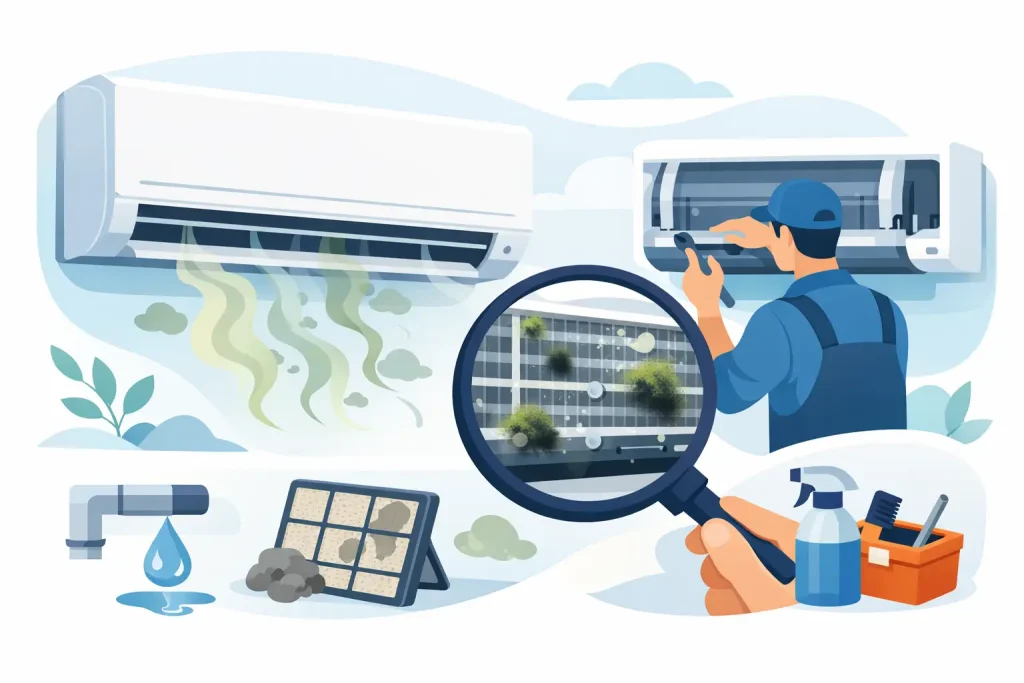
In cooling mode, your indoor unit removes moisture from the air. That moisture exits through a condensate drain line. A clogged drain can lead to water leaks, musty odors, or a system shutdown if the safety switch detects a problem.
Look around the indoor air handler for standing water, damp insulation, staining, or an unusual smell. If your system has an accessible drain line, keeping the area around it clean can help you notice trouble early. Homeowners should avoid pouring random chemicals into the line, since the wrong product can damage components or create a more difficult clog. If water is backing up, schedule service before it affects ceilings, floors, or equipment.
It also helps to pay attention to changes in daily operation. A heat pump should produce steady airflow and cycle on and off normally. New rattling, buzzing, grinding, frequent cycling, weak airflow, or uneven temperatures are not problems to ignore. They may be caused by something simple, such as a clogged filter, but they can also point to a failing capacitor, blower issue, refrigerant concern, or electrical problem.
Seasonal Heat Pump Maintenance Matters
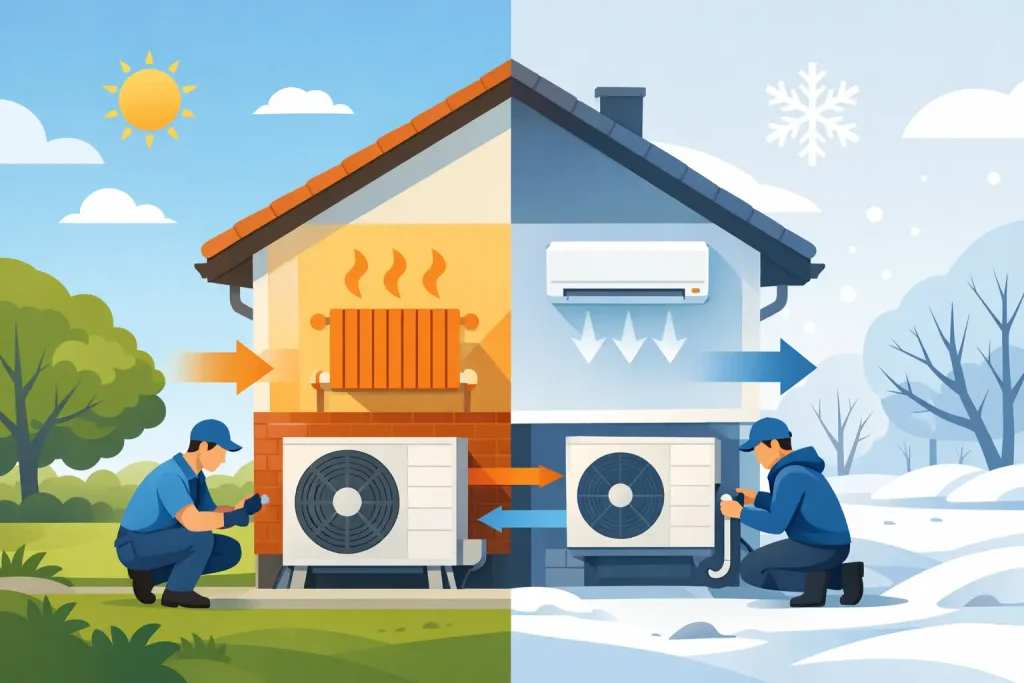
Because a heat pump handles both heating and cooling, it benefits from professional maintenance twice a year when possible: once before the cooling season and once before the heating season. At minimum, schedule a full maintenance visit annually. For rental properties and small commercial spaces, planned service is particularly valuable because an unexpected failure can affect tenants, staff, customers, and operating costs.
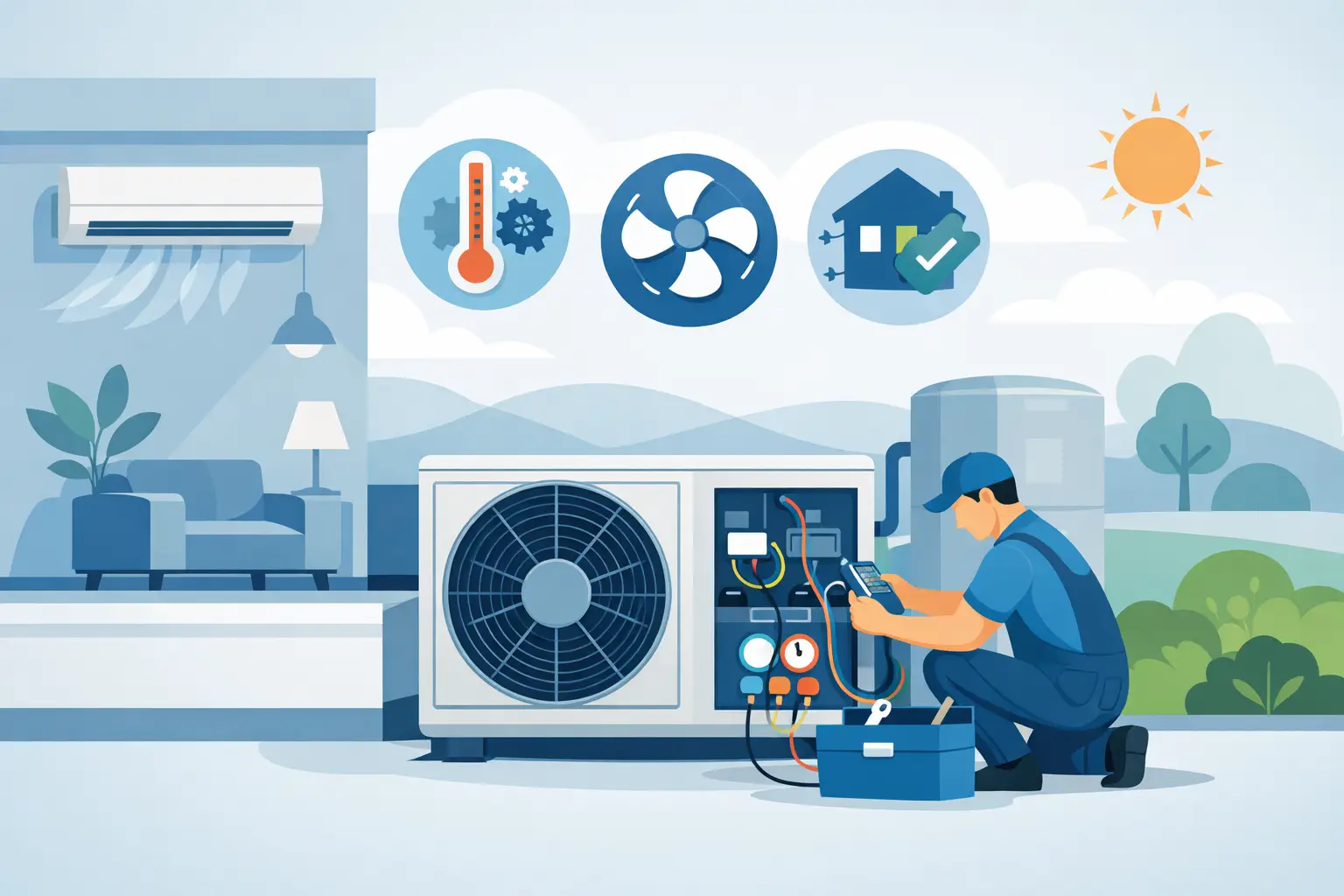
During a professional tune-up, a technician can inspect and clean components that are not safe or practical for homeowners to service. This usually includes checking electrical connections, testing capacitors and controls, inspecting the blower assembly, cleaning coils as needed, verifying refrigerant performance, checking the condensate system, and confirming that the thermostat communicates properly with the equipment.
A technician can also catch wear before it becomes an emergency. For example, a loose electrical connection may create intermittent operation long before the system stops altogether. A dirty indoor coil can slowly reduce airflow and efficiency without creating an obvious alarm. Early repairs are often simpler and less disruptive than waiting for a complete breakdown during a heat wave or cold snap.
Four Signs You Should Schedule Service Soon
Some problems should not wait for the next maintenance appointment. Contact an HVAC professional if you notice any of these signs:
- The heat pump runs constantly but does not maintain the thermostat setting.
- Ice builds up heavily on the outdoor coil or returns quickly after a defrost cycle.
- You hear loud grinding, banging, or electrical buzzing from the indoor or outdoor unit.
- Your energy bill rises sharply without a clear change in weather or household use.
Other warning signs include water near the indoor unit, a burning smell, tripped breakers, or airflow that has suddenly weakened. Turn the system off and request service if you smell burning, see damaged wiring, or suspect an electrical issue.
Avoid Common Heat Pump Maintenance Mistakes
Heat pump maintenance is useful only when it protects the equipment. A few well-intentioned shortcuts can cause expensive damage. Do not cover the outdoor unit tightly for the winter. Moisture can become trapped inside, and a covered unit cannot operate safely if the system turns on. If you want to protect it from falling debris, use a breathable top cover designed for that purpose and leave the sides open.
Avoid repeatedly switching between heating and cooling modes. Give the system several minutes to complete a cycle before making a change, particularly if your thermostat does not include built-in compressor delay protection. Constantly changing settings can create unnecessary wear and make it harder to tell whether the system is actually performing correctly.
Do not attempt to add refrigerant yourself or assume low refrigerant is a normal maintenance item. A properly operating heat pump does not consume refrigerant. If levels are low, there may be a leak that needs to be located and repaired by a qualified technician.
Finally, do not ignore the outdoor unit because it is out of sight. Landscaping growth, pet hair, dryer vent lint, and autumn leaves can accumulate surprisingly fast. A five-minute check after yard work or a storm can make a meaningful difference.
Build a Routine That Fits Your Property
For most homes, checking the filter monthly, clearing the outdoor unit as needed, and scheduling professional service before peak seasons is a sensible plan. Homes with multiple pets, high dust levels, or heavy system use may need more frequent attention. Older systems can also benefit from closer monitoring, especially if comfort has become less consistent.
For landlords and property managers, record filter changes, maintenance visits, repairs, and tenant-reported comfort issues. A basic service history makes it easier to spot recurring problems and plan repairs or replacement on a practical timeline instead of reacting to every breakdown.
ABC Cooling & Heating helps homeowners and property managers in Baltimore-area communities keep heat pumps ready for the demands of every season. When your system starts showing changes in performance, timely service can protect both your comfort and your budget. A clean filter and clear outdoor unit are a strong start, but a trained set of eyes before the next weather extreme can provide the confidence that your heat pump is ready to work.