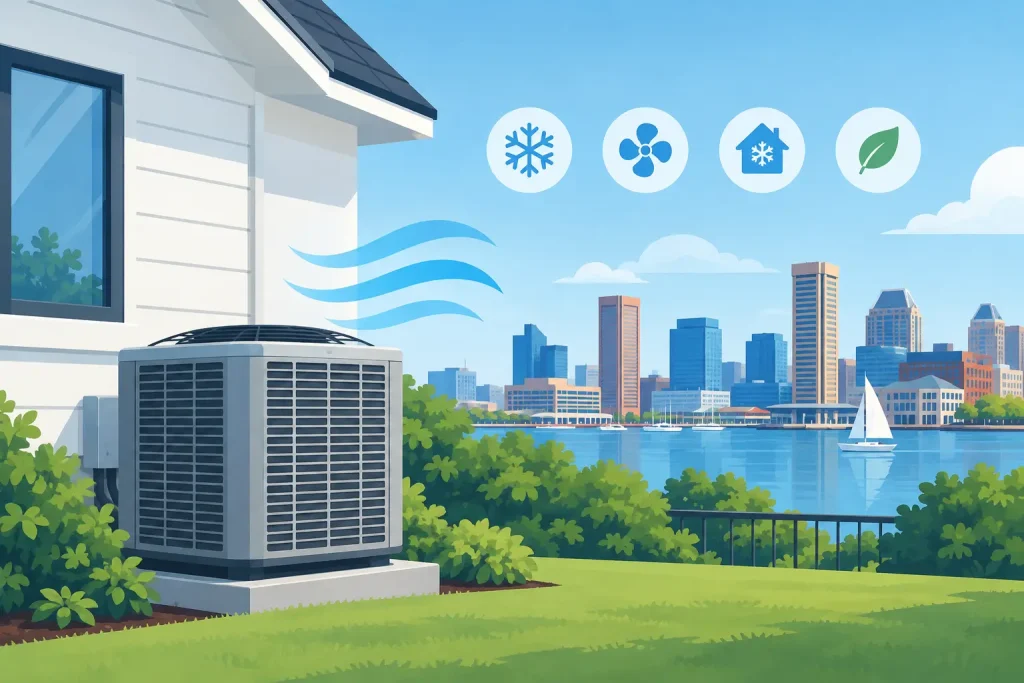
A cooling system should do more than blow cold air on the hottest afternoon of the year. It should keep every occupied room comfortable, control humidity, fit the building’s electrical and ductwork setup, and operate without sending utility costs through the roof. The best cooling systems for Baltimore-area homes and small businesses are not the same for every property. The right choice depends on the building, the people using it, and the condition of the equipment already in place.
For many property owners, the decision starts after an AC failure. That is understandable, but a quick replacement should still be a well-informed one. A properly sized and professionally installed system can deliver reliable comfort for years. An oversized or poorly matched system can create uneven temperatures, short cycling, excess humidity, and unnecessary repair costs.
What Makes a Cooling System the Right Choice?
Cooling capacity matters, but it is only one part of the picture. A system must be sized using the home or commercial space’s square footage, insulation, window exposure, ceiling height, occupancy, and duct condition. Two houses with the same floor plan can need different equipment because one has a finished attic, older windows, or sun-facing rooms that hold heat all afternoon.
Efficiency is another deciding factor. Air conditioners and heat pumps use SEER2 ratings to show cooling efficiency. Higher ratings generally mean lower electricity use, but the most efficient model is not automatically the best value. If you plan to move soon, a moderate-efficiency unit may make more financial sense. If you expect to stay in the property for many years or manage a building with heavy cooling demand, investing in higher efficiency may pay off over time.
Humidity control deserves equal attention in Maryland’s warm, damp summers. A system that cools a room quickly but does not run long enough can leave the air clammy. Correct sizing, a properly adjusted blower, clean coils, and sound ductwork all contribute to better moisture removal.
Best Cooling Systems for Different Properties
Central air conditioning for ducted homes
A central air conditioner is still the most common choice for homes with usable ductwork and a furnace or air handler. It moves cooled air through supply vents and returns warmer indoor air to the system for another cooling cycle. When the duct system is in good condition, central AC offers familiar, whole-home comfort with one primary thermostat.
This option works especially well when an older air conditioner has failed but the furnace, air handler, and ducts are still compatible with a new outdoor unit. However, compatibility should be verified before installation. A new condenser paired with an aging or incorrectly sized indoor coil may lose efficiency and suffer premature problems.
Central AC can also be a practical option for landlords and property managers who need dependable cooling across several rooms without adding wall-mounted equipment. The trade-off is that duct leaks, poor return-air design, and rooms at the end of long duct runs can affect comfort. Addressing those issues during replacement often matters as much as selecting the brand or model.
Heat pumps for year-round comfort
A heat pump cools a building in summer and provides heating in cooler weather by moving heat rather than creating it through combustion. For homeowners replacing both aging air conditioning and heating equipment, it can be one of the most efficient all-in-one solutions available.
Modern heat pumps are designed to operate effectively through much of a Maryland winter. Some homes use a heat pump as the primary system with electric backup heat, while others pair it with a gas furnace in a dual-fuel arrangement. The best setup depends on local energy costs, insulation, the home’s heating load, and the condition of existing equipment.
The advantage is flexibility. One outdoor unit can support both heating and cooling, reducing the need for separate systems. The consideration is upfront planning. Heat pump installation requires accurate sizing and a review of electrical capacity, ductwork, and cold-weather performance needs. A licensed HVAC technician can explain whether a standard heat pump or dual-fuel system is the better long-term fit.
Ductless mini-splits for additions and problem rooms
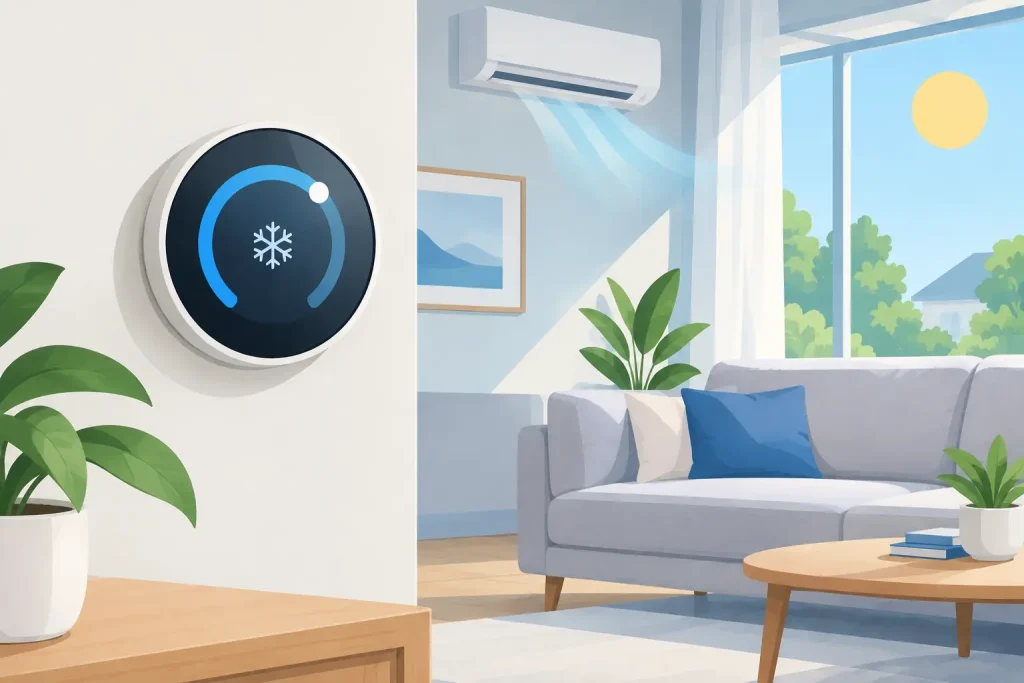
Ductless mini-split systems use an outdoor condenser connected to one or more indoor air handlers. Each indoor unit controls a specific zone, making mini-splits useful for converted garages, finished basements, home offices, sunrooms, additions, and older homes without ducts.
They are also a strong solution for rooms that never seem to match the thermostat setting. Instead of forcing more air through an undersized duct run, a ductless unit can cool that area independently. Many models also provide heat, which adds value during spring and fall or in rooms that need supplemental comfort year-round.
Mini-splits are highly efficient, but placement matters. Indoor heads need a location that distributes air well and allows access for cleaning. Filters need regular attention, and a multi-zone system may cost more than a single central replacement. For the right application, though, ductless cooling avoids major renovation work and gives occupants more control.
Packaged systems for certain homes and commercial spaces
A packaged air conditioning system places most components in a single outdoor cabinet, often installed on a roof, slab, or platform. These systems are common in some commercial properties and homes with limited indoor mechanical space.
Packaged units can simplify service access because the major cooling components are located together. They are not the ideal choice for every home, but they can be practical where the building was designed for one. Before replacing a packaged unit, technicians should inspect the curb or pad, electrical connections, duct transitions, drainage, and roof access if applicable.
Factors That Affect Cooling System Cost
It is tempting to compare systems by equipment price alone, but installation quality has a major effect on comfort, efficiency, and lifespan. A complete quote should account for the outdoor unit, indoor coil or air handler, refrigerant line condition, electrical work, thermostat, condensate drainage, and any duct modifications required for proper airflow.
Replacement cost can also rise when the old system uses outdated refrigerant, the electrical panel needs an upgrade, or a property has damaged ducts. Those are not unnecessary extras. They are issues that can prevent a new system from performing as designed.
For commercial spaces, the load can change based on business use. A small office, retail storefront, salon, or server room may have very different cooling requirements even when square footage is similar. Occupancy, lighting, equipment heat, operating hours, and ventilation should all be considered before selecting capacity.
Don’t Choose a System by Tonnage Alone
Cooling equipment is often discussed in tons, but tonnage is not a shortcut for proper sizing. A larger unit is not automatically more powerful in a helpful way. If it cools the building too fast, it may shut off before removing enough humidity. That can leave rooms feeling sticky even when the thermostat reads the set temperature.
An undersized unit has the opposite problem. It may run constantly during heat waves, struggle to reach the set temperature, and experience added wear. The goal is steady, balanced operation that meets the building’s actual cooling load.
A professional evaluation should include more than a glance at the old nameplate. Previous equipment may have been oversized from the beginning, or the building may have changed since it was installed. New windows, added insulation, a finished basement, or a home addition can all affect what the property needs now.
Maintenance Protects Any Cooling System
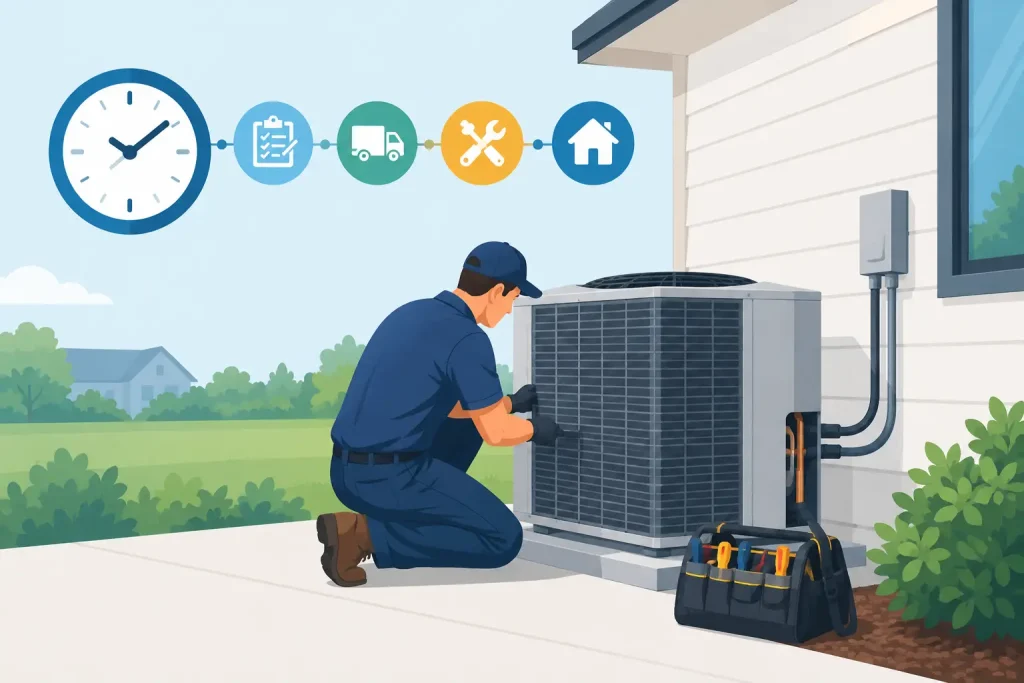
Even the best equipment needs routine care. A clogged filter restricts airflow, dirty outdoor coils make it harder to release heat, and neglected drain lines can lead to water damage or system shutdowns. Annual maintenance gives technicians a chance to check refrigerant performance, electrical components, blower operation, safety controls, and drainage before summer demand peaks.
Homeowners can help between visits by changing filters on schedule, keeping plants and debris away from the outdoor unit, and paying attention to new sounds or changes in airflow. Calling early when a system starts short cycling, leaking, or producing warm air can often prevent a larger repair.
For property managers, scheduled maintenance is especially useful because it reduces surprise breakdowns during tenant emergencies. Documented service also helps track recurring issues and plan replacements before a failing unit becomes an urgent problem.
When Repair Makes Sense and When Replacement Is Smarter
A repair may be the right move when a system is relatively young, has been maintained, and needs a straightforward part replacement. Capacitors, contactors, thermostats, and some drainage problems can often be resolved without replacing the entire unit.
Replacement becomes more reasonable when repairs are frequent, the system uses outdated refrigerant, energy bills have climbed, or the unit cannot keep the building comfortable. Age alone does not decide it, but an older unit with a costly compressor or coil failure deserves a clear comparison between repair cost and long-term replacement value.
ABC Cooling & Heating can assess the equipment, explain the findings in plain language, and recommend options based on the property rather than a one-size-fits-all sales pitch. That clarity matters when comfort, budget, and timing are all on the line.
The best next step is a professional load and equipment evaluation before the next heat wave puts added pressure on your system. A cooling solution chosen for your actual space can keep the people inside comfortable, protect your budget, and make summer feel far more manageable.