A failed AC unit in a Baltimore heat wave or a furnace that quits on a cold morning creates one immediate concern: when will comfort be back? When homeowners ask, “HVAC installation takes how long?” they usually need more than a number. They need to know whether they will be without heating or cooling overnight, what could delay the work, and how to plan around the installation day.
For most straightforward residential replacements, a new HVAC system can be installed in one day. Many jobs take roughly 4 to 8 hours. More involved replacements can take two days or longer, particularly when ductwork, electrical upgrades, permits, or a new system layout are part of the project. A qualified technician should explain the expected schedule before work begins, not leave you guessing after the old equipment has been removed.
How Long Does HVAC Installation Take for a Typical Replacement?
If your home already has a central heating and cooling system and the new equipment is similar in size and type, installation is often completed in a single workday. This might include replacing an outdoor condenser, indoor evaporator coil, furnace or air handler, thermostat, refrigerant connections, and the related safety components.
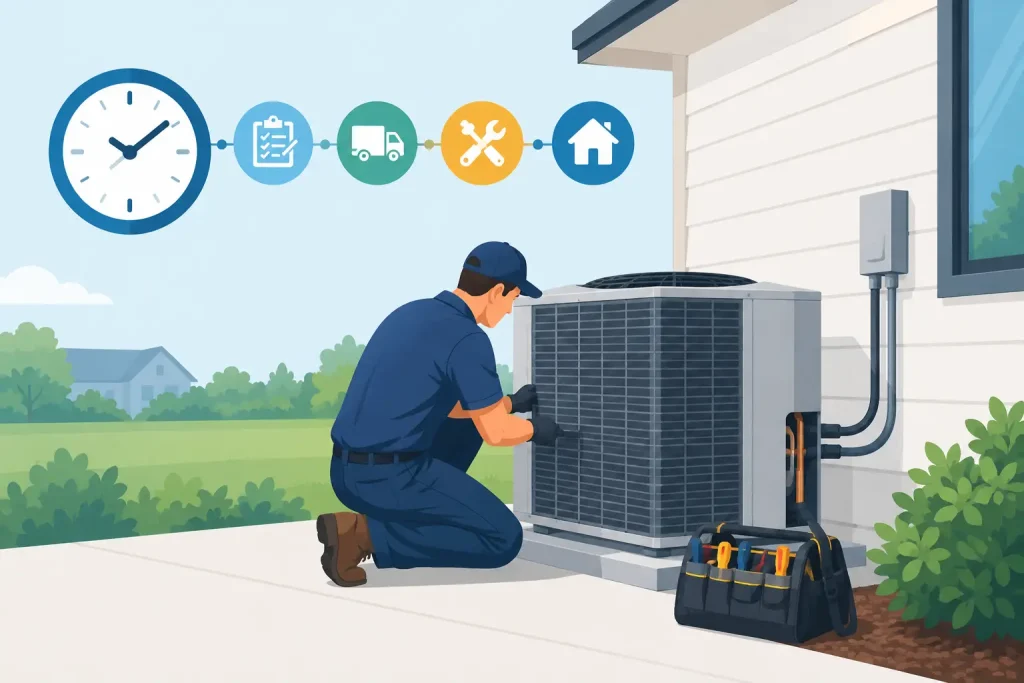
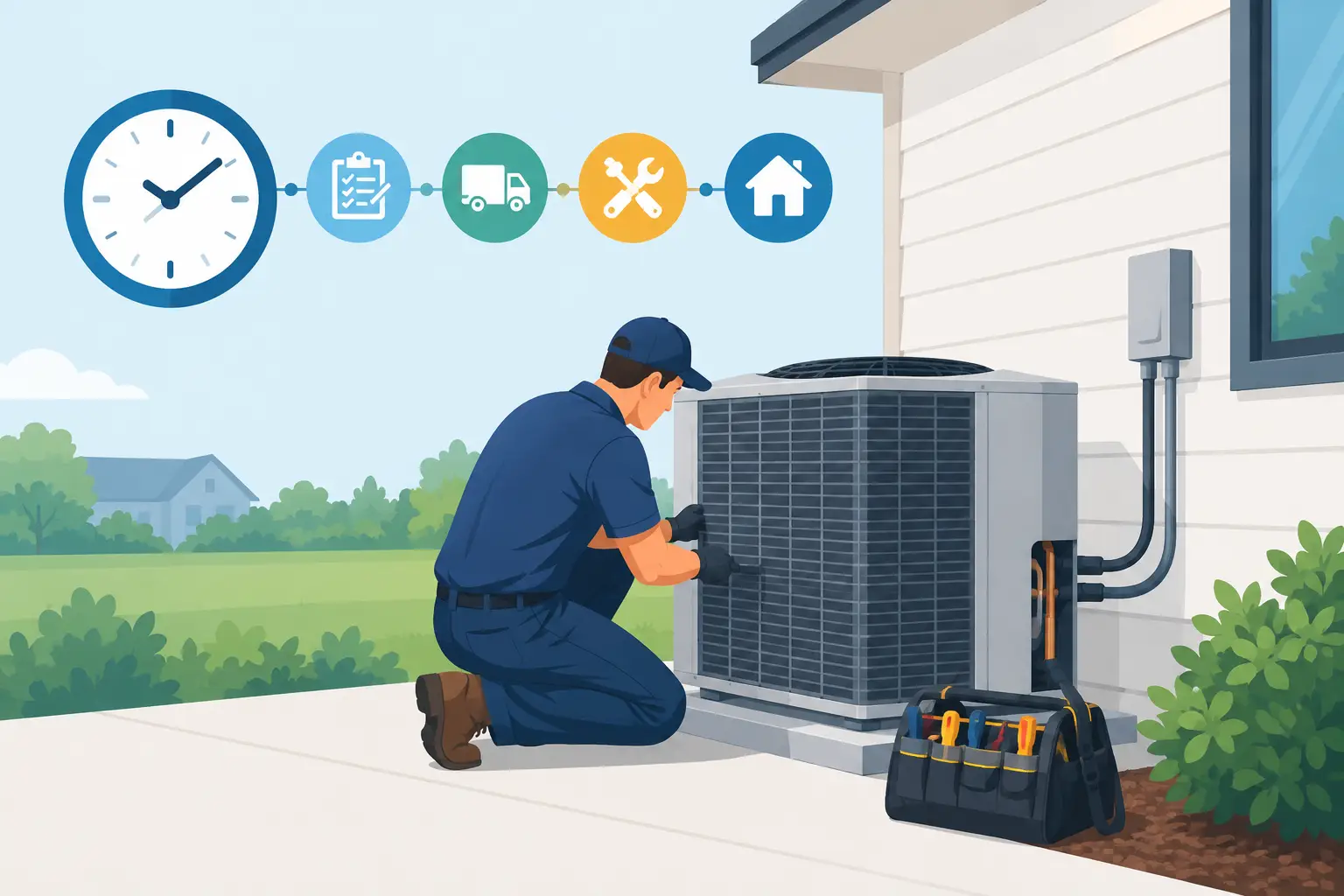
The crew starts by protecting the work area and removing the old equipment. They then set and connect the new units, make electrical and drainage connections, pressure-test refrigerant lines, charge the system as needed, and run the equipment through startup checks. The final part matters just as much as the physical installation. Technicians should verify airflow, temperature performance, thermostat operation, safety controls, and proper drainage before they leave.
A same-day replacement is common, but it should not mean rushed workmanship. A faster installation is a benefit only when the system is properly sized, carefully connected, and fully tested.
What Can Make an HVAC Installation Take Longer?
Every property has its own layout, equipment history, and code requirements. A clear estimate should account for those details. The following situations can extend the HVAC installation timeline beyond one day:
- New or modified ductwork is needed because existing ducts are leaking, undersized, damaged, or poorly routed.
- Electrical work is required, such as a new disconnect, breaker, wiring upgrade, or electrical panel adjustment.
- The system is being relocated from an attic, crawl space, closet, roof, or another difficult-access area.
- The new equipment requires changes to the gas line, venting, condensate drain, refrigerant line set, or equipment pad.
- Permits or inspections are required before the project can be finalized.
- The replacement involves a different type of system, such as changing from a furnace and AC combination to a heat pump setup.
Older homes around Baltimore and nearby communities can bring extra variables. Tight utility closets, aging wiring, limited attic access, and older duct designs may not be obvious until the equipment is inspected. That does not automatically mean a project will become expensive or lengthy, but it is why an in-person assessment is more reliable than a quick estimate based only on square footage.
System Availability Also Affects the Schedule
The installation itself may take one day, while the time from approval to installation depends on equipment availability. During periods of extreme heat or cold, popular system sizes can move quickly. Specialty equipment, high-efficiency models, and commercial units may require additional lead time.
A responsive HVAC company will be direct about availability and offer practical options. In some cases, a temporary repair can keep an older system operating until the selected replacement equipment arrives. In other cases, immediate replacement is the safer and more cost-effective choice.
Replacement, First-Time Installation, and Commercial Work Are Different
A like-for-like residential replacement is usually the quickest type of project. Installing HVAC in a home that has never had central air, however, is a larger job. Adding ductwork, creating routes for refrigerant lines, upgrading electrical service, and selecting equipment locations can turn the project into several days of work.
Ductless mini-split systems have their own timeline. A single-zone ductless installation may often be completed in one day, while multi-zone systems can take longer because each indoor unit needs careful placement, drainage, electrical connections, and refrigerant piping.
For landlords, property managers, and small commercial property operators, scheduling can be influenced by tenant access, rooftop equipment, building rules, and business hours. A small office or retail replacement may be completed in a day, but a more complex commercial system can require several days and coordinated planning to minimize disruption.
Why Proper Planning Saves Time on Installation Day
The fastest path to a reliable installation starts before the crew arrives. A contractor should inspect the existing system, confirm the heating and cooling load, review ductwork and electrical conditions, and discuss your comfort concerns. A system that is too large can short-cycle and struggle with humidity. One that is too small may run constantly without keeping up. Choosing the right size is not a detail to skip just to speed up the process.
Planning also prevents surprises. If a technician identifies a damaged drain line, inadequate return airflow, or outdated wiring before installation day, the work can be scheduled correctly from the beginning. That is better than discovering a necessary repair after the old equipment has already been disconnected.
For homeowners, a few simple preparations can help the day move efficiently. Clear a path to the furnace, air handler, electrical panel, and outdoor unit. Move pets to a quiet, safe space. If equipment is in an attic or utility closet, remove stored items that block access. You do not need to prepare the technical work, but easy access helps the installation team focus on the job.
What Happens During a Professional HVAC Installation?
You should expect clear communication before, during, and after the work. The crew should confirm the scope of the project and protect floors, walls, and nearby belongings where needed. Old equipment and materials are removed, then the new system is installed according to manufacturer requirements and applicable codes.
Once connections are complete, the technicians should not simply turn the system on and leave. Refrigerant levels, electrical readings, airflow, drainage, combustion safety for gas furnaces, and thermostat controls all need to be checked. The team should also show you how to operate the thermostat, change filters, and recognize signs that service may be needed.
This final testing phase is one reason a realistic timeline matters. An HVAC system is not fully installed because it powers on. It is installed when it is operating safely, efficiently, and as designed for your home or building.
Can You Stay Home During HVAC Installation?
Yes. Most homeowners stay home during the installation, especially because the technicians may need access to different parts of the property and may have questions about thermostat preferences or equipment placement. There will be periods of noise, including drilling, equipment removal, and testing, so it may not be an ideal day for remote meetings or naps.
Your heating or cooling will usually be off while the old equipment is removed and the new system is connected. For a one-day project, the interruption is generally limited to that workday. If temperatures are severe and the project requires more time, ask the contractor what temporary comfort options are available.
FAQ: HVAC Installation Timeline
Can an HVAC system be installed in one day?
Yes. Many standard residential replacements are completed in one day, often within 4 to 8 hours. The timeline increases when ductwork, electrical upgrades, access challenges, or major system changes are involved.
Is it faster to replace only the air conditioner or furnace?
Replacing one component can take less time than replacing a full system, but the best choice depends on the age, condition, and compatibility of the existing equipment. Installing a new AC unit with an older incompatible coil or furnace can create performance and warranty concerns. A technician can explain whether partial replacement is sensible for your situation.
Should I replace my HVAC system before it fails?
If the system is aging, needing frequent repairs, producing uneven comfort, or driving up utility costs, planned replacement gives you more control over timing and equipment selection. Waiting for a complete breakdown can limit options during a busy season.
When comfort is on the line, the goal is not simply to finish quickly. It is to install the right system correctly, communicate clearly, and leave your home or property ready for the season ahead. ABC Cooling & Heating can assess your current equipment, explain the expected timeline, and help you move forward with confidence.