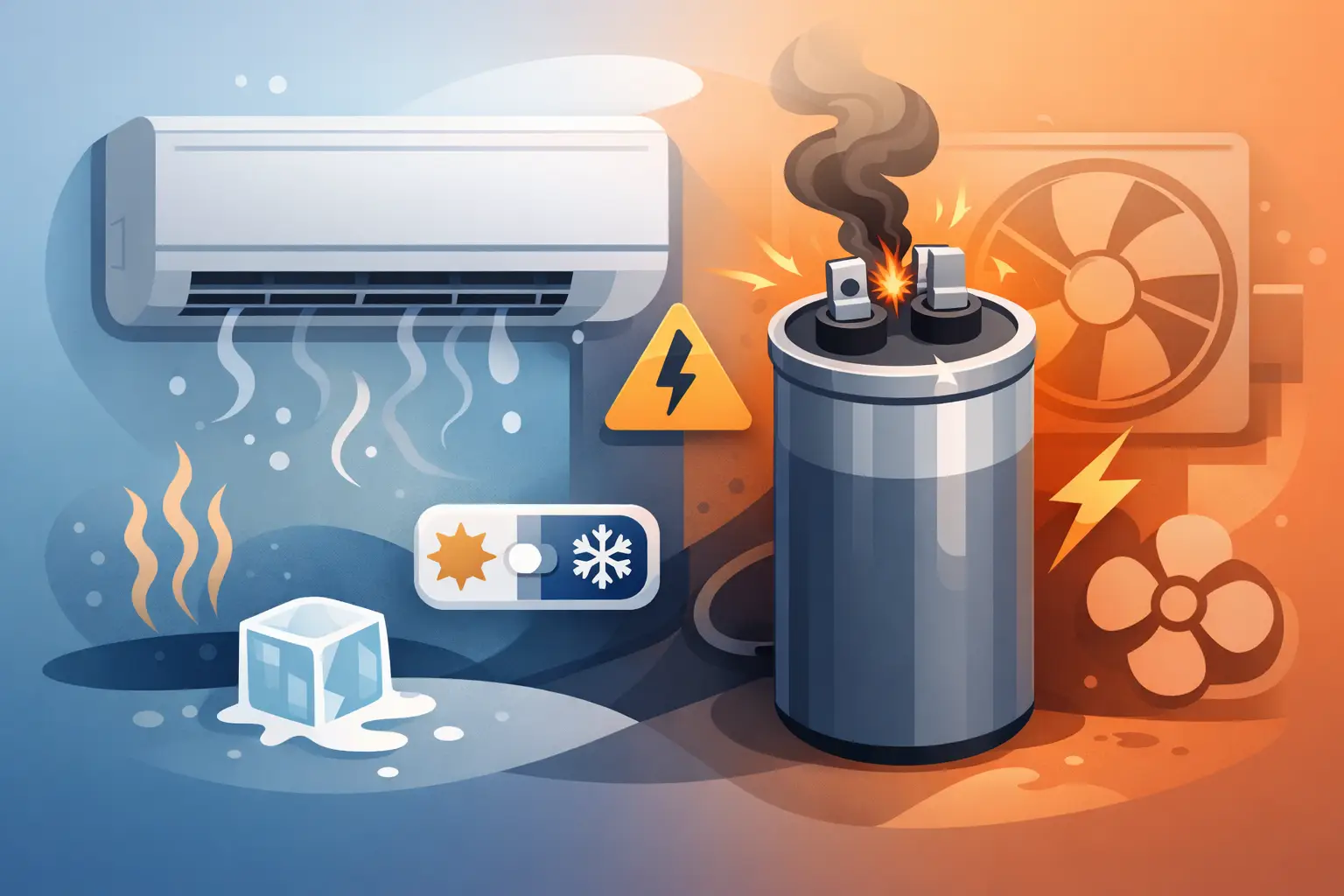
Your air conditioner may be close to starting, but not quite getting there. You hear a hum from the outdoor unit, the fan does not spin, or cool air suddenly disappears on a hot Maryland afternoon. These are among the top signs of a failing capacitor, a small electrical part that plays a major role in starting and running your HVAC equipment.
A capacitor problem is often repairable when caught early. Waiting can put extra strain on the compressor or fan motor, turning a straightforward service call into a more involved repair. Knowing what to watch for helps homeowners, landlords, and property managers make the right call before comfort becomes an emergency.
Top Signs of a Failing Capacitor
The AC hums but will not start
A humming or buzzing outdoor condenser is one of the most common capacitor symptoms. The unit is receiving power, but the capacitor may not be delivering the electrical boost needed to start the compressor or fan motor.
Do not keep cycling the thermostat on and off to force the system to run. Repeated startup attempts can overheat electrical components and place unnecessary stress on the equipment. Turn the system off at the thermostat and arrange for a professional diagnosis.
The outdoor fan is not spinning
If the outdoor unit is running or humming but the fan blades are still, a weak or failed capacitor could be the cause. The fan motor needs a properly functioning capacitor to start and maintain the right speed.
This symptom can also point to a failing fan motor, a contactor issue, or a wiring problem. That is why a technician should test the capacitor rather than replacing parts based on a guess. A proper reading confirms whether the component is outside its rated microfarad range.
Your AC starts slowly or needs several tries
An air conditioner should start in a steady, predictable sequence. If it hesitates, makes a brief humming sound, or takes multiple attempts before the outdoor unit engages, the capacitor may be weakening.
This is easy to overlook because the system may still cool the home between episodes. However, intermittent operation is not the same as normal operation. A capacitor can degrade gradually, especially after years of hot-weather use, and it may fail completely during the next heat wave.
Warm air is coming from the vents
When the compressor cannot start or stay running, your indoor blower may continue moving air without actually cooling it. The result is warm or room-temperature air from the supply vents, even though the thermostat is set to cool.
A failed capacitor is one possible reason, but refrigerant concerns, compressor issues, thermostat problems, and electrical faults can create similar symptoms. If your home is not cooling, a licensed HVAC technician can identify the source without risking damage to the system.
The system shuts off unexpectedly
A weak capacitor can cause the air conditioner to struggle during startup or operation, then shut down on a safety control. You may notice short, incomplete cooling cycles, particularly during the hottest part of the day when the system is under greater demand.
Short cycling can have several causes, so it should not be treated as a capacitor diagnosis by itself. Still, it deserves quick attention. Frequent starts are hard on the compressor, increase energy use, and can leave a home or rental property uncomfortable with little warning.
Higher electric bills without a clear reason
A failing capacitor does not always cause an immediate shutdown. Sometimes it allows a motor to run inefficiently or makes the system work harder to start. If your cooling costs rise while your routine thermostat settings have not changed, an electrical component inspection may be worthwhile.
Energy bills can also increase because of dirty coils, clogged filters, duct leakage, refrigerant problems, or aging equipment. The value of professional service is finding the actual cause instead of spending money on the wrong fix.
Visible swelling, leaking, or corrosion
Capacitors are usually housed inside the outdoor condenser or indoor air handler, so this is not a symptom most property owners should inspect themselves. But if a technician opens the electrical panel and finds a bulging top, oily residue, corrosion, or damaged terminals, replacement is typically necessary.
A capacitor stores electrical energy, even after power is turned off. Never touch, remove, or attempt to discharge one on your own. This is a job for a trained HVAC professional using the right testing equipment and safety procedures.
Why Capacitors Fail
Heat is a major reason capacitors wear out. Outdoor AC units work through Baltimore-area summers with high temperatures, humidity, and long cooling cycles. Over time, that heat can weaken the internal materials inside the capacitor.
Age, electrical surges, vibration, loose connections, and a struggling motor can also shorten its service life. In some cases, the capacitor is the first part to fail. In others, it is reacting to another issue, such as a fan motor that is drawing too much power. A complete inspection helps prevent a new capacitor from failing for the same underlying reason.
Capacitors are not limited to central air conditioners. Heat pumps and some furnace or air-handler blower motors use them as well. If your heating system’s blower hums, starts slowly, or fails to circulate air, the same type of electrical component may be involved.
What to Do When You Suspect a Capacitor Problem
Start by checking the simple items that are safe for a homeowner to review. Confirm that the thermostat is set to cooling and below the indoor temperature. Check that the air filter is not heavily clogged, and look for a tripped breaker. If the breaker trips again after being reset, leave it off and call for service rather than repeatedly resetting it.
If the outdoor unit hums, the fan is not moving, or the system is blowing warm air, turn off cooling at the thermostat. Avoid opening the condenser panel or using a stick to spin the fan blades. That common shortcut can be dangerous and may damage the motor or blades.
For landlords and property managers, document the symptoms before requesting service. Note whether the indoor blower runs, whether the outdoor unit hums, how long the problem has been happening, and whether a breaker has tripped. Those details can help the technician diagnose the issue efficiently on arrival.
How a Professional Confirms the Repair
A capacitor cannot be reliably diagnosed by appearance alone. A licensed technician will disconnect power, safely discharge the component, inspect electrical connections, and test the capacitor’s actual capacitance against its rated value. They will also check the contactor, motor amp draw, wiring, and system operation after the repair.
If replacement is needed, the new part must match the equipment’s required specifications. Installing an incorrect capacitor can lead to poor performance or damage. The goal is not simply to get the AC running for the moment, but to make sure it starts, runs, and cools safely.
In many cases, capacitor replacement is a targeted repair that can restore operation quickly. The trade-off is that a failed capacitor may reveal another aging component. If the fan motor or compressor is showing abnormal readings, a dependable technician should explain the findings clearly and discuss the practical repair options before work proceeds.
Protect Your Comfort With Timely Service
A failing capacitor rarely improves on its own. What begins as a delayed start or occasional humming sound can become a no-cooling call when your home or business needs the system most. ABC Cooling & Heating helps local property owners identify HVAC electrical issues quickly, explain the repair in plain language, and restore reliable comfort with professional workmanship.
If your AC is humming, starting inconsistently, or blowing warm air, shut it down and schedule an inspection. Acting early can protect the equipment you depend on and help keep a minor electrical issue from disrupting your entire day.