A little frost on the outdoor unit during a cold Maryland morning can be normal. Thick ice that keeps building up is not. If your heat pump makes ice on the outdoor coil, indoor coil, refrigerant lines, or cabinet, the system may be struggling to move air, drain water, or complete its defrost cycle. Acting early can help prevent a no-heat call, water damage, or unnecessary stress on expensive system parts.
When Is Ice on a Heat Pump Normal?
Heat pumps work by moving heat rather than creating it through combustion. During heating season, the outdoor coil can become cold enough to collect moisture from the air. When outdoor temperatures are low, that moisture may freeze into a light, even layer of frost.
A properly operating heat pump handles this through a defrost cycle. Every so often, it briefly reverses operation to warm the outdoor coil and melt the frost. You may see steam rise from the unit, hear a change in sound, or notice water dripping beneath it. Those signs are generally normal.
The concern starts when frost turns into a heavy layer of ice, covers the coil fins, traps the fan, or returns shortly after a defrost cycle. Ice should not build into a solid block around the outdoor unit. Likewise, ice on the indoor unit or refrigerant line is never something to ignore, especially while the system is cooling your home.
Why a Heat Pump Makes Ice
Ice is a symptom, not the root problem. The exact cause depends on whether the unit is in heating or cooling mode, where the ice appears, and how the system has been performing.
Restricted Airflow
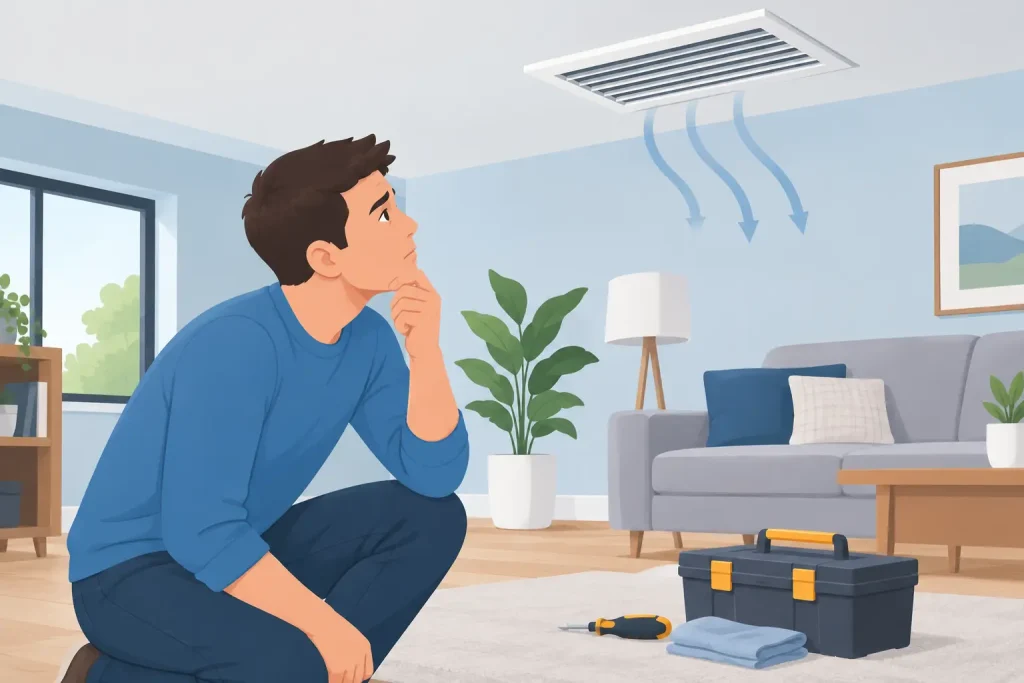
Poor airflow is one of the most common reasons an indoor coil freezes. A clogged air filter, blocked return vent, closed supply registers, dirty indoor coil, or failing blower can keep enough warm air from passing across the coil. As the coil gets too cold, condensation freezes on its surface.
Homeowners sometimes close multiple vents in unused rooms to save money. In many systems, that can reduce airflow enough to create comfort problems and contribute to freezing. Keep most supply and return vents open, and replace a dirty filter with the correct size and type for your equipment.
A Defrost System Problem
In heating mode, the outdoor unit relies on several components to recognize frost and start the defrost cycle. A faulty defrost control board, sensor, thermostat, reversing valve, or wiring connection can prevent the unit from clearing itself.
If the outdoor coil is coated in ice but the system never seems to enter defrost, professional diagnosis is the right next step. Trying to force the unit to run through the problem can reduce heating capacity and put additional strain on the compressor.
Low Refrigerant or a Refrigerant Leak
A heat pump requires the correct refrigerant charge to transfer heat efficiently. When the charge is low, pressure and coil temperature can drop enough for moisture to freeze. Low refrigerant is not a normal maintenance issue. It usually means there is a leak that needs to be located and repaired before refrigerant is added.
Ice caused by a refrigerant problem may appear on the larger insulated refrigerant line, the indoor coil, or the outdoor coil. You may also notice weak heating or cooling, longer run times, uneven temperatures, or higher utility bills.
Dirty Coils, Drainage Issues, or Outdoor Obstructions
Outdoor coils need open airflow to release or absorb heat. Leaves, mulch, grass clippings, snow, and debris can restrict that airflow. A dirty coil can also make defrosting less effective.
In winter, melted defrost water must be able to drain away from the unit. If it refreezes around the base, ice can build from the bottom up and eventually interfere with the fan or coil. The unit should sit level on a stable pad with clear space around it. Avoid piling snow against the cabinet or placing a cover over a running heat pump.
What to Do If Your Heat Pump Is Frozen
Start by looking at the system without touching the electrical components or trying to break ice off the coil. Sharp tools, hammers, screwdrivers, and high-pressure water can bend delicate coil fins and damage refrigerant lines.
If the ice is on the indoor coil or refrigerant line during cooling season, turn the thermostat system setting to Off and set the fan to On. This may allow warm household air to thaw the coil. Check and replace the filter if it is dirty, and make sure vents and returns are not blocked. Do not restart cooling until all ice has melted and the cause has been addressed.
If the outdoor unit is iced over in heating mode, switch the thermostat to Emergency Heat or Aux Heat if your system has that option. This allows the backup heat source to keep the home comfortable while the heat pump is not running. Then clear loose snow and debris from around the unit without scraping the coil.
Do not pour hot water over a frozen heat pump. The sudden temperature change can damage components, and the water can quickly refreeze around the base. If the fan is trapped in ice, the coil is completely encased, or the unit repeatedly freezes, turn it off and schedule service.
When to Call for Heat Pump Repair
A service call is recommended when ice comes back after thawing, the outdoor unit will not defrost, or the system cannot maintain the thermostat setting. You should also call when you hear unusual grinding or buzzing, see water leaking indoors, smell an electrical odor, or find ice on refrigerant lines.
For landlords and property managers, recurring freeze-ups deserve prompt attention even if occupants still have some heat or cooling. A heat pump can continue running while delivering poor performance, which often means higher energy use and a greater chance of a more disruptive failure later.
A licensed technician can check airflow, blower performance, coil condition, refrigerant pressures, electrical connections, drainage, and defrost controls. This step-by-step diagnosis matters because replacing a part before identifying the underlying issue can waste time and money. ABC Cooling & Heating focuses on clear explanations and practical repair recommendations, so you understand what is causing the freeze-up before work begins.
Can You Prevent a Heat Pump From Freezing?
Regular maintenance lowers the chance of ice-related problems, although it cannot prevent every weather-related frost event. Change filters on schedule, keep outdoor equipment clear of leaves and snow, and avoid blocking indoor vents. If landscaping is close to the outdoor unit, trim it back to preserve airflow on all sides.
Professional maintenance adds checks most homeowners cannot safely perform, including coil cleaning, refrigerant testing, drain inspection, electrical testing, and defrost operation. This is especially valuable before winter in Baltimore-area homes, where damp cold weather can create frequent frosting conditions.
If your heat pump has frozen once, pay attention to what happens after it thaws. A healthy system should return to normal operation and clear routine frost through defrost cycles. Ice that returns is the system asking for attention, and a prompt repair can help protect comfort when you need it most.