
A maintenance plan should make air conditioning ownership less stressful, not add another confusing bill to your monthly expenses. Knowing how to choose an AC maintenance plan comes down to more than finding the lowest advertised price. The right plan gives you reliable service before Maryland heat puts your system under strain, clear expectations when something needs attention, and a technician who can explain what is happening without pressure.
For homeowners, landlords, and small property managers, the goal is simple: reduce surprise breakdowns, protect the equipment you already own, and know who to call when comfort cannot wait.
Start With What Your AC System Actually Needs
Not every cooling system needs the same level of service. A newer central air conditioner with a clean service history may need a straightforward annual tune-up plan. An older unit, a heat pump that runs through much of the year, or equipment serving a rental property may benefit from more frequent visits and stronger repair benefits.
Consider the age, use, and condition of the system first. If your AC is more than 10 years old, has needed repeated repairs, struggles to cool certain rooms, or causes unusually high electric bills, maintenance should include a close inspection of performance and wear. A plan will not make an aging system new again, but it can help you make repair-versus-replacement decisions with better information.
For commercial spaces and multi-unit properties, usage matters even more. Equipment that serves customers, tenants, servers, or inventory may run longer hours and face a higher cost when it goes down. In that case, quicker scheduling and documented service records can be just as valuable as the maintenance visit itself.
What a Good AC Maintenance Plan Should Include
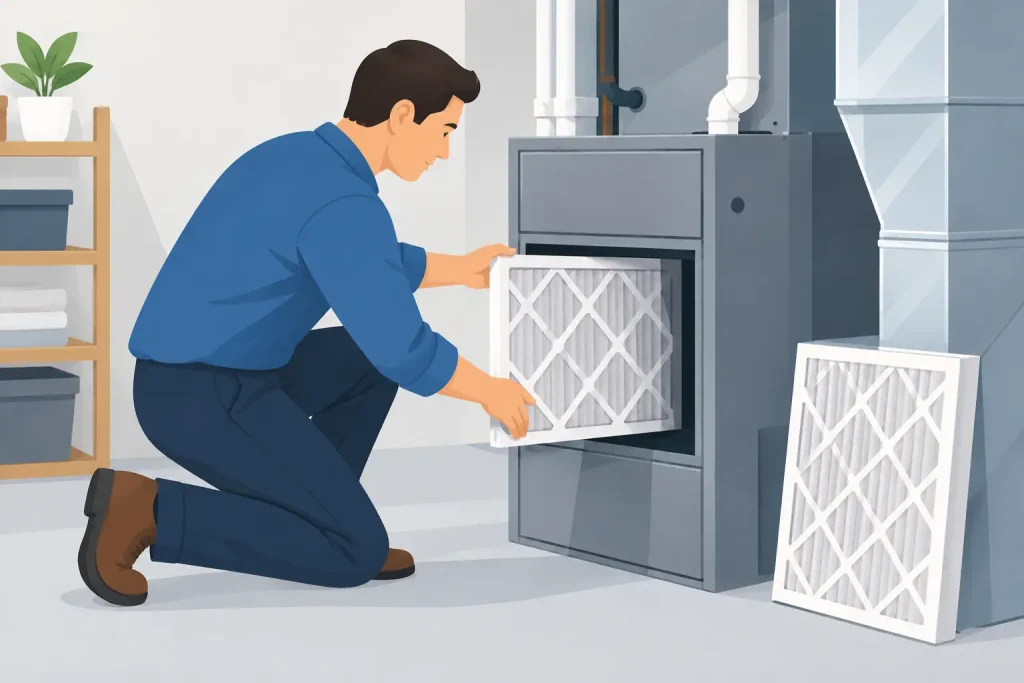
A real maintenance plan is more than a quick filter change and a sticker on the unit. During a proper seasonal visit, a licensed HVAC technician should inspect the parts that affect safety, airflow, efficiency, and cooling performance.
Look for a plan that clearly describes the work performed. Depending on your system, that should include checking electrical connections, inspecting the thermostat, testing capacitors and other components, cleaning the outdoor condenser area, clearing the condensate drain, examining the blower, checking refrigerant performance, and measuring temperature split and airflow. The technician should also inspect the filter and tell you whether it needs to be changed.
The exact checklist can vary by equipment type. Heat pumps require attention in both cooling and heating seasons, while a rooftop commercial unit may need additional checks. What matters is that the company can explain why each task is included and provide a record of what was found.
Be cautious with plans that promise a long list of services but never explain the scope. Ask whether coil cleaning is included or only available for an added charge. Ask whether the plan covers one visit per year or separate spring and fall visits. Small details can change the value considerably.
Maintenance is not the same as repair coverage
This distinction prevents many frustrating surprises. Preventive maintenance is designed to find problems early and keep equipment operating properly. Repair coverage, if offered, may provide a discount on parts and labor, waived diagnostic fees, or priority scheduling. It generally does not mean every future repair is free.
Read the terms carefully. A fair plan should state what is included, what is discounted, and what falls outside the agreement. Refrigerant leaks, failed major components, damaged ductwork, and emergency after-hours calls may have separate costs. Clear terms are a sign of a service company that respects your budget.
Compare Value, Not Just the Annual Price
The cheapest plan is not always the most affordable once a repair is needed on a 95-degree afternoon. Compare the annual fee against the practical benefits you will use: the number of visits, repair discounts, diagnostic-fee savings, priority service, and whether the plan applies to every system at the property.
Priority scheduling deserves special attention in Baltimore-area summers. It should not mean a company ignores other customers or guarantees an impossible arrival time. It should mean plan members move ahead in the regular service queue when demand is high. Ask how priority scheduling works in practice, especially if you manage tenants or operate a small business where a cooling outage affects people immediately.
Also ask whether the price is fixed for the agreement term and whether it renews automatically. Automatic renewal is not necessarily a problem, but it should be disclosed plainly. You should know the cancellation policy, how much advance notice is required, and whether there is a service fee if you cancel after a visit has been completed.
A plan with a slightly higher annual cost can be the better choice when it includes thorough inspections, transparent repair discounts, and responsive service. On the other hand, if your equipment is brand new and protected by a strong manufacturer warranty, a basic annual maintenance option may be enough. More coverage is only valuable when it matches your situation.
Ask Who Will Perform the Work
An AC maintenance plan is only as dependable as the people behind it. Before enrolling, confirm that the company uses licensed, trained technicians and services your type of equipment. A technician should be able to work on central AC systems, heat pumps, thermostats, and the supporting electrical and drainage components that influence performance.
Pay attention to communication, too. You should receive a straightforward explanation after each visit, including any concerns found, what can wait, and what deserves prompt attention. You should not feel pushed into an expensive replacement simply because a technician discovered a worn part.
For landlords and property managers, request service documentation that can be kept with property records. A dated report helps track recurring problems, support budgeting, and show that the equipment has been maintained. It can also be useful when deciding whether a tenant concern is caused by the HVAC system, an airflow issue, or a thermostat setting.
Watch for Plan Details That Create Problems Later
Most maintenance agreements are helpful when they are written clearly. Still, a few warning signs deserve a closer look. Avoid vague promises of “complete protection” without definitions. Be wary if the company cannot provide a maintenance checklist, will not explain exclusions, or makes it difficult to reach a real person for scheduling.
You should also question plans that require expensive repairs to be approved immediately. Maintenance visits often uncover issues, but you are entitled to understand the diagnosis and cost before authorizing non-emergency work. A professional technician can explain the urgency, show you the relevant condition when possible, and give you room to decide.
Finally, make sure the plan fits your calendar. Spring maintenance is ideal before heavy cooling demand begins, but a company should be able to provide reasonable scheduling rather than making you wait months for a promised visit. If your system is already making unusual noises, leaking water, cycling frequently, or failing to keep up, schedule a repair assessment instead of waiting for the next tune-up.
How to Choose an AC Maintenance Plan for a Rental or Business
Property owners have a few additional considerations. Confirm whether each unit needs its own agreement, whether visits can be coordinated across multiple systems, and who is authorized to approve repairs. Setting these expectations early prevents delays when a tenant reports no cooling.
For a small business, ask about scheduling outside customer-facing hours when possible. You may also need a plan that addresses multiple pieces of equipment, such as AC, heating, and heat pumps, rather than treating each system as an unrelated service call. A year-round relationship with one local HVAC provider can make maintenance records, seasonal planning, and emergency decisions much easier to manage.
ABC Cooling & Heating approaches maintenance as a practical way to protect comfort and catch developing issues before they become urgent. The best plan is one that gives you clear service, honest recommendations, and confidence that help is available when your building needs it.
Before signing, take a few minutes to compare the visit schedule, inspection scope, repair benefits, and service response policy in writing. A good AC maintenance plan should leave you feeling prepared for the next heat wave, not wondering what your coverage really means.