The first warm Maryland afternoon is not the time to find out your air conditioner is struggling. A practical spring HVAC maintenance checklist gives you a chance to spot small problems, reduce unnecessary energy use, and schedule service before the first real heat wave fills appointment calendars.
For homeowners, landlords, and property managers, spring maintenance is less about checking a box and more about protecting comfort when people depend on it. A clean, properly operating system generally runs more efficiently, controls humidity better, and is less likely to fail when it is working its hardest.
Why Spring HVAC Maintenance Pays Off
Your heating system carried the workload through winter. Now the cooling side of your HVAC system needs attention before summer temperatures and humidity arrive. Dust, leaves, clogged filters, drain issues, and worn electrical components can all affect air conditioner performance, even if the system seemed fine when it was last used.
Preventive service also gives a technician time to find concerns before they become an urgent repair. A weak capacitor, low refrigerant caused by a leak, or a blocked condensate drain may be manageable during a scheduled visit. Left alone, those same issues can lead to warm air, water damage, a frozen coil, or a complete system shutdown during a hot stretch.
There is a cost trade-off, of course. Routine maintenance does not guarantee that an older unit will never need repair. But it can help you make informed decisions sooner, whether that means completing a small repair, planning for replacement, or simply getting another reliable season from your current equipment.
Spring HVAC Maintenance Checklist: What You Can Do
A few homeowner tasks make a real difference and help your technician focus on the work that requires professional training. Turn the system off before cleaning around equipment, and do not remove electrical panels or attempt refrigerant work yourself.
- Replace or clean the air filter. Check the filter size and airflow direction before installing a replacement. A dirty filter restricts airflow, makes the system work harder, and can contribute to frozen evaporator coils. Most one-inch filters need attention every one to three months, but homes with pets, allergies, renovations, or heavy system use may need more frequent changes.
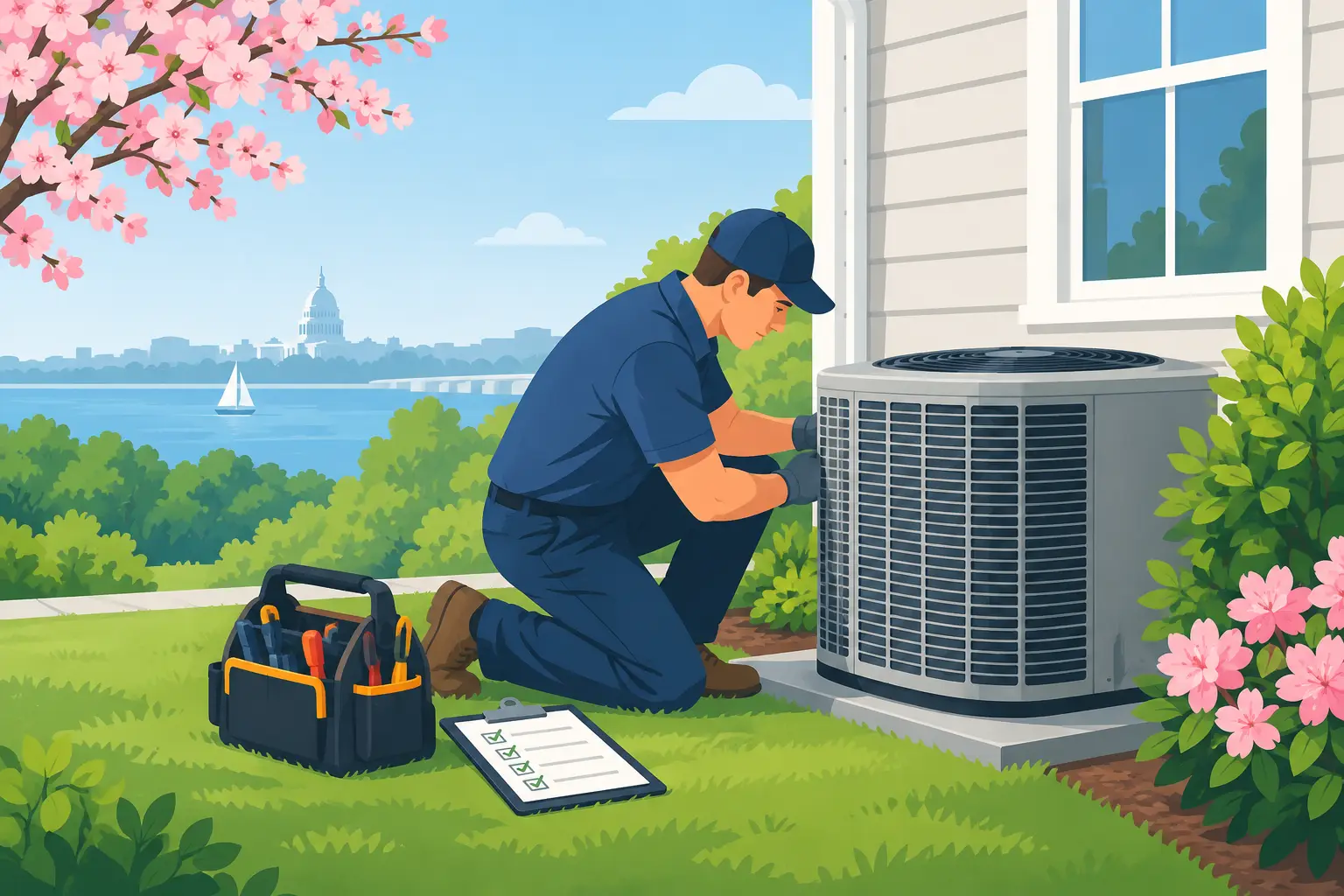
- Clear the outdoor condenser area. Remove leaves, branches, mulch, and debris around the outdoor unit. Keep shrubs and other obstructions trimmed back so air can move freely around the cabinet. Do not use a pressure washer on the coils, since the fins bend easily.
- Check supply and return vents. Make sure registers are open and not blocked by furniture, rugs, storage bins, or curtains. Closing multiple vents to force air into other rooms usually creates airflow problems rather than saving energy.
- Test the thermostat. Switch the thermostat to cooling mode and set it a few degrees below the indoor temperature. Listen for the system to start and confirm that cool air reaches the vents after a few minutes. If you have a programmable thermostat, review the schedule so it matches your household’s spring and summer routine.
- Look for moisture near indoor equipment. Check around the air handler, furnace, and drain line for water, staining, or a musty odor. Air conditioners remove humidity from indoor air, and that moisture needs a clear path out of the home. A slow drain can become a messy problem quickly.
- Pay attention to unusual operation. Rattling, buzzing, short cycling, weak airflow, uneven temperatures, or a sudden jump in your utility bill all deserve a closer look. Write down what you notice and when it happens. Clear details help a technician diagnose the issue faster.
These steps are useful for central air systems, heat pumps, and many ducted systems. Window units, ductless mini-splits, and commercial equipment have different maintenance needs, so follow the manufacturer guidance and arrange professional service when performance changes.
What a Professional AC Tune-Up Should Cover
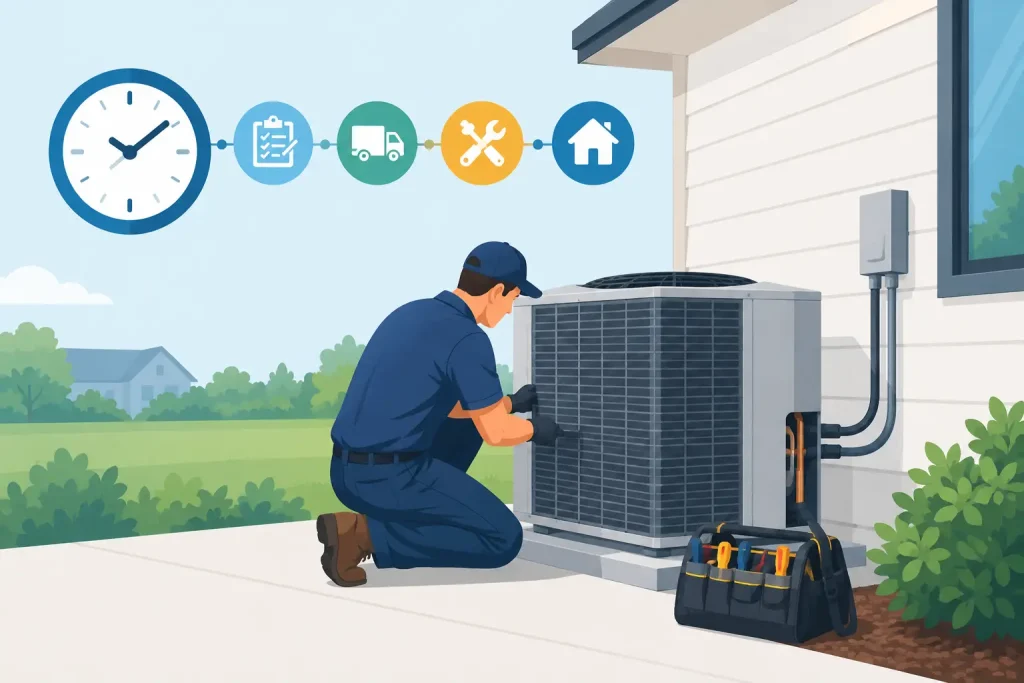
A complete spring visit goes beyond changing a filter and rinsing debris off the outdoor unit. Licensed HVAC technicians inspect the operating condition of the equipment and look for safety, performance, and reliability concerns that are difficult to identify from the outside.
A professional maintenance appointment should typically include an inspection of electrical connections and components, capacitors, contactors, blower operation, thermostat controls, refrigerant performance, and the outdoor condenser. The technician should also inspect and clean coils as needed, check the condensate drain and drain pan, verify temperature performance, and look for signs of worn parts or airflow restrictions.
The exact scope depends on your equipment. A heat pump needs attention to both heating and cooling operation because it performs year-round. A system with an older furnace, a zoning setup, or indoor air quality accessories may require additional checks. For rental and commercial properties, maintenance can also include documenting equipment condition and flagging issues that could affect tenants or business operations.
Ask questions during the visit. A dependable technician should explain what was found in plain language, tell you what needs immediate attention versus what can be monitored, and provide clear pricing before major work begins. You should not be pressured into replacing a system simply because it is not brand new. At the same time, repeated repairs, poor comfort, and rising operating costs may make a replacement quote worth considering.
Watch for These Signs Before You Turn On the AC
Some spring issues should not wait for a tune-up date. If the system will not start, blows warm air, trips the breaker, smells like something is burning, or leaks water indoors, turn it off and call for service. Continuing to run equipment with an electrical or drainage problem can make the repair more expensive.
Other signs are less urgent but still worth scheduling soon. These include rooms that never cool evenly, a thermostat that does not hold the set temperature, persistent humidity, loud startup noises, or an outdoor unit that runs constantly. In Baltimore-area homes, high humidity can make a house feel uncomfortable even when the thermostat reading looks reasonable. Proper cooling performance and moisture removal need to work together.
If ice forms on the refrigerant line or indoor coil, shut the cooling system off and change the fan setting to ON if your thermostat allows it. A clogged filter can cause freezing, but so can low refrigerant, a blower problem, or a dirty coil. Do not chip ice off the equipment or assume adding refrigerant is the answer. Refrigerant does not get used up under normal operation, so low levels often point to a leak that needs professional diagnosis.
Simple Habits That Support Summer Comfort
Maintenance prepares the equipment, but everyday habits affect how hard it has to work. Keep blinds or curtains closed during the hottest part of the day, use bathroom and kitchen exhaust fans only as long as needed, and avoid placing heat-producing appliances near the thermostat. Ceiling fans can help rooms feel more comfortable, but they cool people rather than the air, so turn them off in empty rooms.
A reasonable thermostat setting matters more than chasing the lowest possible number. Many households find that a moderate setting, paired with clean filters and good airflow, provides better comfort and lower energy use than making drastic adjustments throughout the day. If a home stays humid or has major temperature differences between rooms, the answer may be airflow balancing, ductwork improvements, insulation, or equipment sizing rather than simply lowering the thermostat.
For landlords and property managers, spring is also a smart time to confirm access to mechanical rooms, clear outdoor units at vacant properties, and document filter changes. Small operational routines can prevent emergency calls once seasonal demand picks up.
Schedule Service Before Summer Is in Full Swing
The best time for spring maintenance is before you need cooling every day. Booking early provides more flexibility, and it gives you time to address any repairs without the pressure of a system failure during extreme heat. ABC Cooling & Heating serves homeowners and property owners throughout Baltimore and nearby communities with clear recommendations, responsive service, and maintenance designed around dependable comfort.
Start with the simple checks you can safely handle, then schedule a professional inspection if your system is overdue, showing warning signs, or heading into another demanding Maryland summer. A little attention in spring can make the first hot day feel routine instead of urgent.