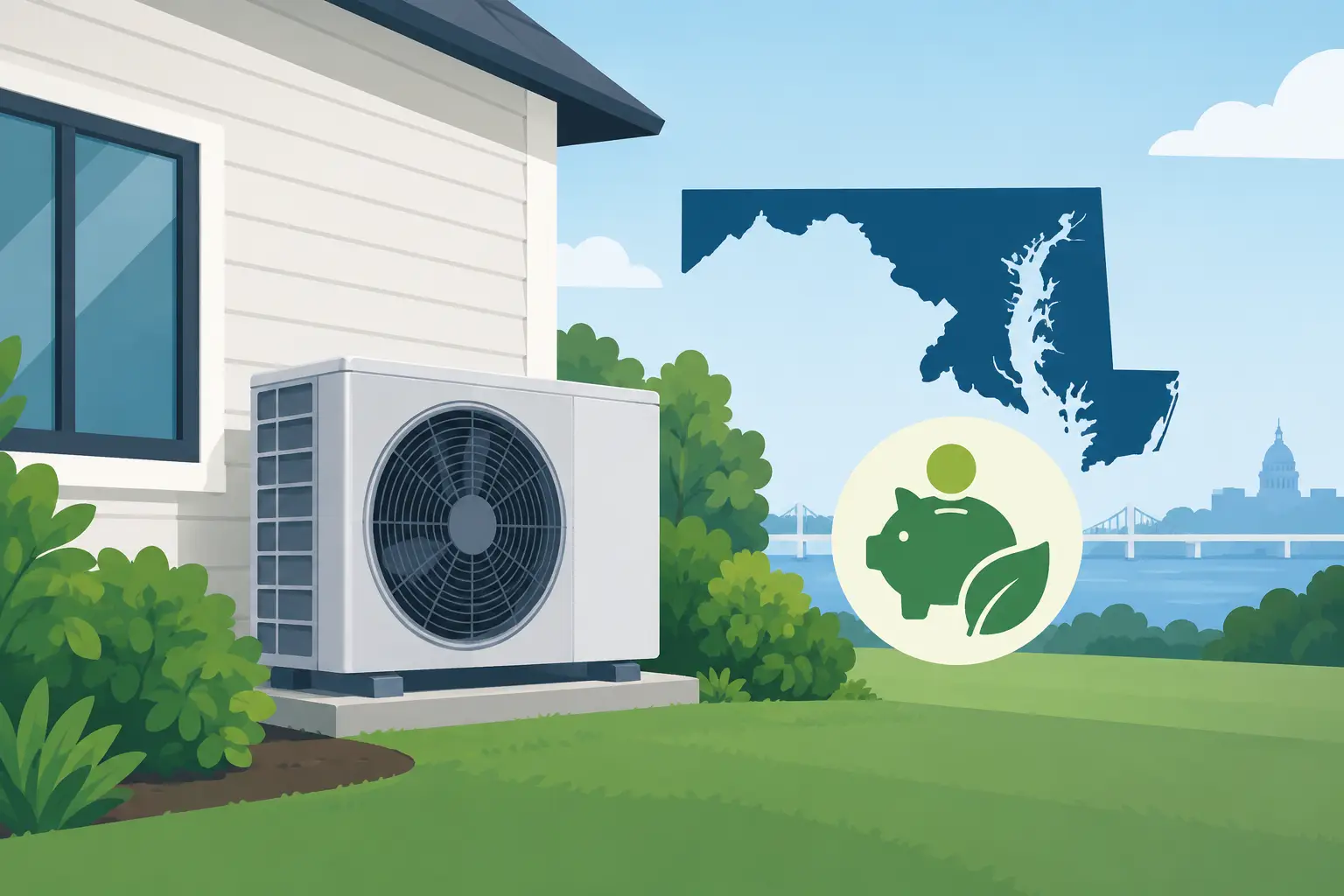
A heat pump replacement can solve more than one comfort problem at once. It can replace an aging air conditioner, improve winter heating, and reduce energy use in the right home. This guide to heat pump rebates explains where Maryland homeowners and property managers may find savings, what can affect eligibility, and why checking the details before installation matters.
Rebates and tax credits can make a meaningful difference in the upfront cost of a new system, but they are not automatic. Programs have specific equipment, efficiency, income, installation, and documentation requirements. A qualified HVAC contractor can help you choose a system that fits your property, but the program administrator makes the final eligibility decision.
Where Heat Pump Rebates May Come From
Most heat pump incentives fall into three categories: utility rebates, state or local programs, and federal tax credits. These programs are separate, and in some cases they can be combined. In other cases, one incentive may reduce the cost used to calculate another. That is why it is smart to confirm the rules before signing an installation agreement.
Utility company rebates
Your electric utility may offer rebates for qualifying high-efficiency heat pumps, heat pump water heaters, smart thermostats, or electrical upgrades. The available amount often depends on the exact equipment efficiency ratings and whether the system replaces older electric, oil, propane, or gas equipment.
Utility programs may require an application before work begins, proof of purchase after installation, or both. Some require participating contractors or specific product data. A rebate that looks simple on an advertisement can be denied if the equipment model, invoice, or application timing does not meet the program rules.
Maryland and local incentive programs
Maryland energy programs can change as funding, utility plans, and state policies evolve. Depending on the current program, assistance may be available for energy-efficient HVAC improvements, weatherization, or income-qualified home upgrades. Local programs sometimes focus on particular neighborhoods, housing types, or income ranges.
For landlords and property managers, eligibility can be more complicated. A program may treat a single-family rental, multifamily building, mixed-use property, and small commercial space differently. Before planning a replacement, verify whether the incentive applies to the building type and who must submit the application.
Federal heat pump tax credits
Federal tax credits may be available for qualifying energy-efficient home improvements. Unlike a rebate, a tax credit is generally claimed when filing your federal tax return, rather than received as an immediate discount from the contractor. The credit may have annual limits, equipment requirements, and documentation rules.
Keep copies of your paid invoice, manufacturer information, model numbers, efficiency ratings, and any required product identification. A tax professional can explain how a credit applies to your individual tax situation, especially if you are making several energy upgrades in the same year.
How to Qualify for Heat Pump Rebates
The right system is not simply the largest unit or the one with the highest advertised rebate. It needs to be properly sized for the home or building, compatible with the existing ductwork and electrical service, and appropriate for Maryland weather. An oversized system can cycle too often, while an undersized system may struggle during extreme temperatures.
Before selecting equipment, confirm these common program requirements:
- The heat pump meets the program’s required efficiency ratings and model qualifications.
- The system is installed at an eligible property within the program service area.
- The installation is completed by a properly licensed contractor when the program requires one.
- The application is submitted by the stated deadline, which may be before installation or shortly after completion.
- You retain invoices, equipment details, proof of payment, and any required certification documents.
Not every requirement applies to every program. Some incentives are based on equipment efficiency alone, while others also consider household income, insulation levels, electrification goals, or the fuel type being replaced. Treat a rebate estimate as an estimate until the current program terms are confirmed.
Efficiency Ratings That Can Affect Savings
Rebate programs commonly use efficiency ratings to decide which systems qualify. You may see SEER2 for cooling efficiency, HSPF2 for heating efficiency, and EER2 for performance under specific cooling conditions. Higher numbers can indicate greater efficiency, but they can also increase the equipment cost.
The best value depends on your home, your electric rates, how you use the space, and the available incentives. A very high-efficiency model may make sense for a home with heavy year-round use. In another property, a dependable mid-range system with a strong rebate may provide the better return.
Cold-climate performance is another factor worth discussing. Modern heat pumps can provide effective heating in Maryland winters, but system design matters. Some homes may benefit from a dual-fuel setup, electrical panel improvements, duct repairs, or supplemental heat for the coldest days. A clear assessment helps prevent surprises after installation.
Why Timing Matters Before Installation
One of the most frustrating rebate problems is learning about a requirement after the equipment has already been installed. Programs can have limited budgets, enrollment windows, pre-approval steps, or changing incentive amounts. Waiting until the final invoice to research savings may limit your options.
Start the conversation early, especially if your existing furnace or air conditioner is still operating. Planned replacement gives you time to compare equipment, evaluate electrical needs, gather program documents, and make a decision without the pressure of a no-heat or no-cooling emergency.
If your system has already failed, fast service still matters. Ask for clear equipment options and request the details you need to check rebate eligibility quickly. An experienced technician should be able to explain the practical differences between systems without pushing you toward equipment that does not fit your property or budget.
Questions to Ask Before You Approve a Quote
A heat pump quote should make the scope of work easy to understand. Ask which equipment model is proposed, what efficiency ratings it carries, whether ductwork or electrical modifications are recommended, and what warranty coverage applies. If rebates are part of your decision, ask what documentation the installer will provide after the job is complete.
It is also reasonable to ask whether the estimate assumes a rebate, includes a rebate as a separate line item, or leaves rebate filing to the customer. Be cautious with any quote that treats an unapproved incentive as guaranteed savings. The final award is usually controlled by the utility, agency, or tax rules, not the HVAC company.
For older Baltimore-area homes, a site visit is especially useful. Older duct systems, limited electrical capacity, uneven room temperatures, and aging insulation can affect both system performance and total project cost. Addressing these issues up front can protect comfort long after the rebate paperwork is finished.
A Practical Plan for Your Upgrade
Begin by identifying your current heating and cooling equipment, its age, fuel source, and any comfort problems you want to fix. Then request a professional evaluation and compare systems based on total installed cost, expected operating costs, comfort needs, and currently available incentives.
Keep all program paperwork in one place, including applications, approval notices, invoices, model information, and proof of payment. If you are a landlord or manage several properties, create a file for each address so rebate deadlines and tax records do not get lost during a busy replacement season.
ABC Cooling & Heating can help homeowners and property managers understand their heat pump options, evaluate system needs, and receive clear installation documentation. The most useful next step is often a straightforward on-site assessment: find the system that will keep the property comfortable first, then pursue every legitimate incentive that helps make that decision more affordable.