
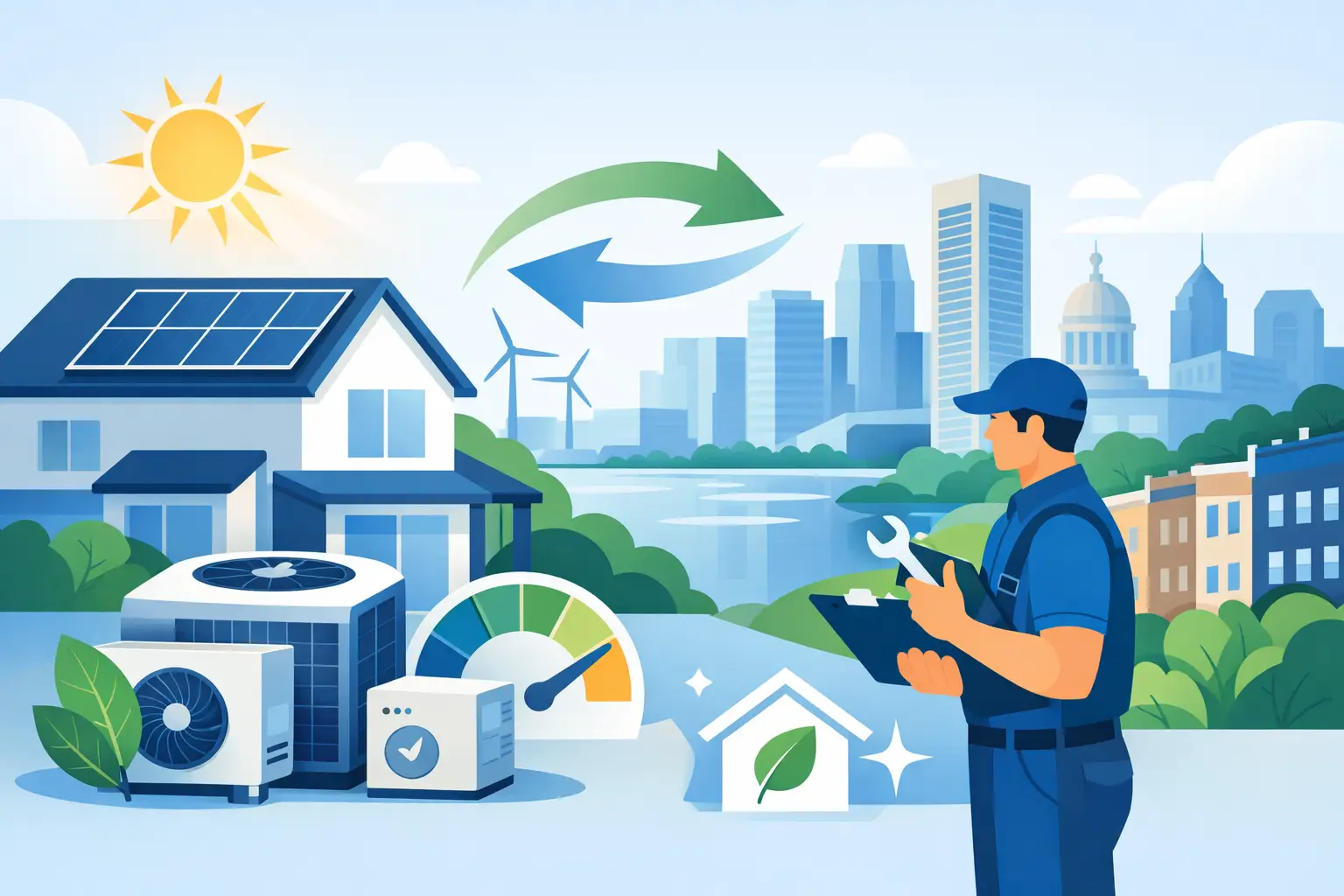
If your summer electric bill keeps climbing or certain rooms never seem to stay comfortable, energy efficient HVAC upgrades Baltimore property owners invest in can solve more than one problem at once. The right upgrade can lower operating costs, reduce hot and cold spots, and take pressure off an aging system that is already working too hard through Maryland’s humid summers and cold winter stretches.
What makes this topic worth a closer look is that HVAC efficiency is rarely about one magic fix. In many homes and small commercial spaces, high energy use comes from a mix of issues – an oversized or undersized system, poor airflow, neglected maintenance, outdated equipment, weak thermostat control, or ductwork that leaks conditioned air into unoccupied spaces. That is why the best upgrade is not always the biggest or most expensive one.
Which energy efficient HVAC upgrades Baltimore properties benefit from most?
For many buildings, the most effective upgrade starts with the equipment itself. If an air conditioner, furnace, or heat pump is nearing the end of its service life, replacement often delivers the biggest jump in performance. Older systems simply use more energy to produce the same result, especially if they have been patched through multiple repair cycles.
That said, replacement is not the only path. A newer thermostat, duct improvements, blower adjustments, or targeted maintenance can improve efficiency without the cost of a full installation. The right answer depends on system age, repair history, energy bills, and how evenly the space heats and cools.
High-efficiency system replacement
When an older AC or furnace starts losing reliability, replacing it with a high-efficiency model can make a measurable difference. Newer systems are designed to run with better energy performance, improved airflow management, and more consistent temperature control. For homeowners, that often means fewer temperature swings and lower monthly bills. For landlords and small commercial operators, it can also mean fewer service interruptions and more predictable operating costs.
But efficiency ratings are only part of the story. A premium system installed incorrectly will not perform the way it should. Proper sizing matters. If the unit is too large, it may short cycle, turning on and off too often and wasting energy. If it is too small, it may run constantly and still struggle to keep up. A careful load calculation and a clear recommendation matter more than chasing the highest rating on paper.
Heat pump upgrades
Heat pumps have become a strong option for many Maryland properties because they handle both heating and cooling in one system. In the right application, they can offer excellent efficiency and year-round comfort. They are especially appealing for homeowners looking to move away from older, less efficient heating equipment.
Still, heat pumps are not a one-size-fits-all choice. The condition of the ductwork, insulation levels, and the layout of the property all play a role. In some cases, a dual-fuel setup or another customized solution may make more sense than a straight equipment swap.
Smart thermostats and zoning
A smart thermostat is one of the most practical upgrades when the existing system is still in decent shape. Better scheduling, occupancy-based adjustments, and remote control can reduce waste without affecting comfort. For busy households, rental properties, and office spaces, that added control can prevent the system from running harder than necessary when no one is there.
Zoning can go a step further. If one floor is always warmer or certain areas sit empty for much of the day, zoning allows more targeted temperature control. This is especially useful in larger homes, mixed-use spaces, and buildings with uneven sun exposure. The trade-off is cost and complexity. Zoning needs to be designed correctly to avoid airflow problems.
Efficiency problems are often hiding in the ductwork
One of the most overlooked energy efficient HVAC upgrades Baltimore buildings may need has nothing to do with the main unit. Leaky, poorly insulated, or poorly designed ductwork can waste a surprising amount of conditioned air. If your equipment seems to run constantly but comfort still feels uneven, the ducts may be part of the problem.
Duct sealing and insulation can improve performance by keeping heated or cooled air moving where it is supposed to go. In older properties, this can be especially important. Even a newer HVAC system can underperform when paired with aging ductwork that was never updated.
Airflow balancing also matters. Some comfort complaints come down to too much air going to one area and not enough reaching another. A professional inspection can identify whether the issue is equipment-related, duct-related, or both.
Maintenance is not flashy, but it protects efficiency
Property owners often think about upgrades only when a system breaks. In reality, routine maintenance is one of the most cost-effective ways to protect efficiency and delay major replacement. Dirty coils, clogged filters, low refrigerant, worn components, and neglected burners all force equipment to work harder than it should.
Seasonal maintenance keeps the system operating closer to its intended performance. It also gives you a chance to catch smaller issues before they turn into emergency repairs. If your HVAC system is not especially old and your energy use has recently crept upward, maintenance may restore lost performance without a major capital expense.
This is where clear, honest diagnosis matters. Sometimes a tune-up and minor repair are enough. Sometimes maintenance reveals a bigger pattern – repeated breakdowns, failing components, or declining output – that points toward replacement. A dependable technician should be able to explain the difference without pushing you toward work you do not need.
When an upgrade makes more sense than another repair
There is a practical tipping point where continued repairs stop being the economical choice. If your system is older, repair costs are increasing, and your utility bills remain high, putting more money into the same equipment may only delay the inevitable. The same is true if your comfort problems are ongoing even after multiple service visits.
A good rule of thumb is to look at the full picture, not just the latest repair bill. How often does the system need service? Are parts becoming harder to source? Does the building stay comfortable during peak summer heat or winter cold? Are tenants or family members constantly adjusting the thermostat? Those details say a lot about whether the current system is still serving the property well.
For landlords and property managers, reliability can be as valuable as efficiency. A more efficient system that also reduces emergency calls and tenant complaints delivers value beyond the monthly utility statement.
Choosing upgrades that fit the property
The best HVAC improvement plan should match the building, the budget, and the comfort priorities. A townhouse with one aging AC unit has different needs than a small retail space with uneven airflow or a multi-family rental with recurring heating complaints. That is why a cookie-cutter recommendation rarely works.
In older Baltimore-area homes, insulation gaps, aging duct systems, and legacy equipment often overlap. Replacing the equipment alone may help, but the biggest gains sometimes come from pairing the installation with airflow corrections or thermostat improvements. In newer properties, a control upgrade or maintenance strategy may be enough to improve efficiency without major construction.
This is also where fair pricing and clear communication matter. Property owners should understand what problem an upgrade is solving, what level of savings or comfort improvement is realistic, and what can wait if the budget needs to be phased. A service-first company will walk through those options plainly.
Energy efficient HVAC upgrades Baltimore owners can plan with confidence
If you are considering energy efficient HVAC upgrades Baltimore homes and small commercial buildings often need, start with an inspection grounded in real system performance, not guesswork. The goal is not just to install new equipment. It is to improve comfort, reduce waste, and make sure the system matches how the space is actually used.
At ABC Cooling & Heating, that means looking at the whole picture – equipment condition, airflow, controls, repair history, and the demands of the property itself. Some customers need a full replacement. Others need targeted repairs, maintenance, or smarter controls. The right recommendation should feel practical, clearly explained, and worth the investment.
If your system is costing too much to run or struggling to keep up, now is a good time to ask better questions before the next heat wave or cold snap puts even more strain on it. The smartest upgrade is the one that makes your property more comfortable, more dependable, and easier to manage month after month.
2 Responses