A heat pump rarely stops being reliable all at once. More often, the warning starts with a room that never feels quite right, an electric bill that keeps climbing, or a repair that solves the problem for only a few months. Knowing when to replace heat pump equipment can help you avoid an emergency breakdown during a Baltimore-area heat wave or cold snap – and make a more confident decision about your home or property.
Replacement is not automatically the right answer every time a heat pump needs service. A well-maintained system with a minor electrical or airflow issue may have plenty of useful life left. The key is looking at the unit’s age, repair history, performance, and the cost of keeping it running.
When to Replace a Heat Pump Instead of Repairing It
Most heat pumps last about 10 to 15 years, although actual lifespan depends on maintenance, installation quality, usage, and local weather. Systems that work hard through Maryland’s humid summers and chilly winters can wear down faster when routine service is skipped.
Age alone does not determine whether a replacement is necessary. A 12-year-old unit with a small, inexpensive repair may still be worth fixing. But an older system with repeated failures, declining efficiency, or a major component problem deserves a replacement evaluation.
A licensed HVAC technician can identify whether the issue is isolated or part of a bigger pattern. That distinction matters. Replacing a relatively new system over a failed capacitor would waste money. Continuing to invest in an aging unit with a failing compressor can do the same.
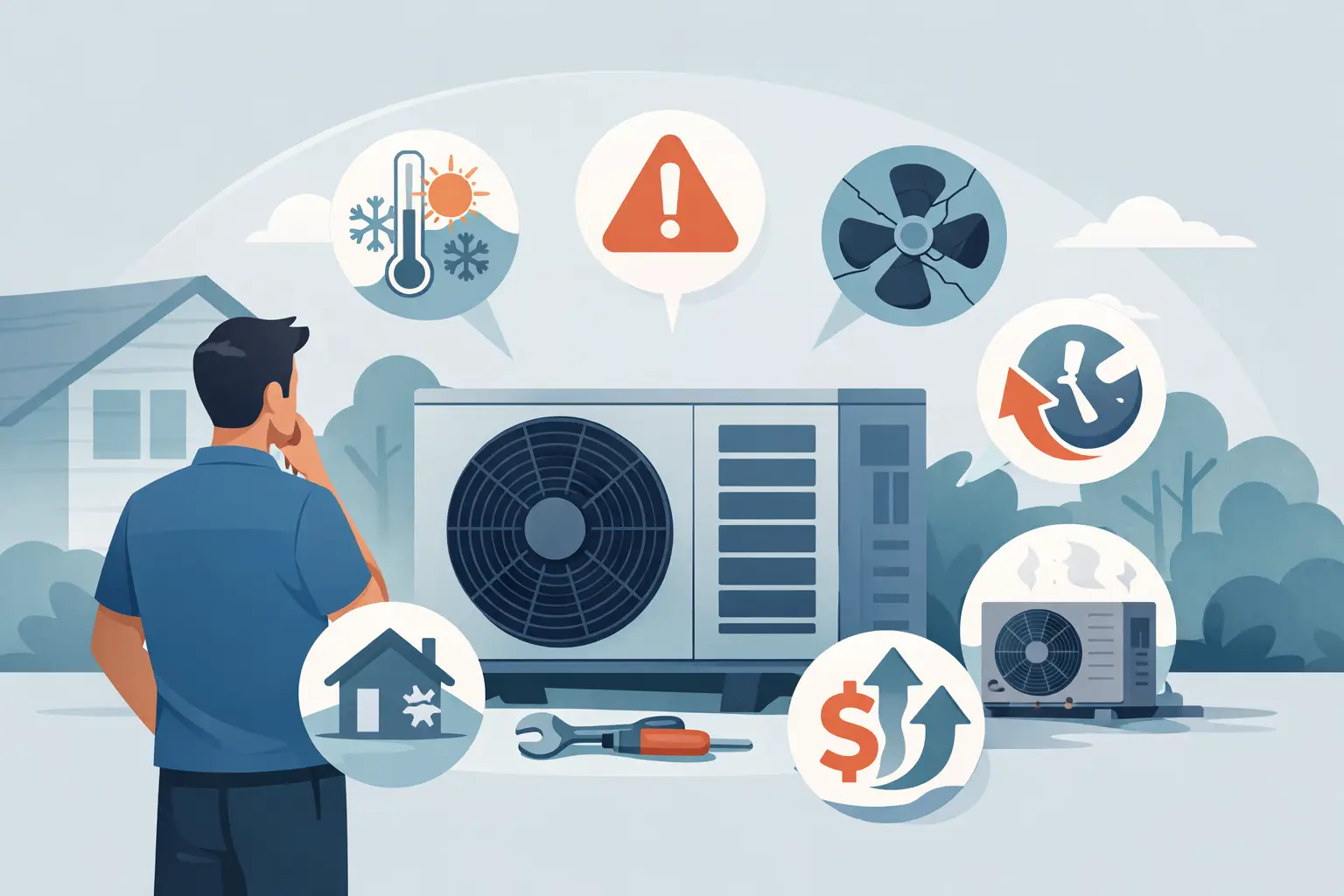
8 Signs It May Be Time for a New Heat Pump
1. Your Heat Pump Is More Than 10 to 15 Years Old
As equipment ages, parts naturally wear and efficiency drops. Older models may also use refrigerants that are more difficult or expensive to service. If your heat pump is near or beyond its expected service life, plan ahead rather than waiting for a complete failure.
Planning gives you time to compare system options, consider your budget, and schedule installation on your terms. An emergency replacement in extreme weather can make an already stressful situation feel more urgent.
2. Repair Calls Are Becoming Routine
One repair does not mean it is time to replace your heat pump. Several repairs in a year, especially after years of service, are a different story. Frequent breakdowns are inconvenient for homeowners and can be particularly disruptive for landlords, property managers, and small businesses trying to keep tenants or customers comfortable.
Pay attention to the type of repair, not just the number of visits. Replacing a small electrical part is usually very different from repairing a refrigerant leak, reversing valve, outdoor coil, or compressor. A technician should explain the immediate repair, its cost, and whether another major expense may be likely soon.
3. Energy Bills Keep Rising Without a Clear Reason
A heat pump should provide efficient heating and cooling. When it has to run longer to do the same job, utility costs often rise. Higher bills can be caused by duct leaks, poor insulation, thermostat problems, or dirty filters, so they do not automatically mean the equipment has failed.
Still, if bills increase alongside weak performance and the system is older, replacement may be the more economical choice. Newer heat pumps can offer better efficiency, improved humidity control, and more consistent temperatures when they are properly sized and installed.
4. Your Home Has Hot and Cold Spots
If one bedroom is stuffy in summer, the living room stays cold in winter, or the system cannot keep up on very hot or cold days, start with a professional diagnosis. Airflow restrictions, ductwork issues, and thermostat settings can all create uneven comfort.
But persistent temperature swings may also mean the heat pump has lost capacity. An aging unit can struggle to move enough conditioned air, especially if it was not sized correctly from the beginning. Replacement gives you an opportunity to correct sizing and system design issues rather than simply installing the same capacity again.
5. The System Runs Constantly or Short Cycles
A heat pump that runs almost nonstop may be trying to overcome a mechanical problem, low refrigerant, poor airflow, or inadequate capacity. A system that turns on and off in short bursts can have its own set of issues, including thermostat trouble, oversized equipment, or electrical faults.
Neither pattern should be ignored. Constant operation adds wear, wastes energy, and can leave the home uncomfortable anyway. Short cycling can shorten the life of major components. Sometimes the fix is straightforward; other times, it reveals that replacement is the more sensible long-term move.
6. You Hear New or Unusual Noises
Heat pumps make normal operating sounds, including airflow, a low outdoor-unit hum, and occasional defrost-cycle noise during heating season. Banging, grinding, rattling, squealing, or loud buzzing are not normal sounds to dismiss.
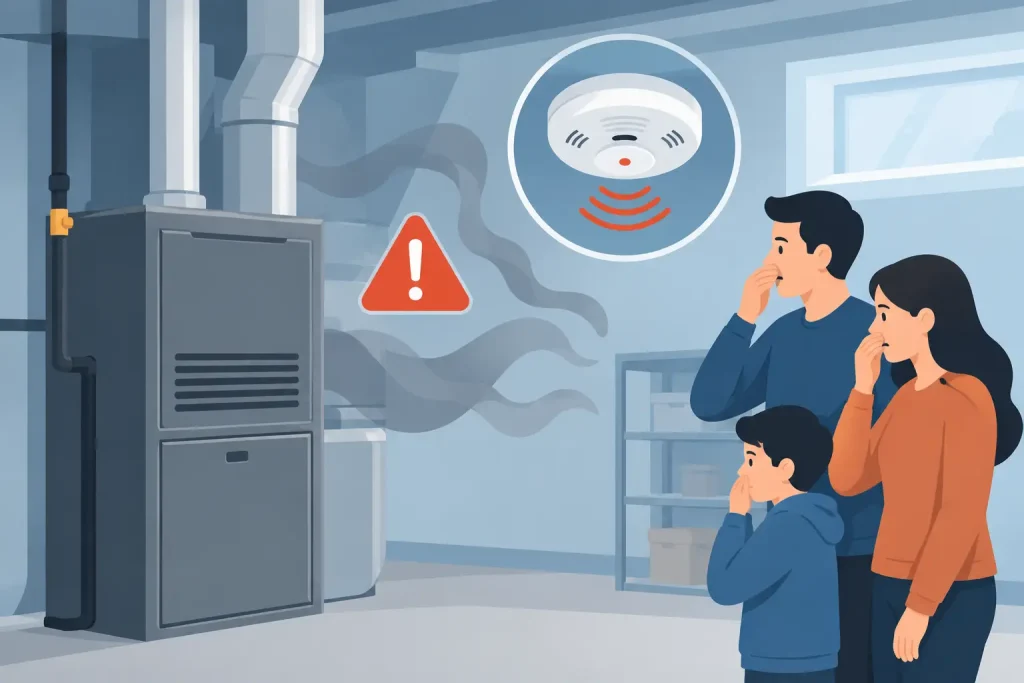
Loose panels and worn mounts can be simple repairs. Grinding or persistent buzzing can point to motor, compressor, or electrical trouble. Turn the system off and schedule service if the noise is loud, sudden, or accompanied by a burning smell.
7. Humidity Control Has Gotten Worse
During Maryland summers, cooling is not just about lowering the thermostat setting. Your system also needs to remove moisture from indoor air. If your home feels clammy even while the heat pump is running, the cause could be a dirty coil, clogged condensate drain, incorrect settings, or declining equipment performance.
Poor humidity control can make rooms feel warmer than they are and encourage concerns such as musty odors or excess moisture. A repair may restore performance, but an older unit that cannot manage comfort reliably may be ready for replacement.
8. The Repair Cost Is High Compared With the System’s Value
There is no single dollar amount that makes replacement automatic. The right decision depends on your unit’s age, repair cost, expected remaining life, efficiency, and comfort needs. A useful rule of thumb is this: when a major repair on an older heat pump costs a substantial portion of a new system, ask for replacement options before authorizing the work.
A professional estimate should be clear enough to compare both paths. You should understand what the repair addresses, whether other aging components remain at risk, and what a replacement would include. Fair advice is not about pushing a new system. It is about helping you avoid paying repeatedly for equipment that no longer serves the property well.
What to Check Before Replacing Your Heat Pump
Before making a final decision, have the full system evaluated. The outdoor unit is only one part of your comfort system. Indoor equipment, refrigerant lines, electrical connections, drainage, ductwork, filters, and thermostat controls can all affect how the heat pump performs.
Ask whether the current system is properly sized for the building. Bigger is not always better. An oversized heat pump may short cycle and remove less humidity, while an undersized one may run constantly and still fall behind. The best replacement is matched to the home’s layout, insulation, occupancy, duct system, and comfort priorities.
For landlords and commercial property operators, consider reliability alongside purchase price. A lower upfront cost can be appealing, but frequent tenant complaints, downtime, and repeated repairs can become more expensive over time. Choosing equipment and installation work that fits the property can protect both operating costs and occupant comfort.
How Maintenance Can Delay Replacement
Routine maintenance cannot make a heat pump last forever, but it can prevent avoidable wear. Seasonal service helps identify loose electrical connections, airflow problems, dirty coils, refrigerant concerns, and drainage issues before they become bigger repairs.
Homeowners can also help by changing filters on schedule, keeping outdoor equipment clear of leaves and debris, and reporting changes in performance early. Waiting until the unit quits completely usually limits your options.
If your heat pump is struggling, a prompt evaluation can bring clarity. ABC Cooling & Heating can assess the condition of the system, explain the repair and replacement options plainly, and help you choose the solution that protects comfort without spending more than necessary.