That damp, stale odor when your heat or air conditioning starts is more than an annoyance. If you are asking, “why does HVAC smell musty,” your system may be holding moisture, circulating odors from another source, or signaling a maintenance issue that needs attention. The good news is that many causes are manageable when they are identified early.
A musty HVAC smell is especially common during Maryland’s humid summers, after a system has been off for a while, or when a heat pump changes operating modes. The right next step depends on where the smell is coming from, when it occurs, and whether you notice other changes such as weak airflow, water near the equipment, or increased allergy symptoms.
Why Does HVAC Smell Musty When It Turns On?
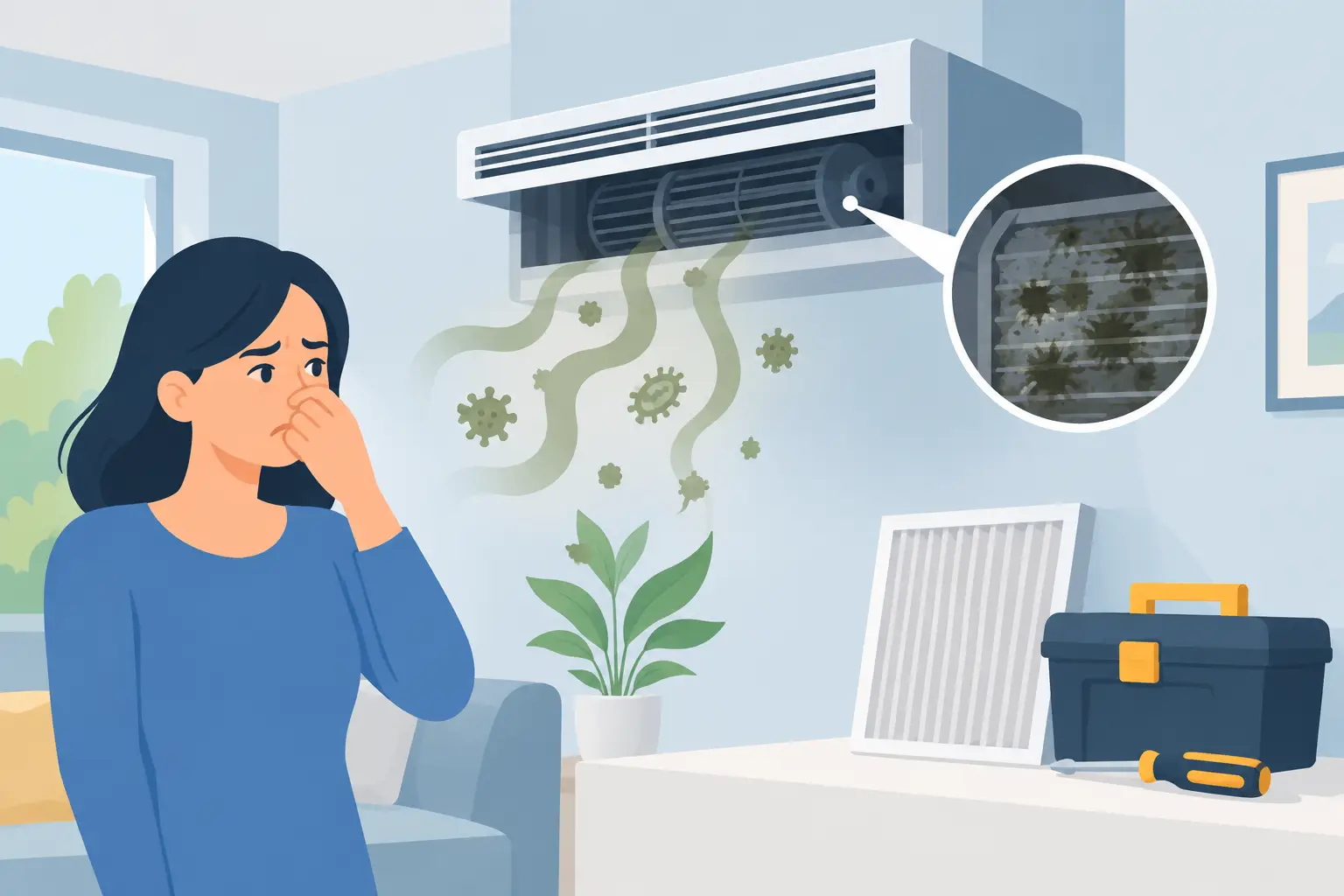
Your HVAC system moves air across cold evaporator coils, through ducts, and past filters before it reaches each room. Whenever warm, humid air meets a cold surface, condensation forms. Normally, that moisture drains away. When it does not, mold and mildew can grow on dust, insulation, drain components, or other organic material around the system.
The odor may be strongest during the first few minutes of a cooling cycle because the blower is picking up air from those damp areas. Sometimes the smell fades as the system runs. That does not necessarily mean the problem is gone. It may simply mean the moving air is diluting the odor.
A musty smell can also come from the building rather than the HVAC equipment itself. A damp basement, crawlspace, plumbing leak, wet carpet, or poorly ventilated bathroom can allow odors to enter return vents and spread through the home or business. A professional diagnosis should separate a system problem from a moisture problem elsewhere in the property.
Common Causes of a Musty HVAC Smell
A dirty evaporator coil
The indoor evaporator coil removes heat and humidity from your air. Over time, dust and debris can collect on its damp surface. That buildup gives mildew a place to grow, especially when the system has restricted airflow or has been running in high humidity.
Coil cleaning is not a simple spray-and-go task. The coil is delicate, access can be limited, and the drain system must also be checked. A technician can clean the coil properly while looking for the airflow or drainage issue that allowed the buildup in the first place.
A clogged condensate drain or drain pan
As your air conditioner cools the air, it produces condensation. That water should flow through a drain line and out of the system. If algae, dirt, or sludge block the line, water can back up into the drain pan. Standing water can create a musty odor and may eventually cause water damage or trigger a safety shutoff.
Look for water around the indoor unit, a full pan, or a drain line that appears to be leaking. Do not ignore these signs. A small drainage issue can become a larger repair if water reaches electrical components, ceilings, flooring, or finished walls.
A filter that is overdue for replacement
A clogged air filter does not usually create a musty smell by itself, but it can contribute to one. When airflow is restricted, the evaporator coil can stay wetter longer and collect more dirt. A dirty filter may also hold dust, pet dander, and odors that become noticeable whenever the blower runs.
Check the filter size, airflow direction, and recommended replacement schedule. In many homes, replacement every one to three months is appropriate, though homes with pets, smokers, construction dust, or heavy system use may need more frequent changes. Use the filter type recommended for your equipment rather than choosing the highest-rated filter available without considering airflow.
Mold or moisture in ductwork
Ducts can develop odor issues when humid air enters through leaks, damaged insulation, or poor connections near an attic, crawlspace, or basement. Dust inside ducts can also absorb odors from moisture problems elsewhere in the building.
Duct cleaning is not the automatic answer for every musty smell. If the underlying source is a wet drain pan, a leaking duct, or a damp crawlspace, cleaning alone may only provide temporary relief. The source of the moisture needs to be corrected first.
The system has been sitting unused
After a long period without air conditioning, light dust and humidity around the equipment can produce a brief stale odor at startup. If it disappears quickly and does not return, the cause may be minor. But an odor that lasts through multiple cycles, gets stronger, or returns every day deserves a closer look.
This is also why a seasonal tune-up is useful before the first stretch of hot weather. Maintenance gives a technician the opportunity to inspect coils, drains, filters, electrical components, and overall system performance before a small issue affects comfort.
What You Can Safely Check Before Calling for Service
Start with the simple items that do not require opening electrical panels or handling refrigerant. Replace a visibly dirty filter, confirm that supply and return vents are open, and look around the indoor unit for obvious water. If your thermostat has a fan setting, make sure it is set to Auto rather than On unless you intentionally want continuous air circulation.
A fan set to On can keep moving air over a damp coil between cooling cycles. In humid weather, that may reintroduce moisture into the air and make a musty odor more noticeable. Auto allows the blower to stop when the cooling cycle ends, which often supports better humidity control.
You can also pay attention to the pattern. Does the smell occur only with cooling, only when the fan starts, or throughout the day? Is it limited to one room? Is there visible moisture in a basement or utility area? These details help a technician find the source faster and avoid unnecessary work.
Avoid pouring harsh chemicals into the drain line, taking apart the air handler, or spraying cleaners into ducts without knowing what is causing the odor. Some products can damage components, create fumes, or mask the real problem instead of fixing it.
When a Musty HVAC Smell Needs Prompt Attention
Schedule service soon if the odor persists for more than a day or two, returns after you replace the filter, or is accompanied by weak cooling, poor airflow, water leaks, unusual noises, or a system that turns off unexpectedly. Landlords and property managers should act quickly when tenants report damp odors, since moisture concerns can affect both occupant comfort and the condition of the property.
Call promptly if you see visible mold around the equipment, notice water stains near ceilings or vents, or have household members with respiratory sensitivities who feel worse when the system runs. A musty smell is different from a burning, electrical, gas, or rotten-egg smell. Those odors can point to more urgent issues and should not be treated as routine maintenance concerns.
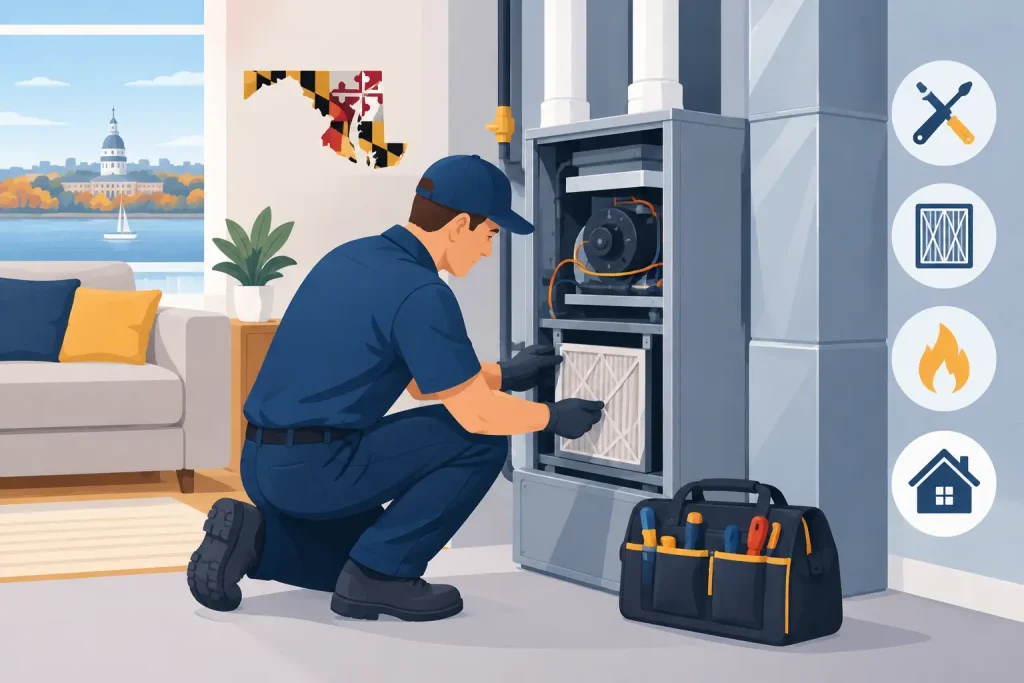
A qualified HVAC technician can inspect the evaporator coil, condensate system, blower compartment, duct connections, humidity performance, and surrounding areas. At ABC Cooling & Heating, the goal is to explain what is causing the smell clearly, recommend the repair that fits the condition of your system, and help you prevent the issue from returning.
Preventing Musty Odors From Coming Back
The most effective prevention is regular maintenance combined with good moisture control. Keep filters current, clear visible debris from around the indoor and outdoor equipment, and arrange seasonal service before heavy heating or cooling use. If your home feels sticky even when the air conditioner is running, ask whether the system is properly sized and controlling humidity as it should.
For some Baltimore-area homes, the answer may involve sealing duct leaks, correcting a drainage issue, improving ventilation, or addressing basement and crawlspace moisture. It depends on the building and the equipment. A clean, well-draining system should make your indoor air feel comfortable, not remind you that something damp is hiding behind the vents.
If the musty odor keeps returning, trust what your home is telling you. A timely inspection can protect your comfort now and help prevent a small moisture issue from becoming a more expensive repair later.