A furnace rarely picks a convenient time to fail. In Baltimore-area homes, a small issue such as a clogged filter or blocked vent can turn into weak heat, higher utility bills, or an urgent no-heat call when temperatures drop. These top furnace maintenance tips help homeowners, landlords, and property managers prevent common problems while knowing when a licensed technician needs to step in.
Start With the Furnace Tasks You Can Safely Handle
Regular attention does not replace professional service, but a few simple checks can protect airflow, comfort, and system efficiency. Before doing anything around the furnace, turn off power at the thermostat or service switch if you need to remove a panel. Never work on gas lines, wiring, burners, or internal components yourself.
Replace the air filter on schedule
A dirty filter is one of the most common reasons furnaces work harder than they should. Restricted airflow can cause uneven heating, frequent cycling, excess wear on the blower, and avoidable energy costs.
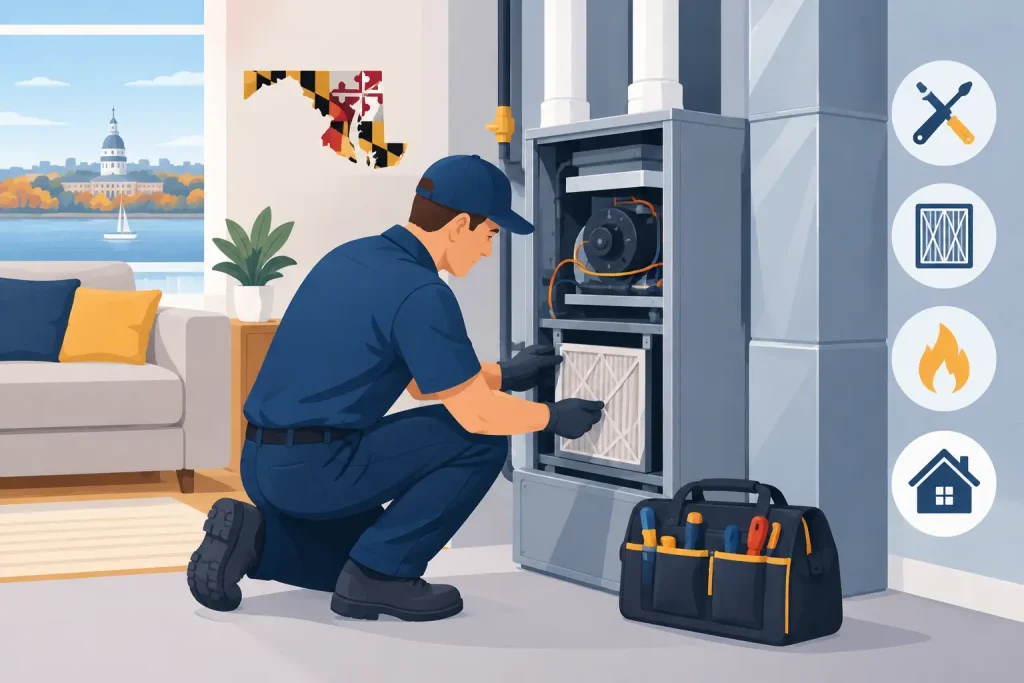
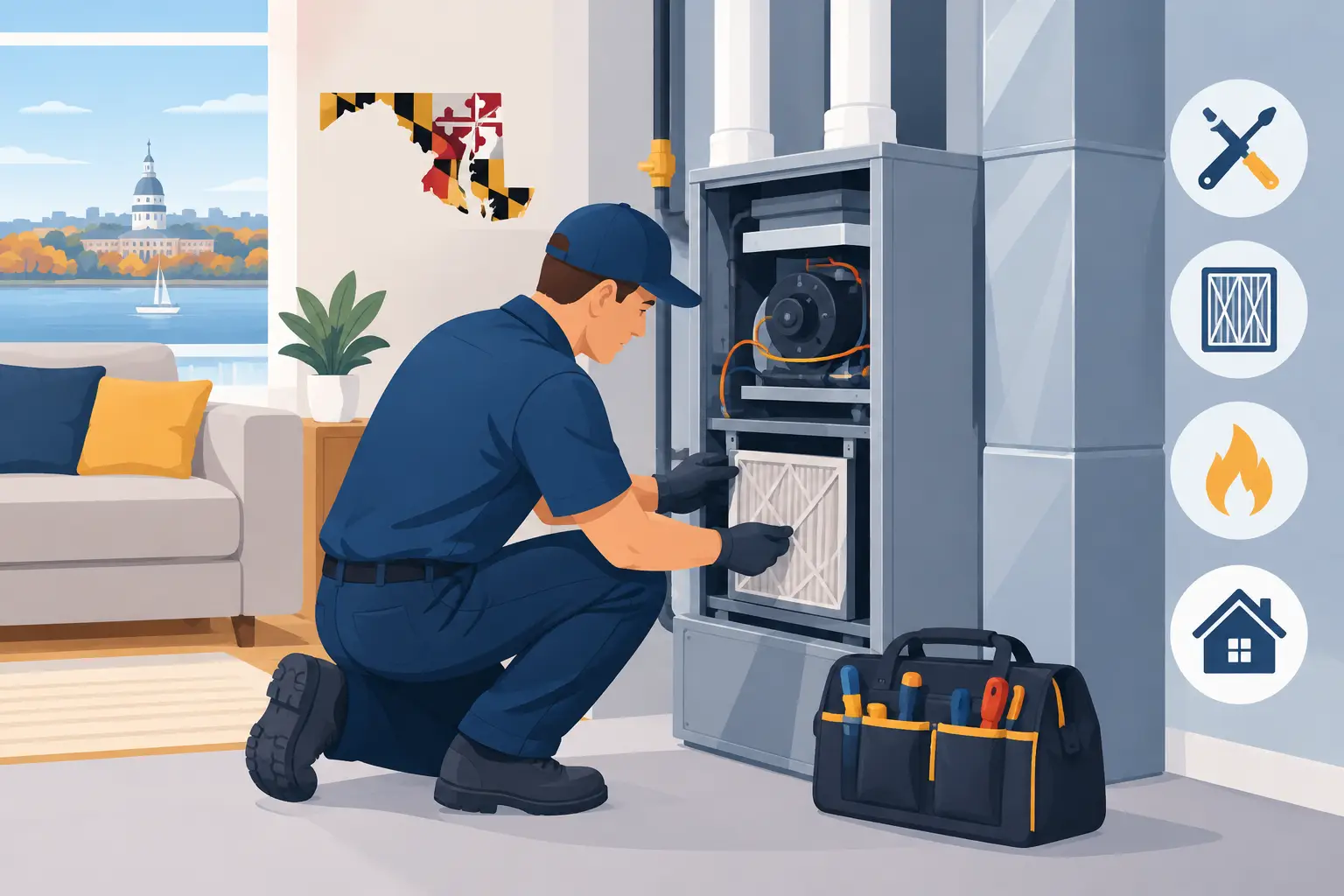
Check the filter every month during heating season. Many homes need a replacement every one to three months, although the right interval depends on the filter type, whether you have pets, household dust levels, and how often the system runs. Write the replacement date on the filter frame so it is easy to track.
Do not assume the highest-rated filter is automatically best for your equipment. Very dense filters can restrict airflow when the system is not designed for them. A technician can recommend an appropriate filter rating for your furnace and indoor air needs.
Keep vents and return grilles open and clear
Your furnace depends on balanced airflow through supply registers and return grilles. Walk through the home and make sure furniture, rugs, storage bins, and curtains are not blocking vents. Return grilles deserve special attention because they pull air back to the system.
Closing multiple vents to force heat into one room often creates more problems than it solves. It can raise static pressure in the ductwork and leave the furnace operating less efficiently. If certain rooms are consistently too cold, the cause may be a duct issue, thermostat location, insulation gap, or system sizing concern that deserves a professional evaluation.
Check the thermostat before assuming the furnace has failed
Set the thermostat to Heat and raise the temperature several degrees above the current room reading. If the screen is blank, replace the batteries if your model uses them and confirm the circuit breaker has not tripped.
A programmable thermostat can save energy, but extreme setbacks may not be practical for every household. A modest reduction while sleeping or away can help, especially in a well-insulated home. If you have a heat pump paired with a furnace, thermostat settings and auxiliary heat controls may require a different approach. Ask a technician before making major setting changes.
Keep the furnace area clean
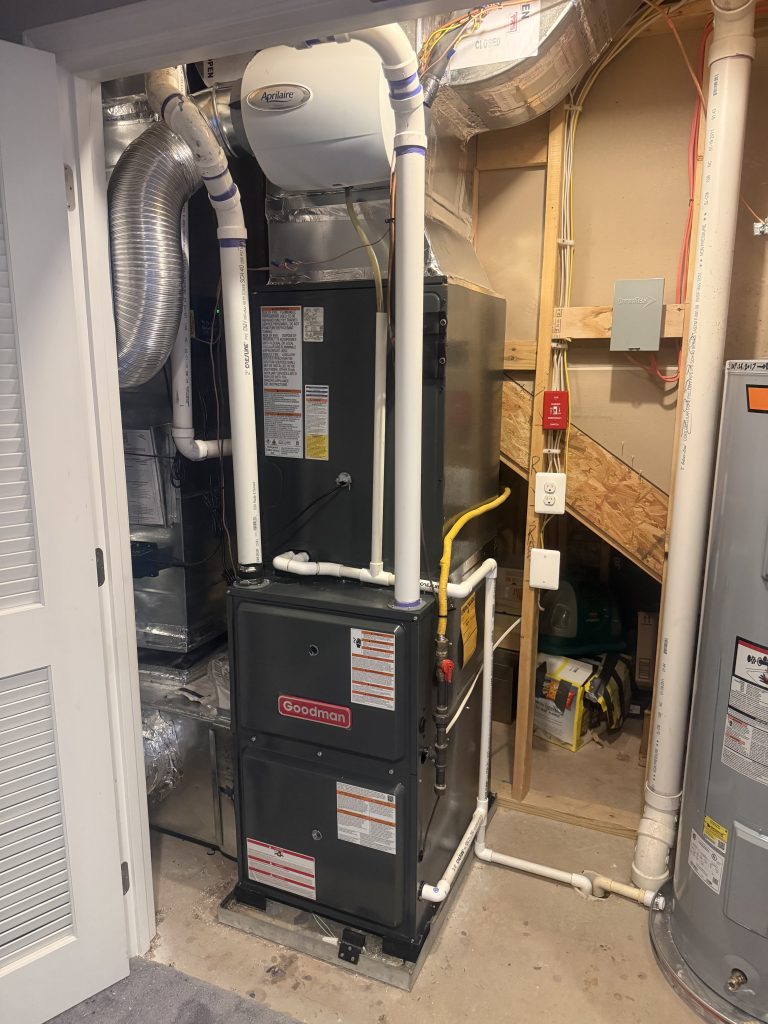
Leave clear space around the furnace. Do not store paint, gasoline, cleaning chemicals, cardboard, laundry, or other combustible items nearby. These materials can create fire risks, interfere with service access, and allow dust to collect around equipment.
For high-efficiency furnaces, inspect the exterior intake and exhaust pipes periodically. Leaves, snow, nests, or debris can block these pipes and cause shutdowns. Clear only visible obstructions from the outside opening. If you suspect a blockage inside the pipe or the furnace is displaying an error code, call for service rather than disassembling anything.
Top Furnace Maintenance Tips for Safety First
Comfort matters, but furnace maintenance is also a safety issue. A gas furnace produces combustion gases that must be vented properly. Problems with venting, the heat exchanger, or burner operation should always be handled by trained professionals.
Make sure carbon monoxide detectors are installed outside sleeping areas and on each appropriate level of the home. Test them monthly, replace batteries as directed, and replace the units when they reach the end of their manufacturer-rated service life. Smoke alarms should also be tested regularly.
If a carbon monoxide alarm sounds, or anyone in the building develops symptoms such as headache, dizziness, nausea, confusion, or unusual fatigue, get everyone outside immediately and call emergency services or the gas utility from a safe location. Do not re-enter until responders say it is safe.
A strong sulfur or rotten-egg odor may indicate a gas leak. Leave the building, avoid operating lights, appliances, switches, or phones inside, and call the gas utility or emergency services from outdoors. Do not try to locate the leak or restart the furnace.
Other warning signs are less urgent but still require prompt service. These include soot around the furnace, persistent burning odors after the first seasonal startup, rumbling or booming at ignition, a yellow or flickering burner flame, water pooling around the unit, or repeated breaker trips. A brief dusty smell when heating begins after a long break can be normal. An odor that persists is not something to ignore.
Schedule Professional Furnace Service Every Year
The best time for annual furnace maintenance is early fall, before the system is working daily. That timing gives you a better chance to address developing problems before cold weather makes a repair more urgent. However, service at any point in the heating season is better than skipping it.
A professional maintenance visit is more than a quick filter change. A licensed technician can inspect electrical connections, test safety controls, check ignition and burner operation, inspect the venting system, assess airflow, clean key components as needed, and look for signs of wear that may lead to a breakdown.
For gas furnaces, the technician can also evaluate combustion-related components and identify conditions that should not be handled as a homeowner project. This matters even more for rental properties and small commercial spaces, where one furnace problem can affect multiple occupants, business operations, and maintenance responsibilities.
Annual service does not guarantee that no part will ever fail. Furnaces contain mechanical and electrical components that wear over time. What maintenance does provide is a clearer picture of the system’s condition, better operating efficiency, and an opportunity to make planned repairs instead of rushed decisions during a cold snap.
Watch for Changes in Performance and Energy Use
A furnace usually gives warning signs before it stops completely. Pay attention when heating cycles become longer, rooms heat unevenly, the blower runs constantly, or the system starts and stops more often than usual. New noises matter too. Rattling can point to a loose panel or duct issue, while squealing, grinding, or repeated clicking may indicate a component that needs attention.
Compare utility bills with the same period last year when possible. A jump in cost can be caused by colder weather or changes in energy rates, so it does not always mean the furnace is failing. But higher bills combined with poor comfort or frequent cycling are worth investigating.
Older furnaces also need realistic attention. If repairs are becoming frequent, parts are hard to source, or the system cannot keep the building comfortable, a repair may not be the most cost-effective choice. The right decision depends on the repair cost, the furnace’s condition and age, efficiency goals, and plans for the property. A clear assessment should explain both repair and replacement options without pressure.
Do Not Skip the Rest of the Heating System
The furnace is only one part of a home’s heating performance. Leaky ductwork, poor insulation, unsealed windows, and a neglected humidifier can all affect comfort. If the furnace seems to run but bedrooms remain cold, the answer may not be a larger furnace. Oversizing equipment can create short cycling and uneven temperatures.
Property owners should also check that exterior vents, basement access, and mechanical rooms remain accessible before a service appointment. Clearing a path helps technicians diagnose the issue faster and complete work efficiently.
For dependable heat, treat small changes as useful information rather than waiting for a complete breakdown. A fresh filter, clear vents, working carbon monoxide alarms, and annual professional service give your furnace the best chance to carry your home or property through a Maryland winter. If something does not sound, smell, or perform right, ABC Cooling & Heating can provide a clear diagnosis and help restore comfort without unnecessary guesswork.