A puddle near your indoor AC unit, a water stain spreading across the ceiling, or a musty smell from a utility closet can all point to the same issue: condensate water is not draining correctly. Knowing how to stop AC condensate leaks quickly can protect your floors, drywall, and equipment, especially during Baltimore-area summer humidity when air conditioners remove a significant amount of moisture from the air.
Condensate leaks are common, but they should never be ignored. The water itself is usually not dangerous, yet the damage it causes can become expensive if it reaches insulation, ceilings, electrical components, or finished living spaces. Some drain issues have a simple fix. Others need a licensed HVAC technician to prevent a repeat leak or damage to the system.
Why Your Air Conditioner Produces Condensate
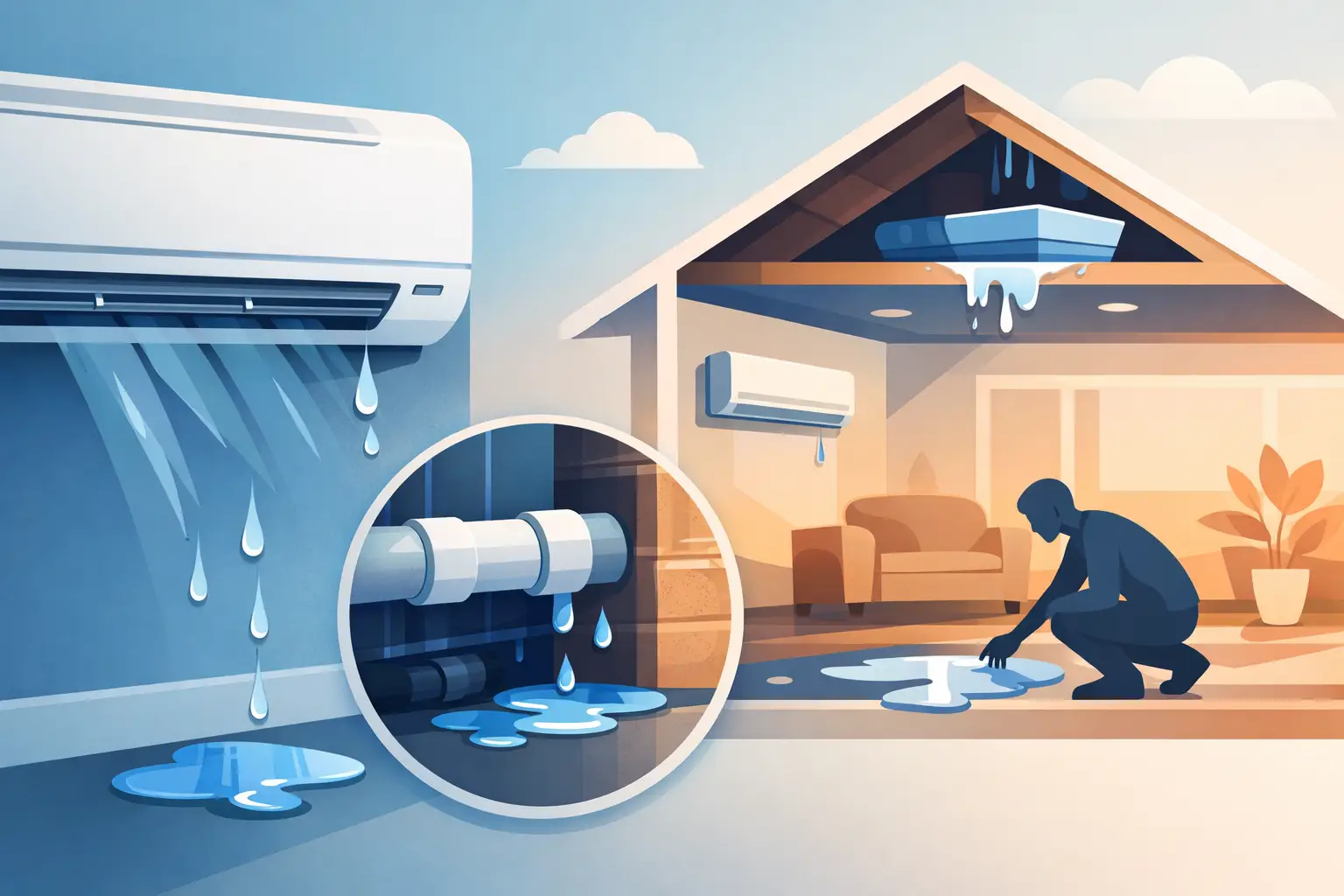
Your air conditioner does more than cool the air. As warm indoor air passes over the cold evaporator coil, moisture in that air turns into water droplets. Those droplets collect in a drain pan and flow through a condensate drain line to a safe discharge point outside, near the system, or into a plumbing drain.
In Maryland’s humid weather, a central AC system can produce several gallons of water in a day. That is normal. Water leaking from the indoor unit, furnace cabinet, air handler, or ceiling is not. It usually means the drain path is blocked, damaged, disconnected, or overwhelmed.
Stop AC Condensate Leaks: What to Do First
Start by protecting the area around the leak. Place towels, a shallow pan, or a bucket beneath dripping water if it is safe to do so. Move furniture, rugs, boxes, and electronics away from the affected area.
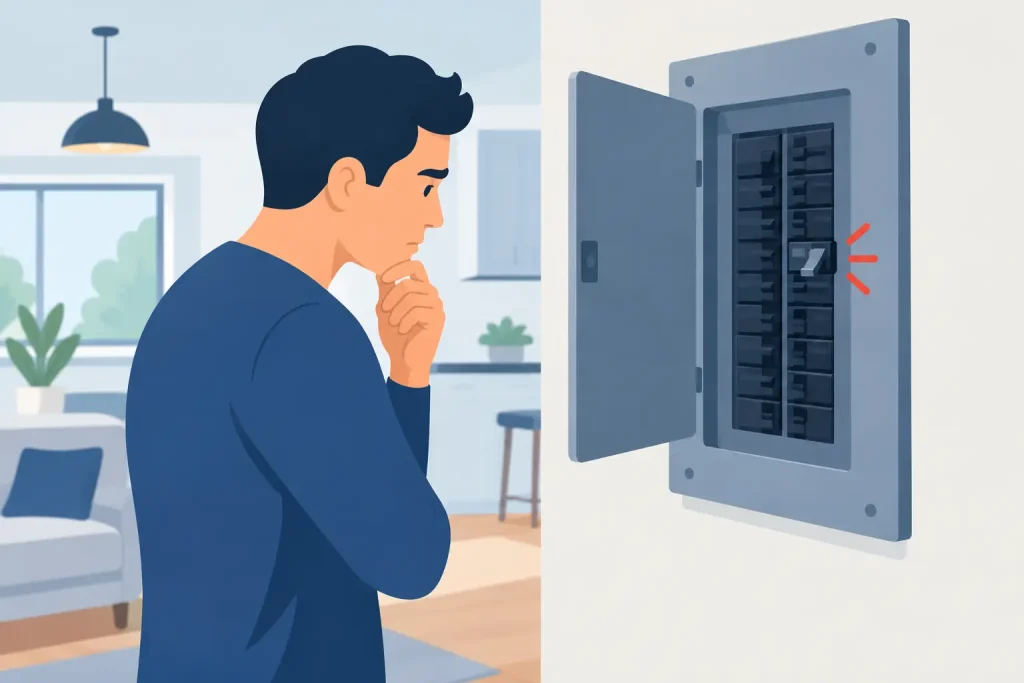
If water is close to electrical wiring, outlets, a breaker panel, or the HVAC equipment’s electrical connections, turn the system off at the thermostat and avoid touching wet components. A ceiling that is sagging or heavily saturated also needs prompt attention, since water can travel farther than the visible stain suggests.
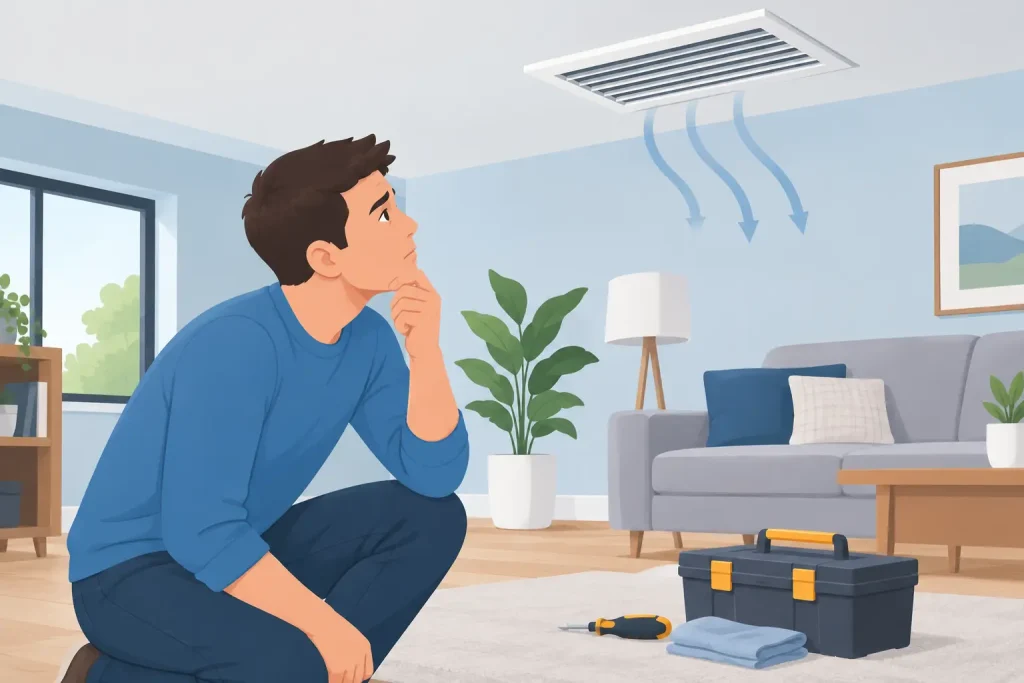
Next, look for the source. Condensate leaks often occur around the indoor air handler, the furnace cabinet when the AC coil sits above it, a condensate pump, or a drain pipe near the system. Do not assume every AC-related leak is condensation. A roof leak, plumbing leak, or frozen coil can create similar symptoms and requires a different repair.
The Most Common Causes of Condensate Leaks
A clogged condensate drain line
A clogged drain line is the most frequent cause. Algae, mildew, dust, rust particles, and slime can build up inside the pipe over time. When water cannot move through the line, it backs up into the drain pan and eventually spills over.
You may notice slow dripping, standing water near the indoor unit, or an AC system that shuts off unexpectedly. Many newer systems have a float safety switch that turns the equipment off when the drain backs up. That shutdown is frustrating during a heat wave, but it can prevent a much larger leak.
A cracked or rusted drain pan
The primary drain pan sits beneath the evaporator coil, where it is not always easy to inspect. Over time, metal pans can corrode and plastic pans can crack. If the pan is damaged, water may leak even when the drain line is clear.
A secondary or emergency pan may be installed beneath an attic air handler. Water in that pan is a warning sign, not a problem solved. It means the primary drainage system needs attention before the secondary pan overflows into the ceiling below.
A disconnected, loose, or poorly sloped drain pipe
Drain pipes need secure fittings and the right slope to carry water away by gravity. A loose connection can drip at the joint, while a sagging or improperly installed section can trap water and create recurring clogs.
This is especially common after renovations, equipment replacement, or accidental contact with exposed piping in a basement, utility room, or mechanical closet. Reattaching a pipe may look simple, but improper sealing or slope can send water right back where it does not belong.
A failed condensate pump
When a system is located below the available gravity drain, it may rely on a condensate pump. The pump collects water in a small reservoir and pushes it through tubing to a drain location. If the pump loses power, the float sticks, the discharge tube clogs, or the motor fails, the reservoir can overflow.
A humming pump that does not move water, or a reservoir filled to the top, is a good reason to schedule service. Pumps are relatively small components, but a failure can create substantial water damage.
A frozen evaporator coil
Ice on the indoor coil can eventually melt faster than the drain system can handle, causing overflow. Restricted airflow from a severely dirty filter, a blocked return, blower problems, or low refrigerant can contribute to coil freezing.
If you see ice, turn the cooling mode off and set the fan to ON if your thermostat allows it. Do not chip at the ice or restart cooling before the cause is identified. Continuing to run a frozen system can damage the compressor and leave you with a much larger repair.
Safe Troubleshooting You Can Handle
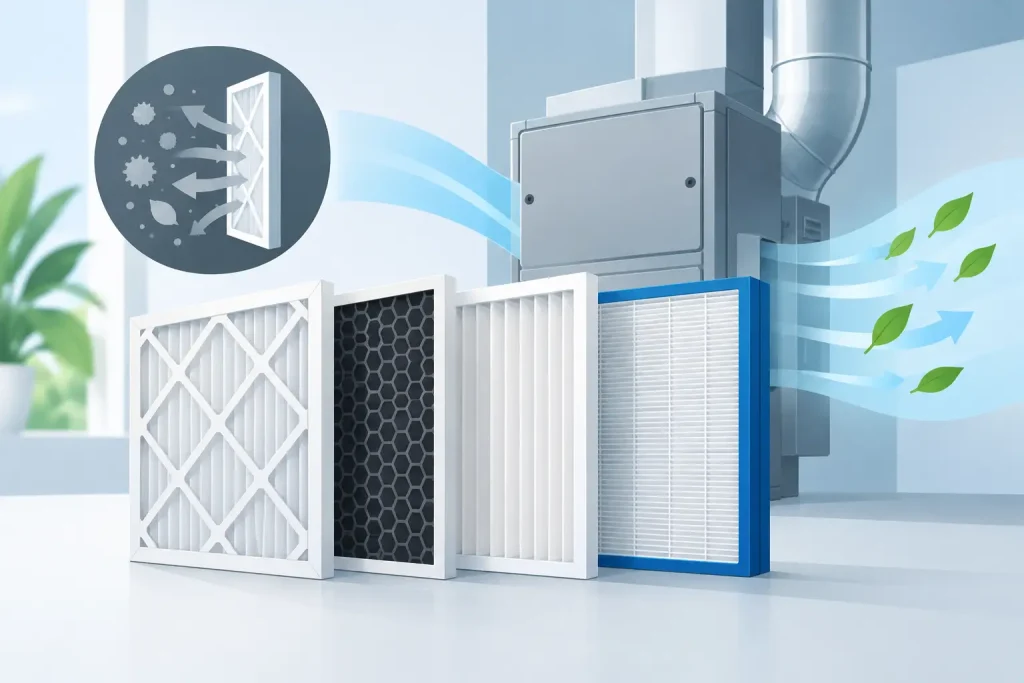
Homeowners and property managers can take a few low-risk steps before calling for help. First, replace a visibly dirty air filter with the correct size and type. A clean filter supports airflow and helps reduce the risk of a frozen coil.
If you can clearly identify the outdoor end of the condensate drain line, a wet/dry vacuum can sometimes remove a minor clog. Seal the vacuum hose around the drain opening as well as possible and run it for a minute or two. You may pull out dirty water or debris. Check the indoor unit afterward for signs that water is draining normally.
Do not force objects, wire, or high-pressure air into the line. That can crack fittings, disconnect a joint inside a wall, or push a blockage deeper into the system. Avoid pouring harsh chemicals into the drain as well. Some products can damage drain components or create fumes in the home. Your equipment manufacturer may have specific maintenance guidance, so when in doubt, leave drain cleaning to a technician.
If the leak is coming from the pan, the cabinet, a pump, or a ceiling, basic troubleshooting is no longer enough. Turn the system off if water is actively spreading and arrange service promptly.
When to Call an HVAC Professional
A professional diagnosis is the right choice when the same condensate leak returns, water is appearing in an attic or ceiling, the drain line is inaccessible, or the system shuts down because of a float switch. It is also necessary if the coil is frozen, refrigerant may be low, or a condensate pump is not working.
A qualified technician can clear the drain line thoroughly, inspect the trap and pipe slope, test safety switches, check the drain pans, and identify whether poor airflow or a mechanical issue is causing the problem. That process matters because clearing the visible clog without addressing the reason it formed can lead to another leak days or weeks later.
For landlords and commercial property operators, quick response is particularly valuable. Water near tenant spaces, inventory, offices, or electrical equipment can disrupt more than comfort. Document the affected area, protect property where possible, and have the HVAC system inspected before putting it back into regular operation.
Preventing Future AC Drain Problems
The best way to stop AC condensate leaks from becoming an emergency is routine maintenance. During an AC maintenance visit, a technician can clean the condensate drain, inspect the pan and pump, verify proper drainage, check the coil, and make sure the system is removing humidity as intended.
Between visits, change filters on schedule and occasionally check the area around your indoor unit for dampness, rust, or musty odors. Keep the drain outlet outside free from mulch, leaves, and soil. If your system has a visible safety switch or condensate pump, ask your technician to show you what normal operation looks like.
ABC Cooling & Heating helps homeowners and property managers in Baltimore and nearby communities identify the actual source of AC water leaks and make practical repairs without guesswork. A small amount of moisture around an air conditioner can be an early warning. Address it now, and you are far more likely to keep a drain issue from becoming a damaged ceiling or an interrupted day.