
A furnace can keep a Maryland home comfortable through a cold snap, but a malfunctioning fuel-burning system can create a serious safety concern. Furnace carbon monoxide risks are highest when combustion, venting, or heat exchanger problems allow this invisible gas to enter the living or working space instead of safely exiting outdoors.
Carbon monoxide, often called CO, has no color, odor, or taste. That is why homeowners should never rely on smell alone to judge whether a furnace is operating safely. Knowing what can cause a problem, what warning signs to watch for, and when to leave the building can protect everyone inside.
How a Furnace Can Produce Carbon Monoxide
Natural gas, propane, and oil furnaces create heat by burning fuel. When the system is properly installed, adjusted, and vented, the combustion gases travel through the heat exchanger and out through the flue or vent pipe. Carbon monoxide becomes a concern when that process is incomplete or when exhaust cannot safely leave the building.
A cracked or deteriorated heat exchanger is one possible cause. The heat exchanger separates combustion gases from the air that circulates through your ductwork. A crack, corrosion, or failed seam can allow combustion byproducts to mix with indoor air. This is not a repair homeowners should try to diagnose or fix themselves.
Blocked, disconnected, damaged, or improperly sized venting can also create dangerous conditions. Bird nests, debris, ice, rust, loose connections, and changes made during a renovation can interfere with proper exhaust flow. High-efficiency furnaces have different venting requirements than older conventional models, so using the wrong materials or installation method can create problems even if the furnace appears to run.
Poor combustion is another concern. A dirty burner, incorrect gas pressure, inadequate combustion air, or a failing inducer motor can prevent the furnace from burning fuel as designed. In some cases, a unit may cycle on and off, make unusual noises, or fail to provide consistent heat. In other cases, there may be few obvious clues without professional testing.
Furnace Carbon Monoxide Risks Are Not Always Obvious
A carbon monoxide leak does not always come with a dramatic furnace breakdown. Some systems continue heating while a venting or combustion issue develops in the background. That is why annual furnace maintenance is a practical safety measure, not just a way to avoid a no-heat call in January.
Be alert to changes around the furnace. Soot or dark staining near the unit, rust on vent pipes, moisture around the flue, a flame that looks yellow or flickers when it should be mostly blue, and persistent condensation on nearby windows can all warrant an inspection. These signs do not prove that carbon monoxide is present, but they should not be ignored.
Other warning signs can affect the people in the building. Headache, dizziness, nausea, weakness, chest discomfort, confusion, and flu-like symptoms can occur with carbon monoxide exposure. Symptoms may improve after someone leaves the house and return after they come back inside. Young children, older adults, pregnant people, and anyone with heart or breathing conditions can be especially vulnerable.
Do not try to use symptoms as a carbon monoxide test. CO alarms are the reliable first line of warning, and a licensed HVAC technician can test combustion and venting equipment. If multiple people or pets feel ill at the same time, treat the situation seriously.
What to Do When a CO Alarm Sounds
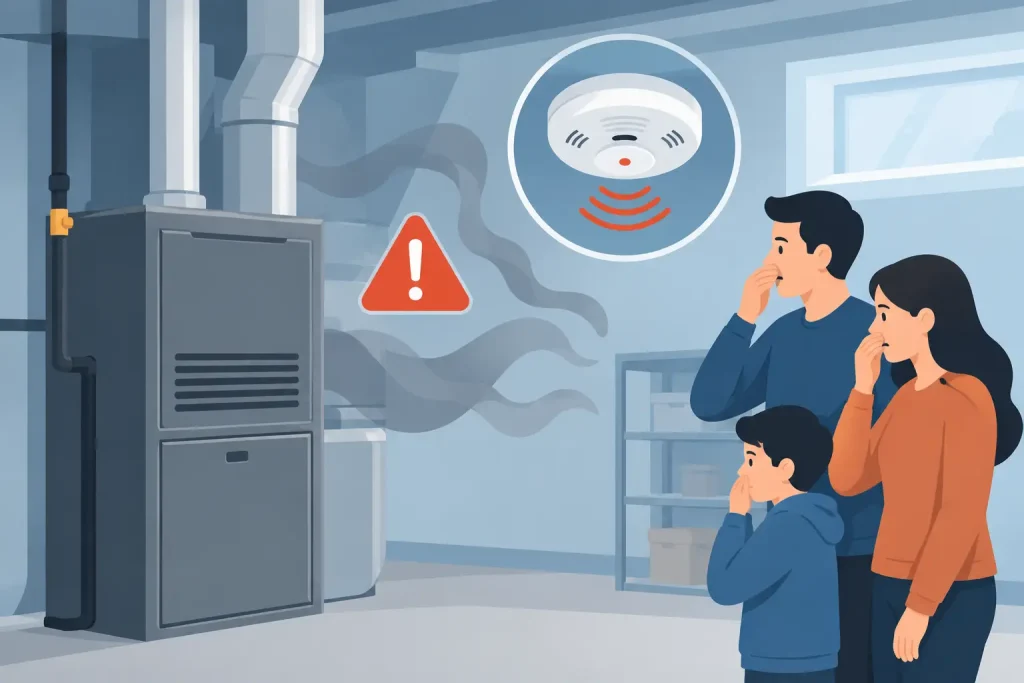
If a carbon monoxide alarm sounds, move everyone outside or to fresh air immediately. Call 911 or your local fire department from outside, especially if anyone feels sick, dizzy, confused, or short of breath. Do not assume the alarm is faulty, and do not reenter the building until emergency responders say it is safe.
Once the immediate safety issue has been addressed, arrange for a qualified HVAC inspection before operating the furnace again. A technician should identify the source of the CO concern rather than simply restart the system. Depending on the findings, the solution may involve vent repair, burner adjustment, a component replacement, or furnace replacement if the heat exchanger or other major safety-critical part has failed.
Never remove alarm batteries, silence an alarm repeatedly, or open windows and continue using the furnace as though the issue has passed. Fresh air may reduce the concentration temporarily, but it does not correct the source.
Carbon Monoxide Alarms Matter as Much as Furnace Service
Every home with fuel-burning equipment should have working carbon monoxide alarms. Install them according to the manufacturer instructions and applicable local requirements, with alarms near sleeping areas and on each level of the home. A finished basement, attached garage, fireplace, gas water heater, or gas range can also create CO risks separate from the furnace.
Test alarms regularly and replace batteries when required by the manufacturer. Pay attention to the alarm’s expiration date as well. CO sensors do not last forever, and an older alarm may no longer offer dependable protection even if it still appears to work during a basic button test.
A plug-in or battery-operated alarm is valuable, but it is not a substitute for maintaining the heating system. Think of it like a smoke alarm: it provides an early warning, while proper service helps reduce the chance of an emergency in the first place.
Preventing Carbon Monoxide Problems Before Heating Season
The most effective approach is to have a licensed professional inspect the furnace before heavy winter use. During a proper maintenance visit, the technician can inspect the burners, heat exchanger, flue connections, venting path, safety controls, filters, electrical components, and overall operation. Combustion testing can help reveal issues that are not visible from the outside of the unit.
Homeowners can support safe operation between visits by replacing filters on schedule, keeping the furnace area clear, and making sure vents and outdoor termination points are not blocked. Do not store paint, gasoline, cleaning chemicals, boxes, or laundry near the furnace. Restricted airflow and flammable clutter create separate hazards and make service more difficult.
If you have recently replaced windows, remodeled a basement, sealed up drafty areas, or added another gas appliance, it is worth asking an HVAC professional to evaluate combustion air and venting. Tighter buildings can change the way appliances draw air. The right solution depends on the furnace type, the home layout, and the existing vent system.
Special Considerations for Landlords and Property Managers
For rental homes and small commercial properties, carbon monoxide safety requires a consistent plan rather than a response after a tenant reports a problem. Schedule seasonal heating maintenance, document alarm testing and replacement dates, and give occupants clear instructions for what to do if an alarm sounds.
Prompt repairs matter. A tenant reporting a yellow flame, repeated furnace shutdowns, soot, or physical symptoms should receive a professional response quickly. Waiting for a complete heating failure can turn a manageable service call into a safety issue and a more disruptive repair.
Older properties may need closer attention because vent connectors, chimneys, and furnace components can corrode over time. Age alone does not mean a furnace is unsafe, but it does mean maintenance and accurate diagnosis become more valuable.
When to Call for Furnace Service
Call for professional furnace service if your CO alarm sounds, you see damage to venting, the furnace is producing soot, the flame appearance has changed, or the system is heating inconsistently. You should also schedule service if the unit has not been maintained in the past year.
ABC Cooling & Heating helps homeowners and property managers in Baltimore-area communities identify heating issues clearly and address them with dependable workmanship. A technician can explain what was found, what repair is needed, and whether replacement should be considered based on safety, condition, and long-term value.
A warm home should also be a safe one. If something about your furnace, venting, or carbon monoxide alarm does not feel right, trust that concern and have the system checked before the next cold night puts it under heavier demand.