A Baltimore-area summer can make a home feel sticky long before it feels truly hot. Finding the best thermostat settings for summer means balancing comfort, humidity control, energy use, and the workload placed on your air conditioner. The right number is not always the lowest one.
For most households, 78 degrees is a practical starting point when people are home and awake. That setting can help control cooling costs while keeping the system from running harder than necessary during Maryland’s hot, humid afternoons. From there, adjust based on your home’s humidity level, insulation, sun exposure, and the needs of the people inside.
The Best Thermostat Setting for Summer at Home
A thermostat setting of 78°F is commonly recommended for occupied homes in summer. It is warm enough to reduce the difference between indoor and outdoor temperatures, which can lower the demand on your AC system. It is also cool enough for many people to stay comfortable when ceiling fans are running.
That said, comfort is personal. A household with young children, older adults, pets, or health concerns may be more comfortable at 74°F to 76°F. If you need to set the temperature lower, do it because it improves safety or daily comfort, not because you expect the home to cool faster. Setting a thermostat to 65°F will not make an air conditioner cool the house more quickly. It simply tells the system to run longer, which can raise costs and put more wear on the equipment.
Humidity changes the equation in our area. A home at 78°F with high indoor humidity can feel much warmer than a home at 78°F with balanced humidity. If your home feels clammy even when the AC is running, the problem may not be the temperature setting. It could point to an oversized system, dirty filter, airflow issue, refrigerant concern, or a dehumidification need.
Best Thermostat Settings for Summer When You Are Away
When the house is empty for several hours, raise the thermostat rather than shutting the AC off completely. A setting around 82°F to 85°F is usually a sensible range for a vacant home during the day. This limits unnecessary cooling while preventing extreme indoor heat and moisture from building up.
For a weekend trip or longer vacation, many homeowners choose 80°F to 85°F, depending on whether pets, plants, temperature-sensitive belongings, or anyone checking on the property will be inside. In particularly humid Maryland weather, avoid letting the house get excessively warm for long periods. Higher indoor temperatures can allow moisture to accumulate, making the home uncomfortable when you return and potentially encouraging mold growth in damp areas.
Landlords and property managers should also consider the building itself. Vacant units with poor airflow, older windows, or top-floor sun exposure may need a more moderate setting to control moisture and protect finishes. There is no single vacation setting that fits every property.
What to Set the Thermostat at Night
Many people sleep better in a cooler room, so a nighttime setting between 72°F and 76°F is common. If lowering the thermostat helps you sleep, it can be a reasonable choice, especially if you offset it with a slightly higher daytime setting.
Before dropping the temperature several degrees, try improving airflow in the bedroom. Ceiling fans, clean supply vents, open interior doors, and appropriate window coverings can make a noticeable difference. A fan does not lower the air temperature, but it moves air across your skin and can make the room feel cooler. Turn fans off when the room is empty so they do not waste electricity.
If one bedroom is consistently much hotter than the rest of the home, the thermostat may not be the real issue. Uneven cooling can result from blocked vents, leaky ductwork, poor attic insulation, an undersized system, or a thermostat located in an unrepresentative part of the house.
Use a Schedule, Not Constant Adjustments
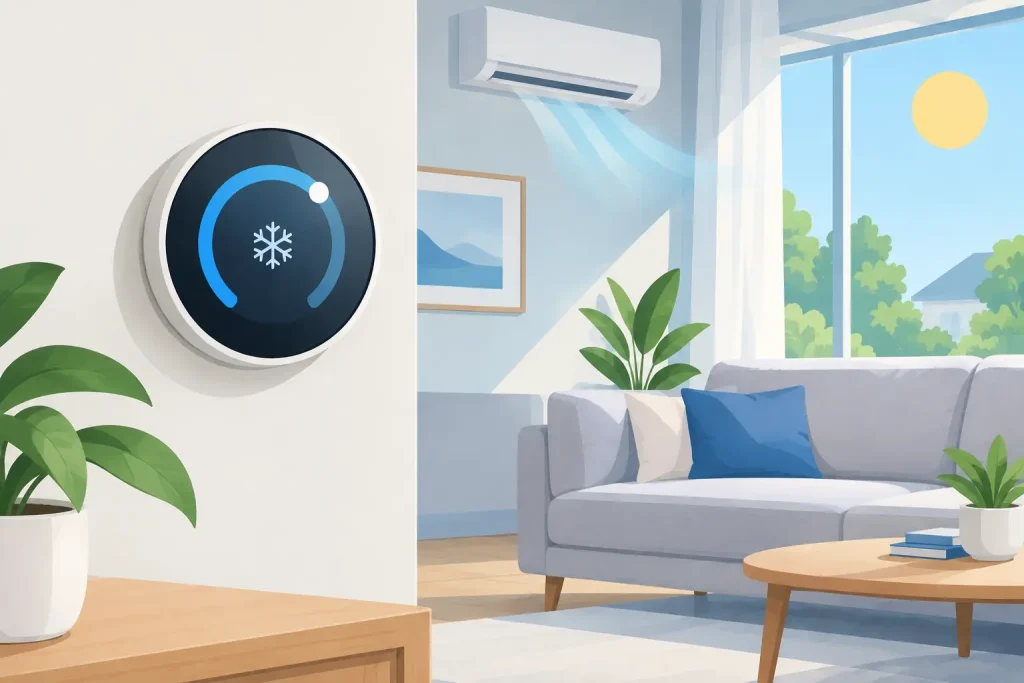
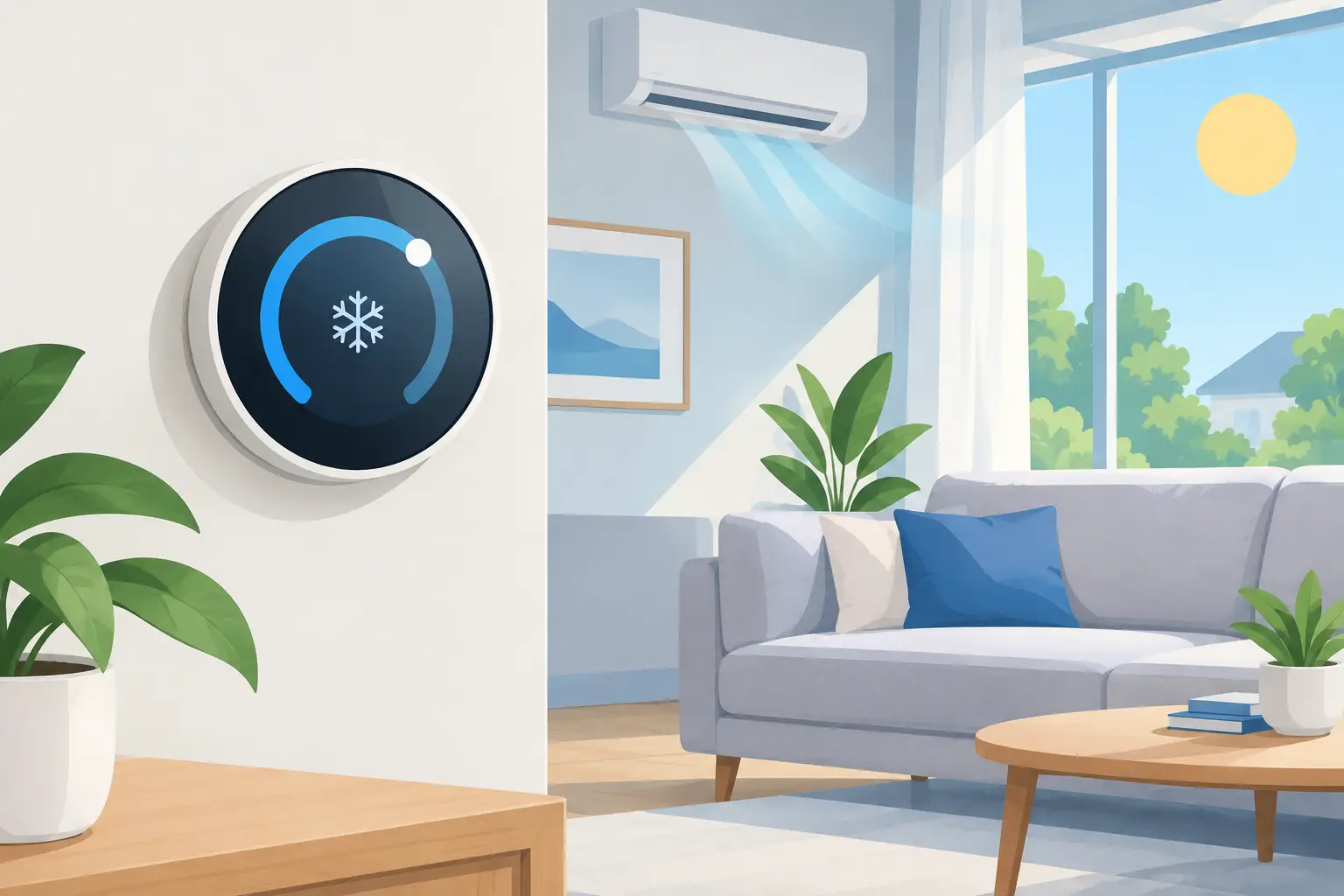
The best thermostat settings for summer work better when they follow your routine. Constantly changing the temperature throughout the day can be frustrating, and it may not deliver the savings you expect. A programmable or smart thermostat can automatically maintain a comfortable schedule without requiring daily attention.
For a typical weekday, try 78°F while the home is occupied, 82°F to 85°F while everyone is away, and a modest reduction at night if needed for sleep. Make changes gradually. A difference of 2°F to 4°F is often enough to improve efficiency without coming home to a hot, humid house that takes hours to recover.
Smart thermostats can be especially helpful for property managers and busy homeowners because they provide consistent scheduling and may alert you to unusual temperature changes. However, the thermostat itself cannot correct mechanical problems. If your AC runs continuously, fails to reach the set temperature, or produces weak airflow, scheduling needs to take a back seat to a professional inspection.
Ways to Feel Cooler Without Lowering the Thermostat
Lowering the thermostat is only one way to improve summer comfort. Your home can often feel cooler at a higher setting when heat and humidity are kept under control. Focus on the conditions around the system as well as the setting on the wall.
Keep blinds or curtains closed on sunny windows during the hottest part of the day. Replace a dirty air filter regularly, since restricted airflow makes cooling less effective and can strain the equipment. Keep supply vents open and clear of furniture, rugs, and boxes. Closing too many vents can increase pressure in the duct system and create uneven temperatures rather than saving energy.
Outdoor maintenance matters, too. The condenser needs open space around it to release heat. Grass, leaves, and overgrown shrubs can interfere with airflow. A clean, properly maintained system has a better chance of keeping up during a heat wave without running excessively.
When a Low Setting Signals an AC Problem
If your thermostat has to be set to 68°F or 70°F just to make the house feel tolerable, it is worth looking beyond personal preference. A well-functioning cooling system should provide reliable comfort at a reasonable setting. Needing an unusually low number may indicate that the system is not removing enough humidity or distributing cool air evenly.
Watch for warning signs such as warm air from vents, short cycling, ice on refrigerant lines, water around the indoor unit, unusual noises, or a sudden jump in utility bills. A dirty coil, clogged drain, failing capacitor, refrigerant leak, or duct issue can all affect comfort. Ignoring these signs can turn a repairable concern into a breakdown during the hottest week of the season.
ABC Cooling & Heating helps homeowners and property managers across the Baltimore area diagnose cooling problems clearly and make practical recommendations based on the system and the property. Fast service is especially valuable when an AC unit cannot keep up with summer heat.
A Comfortable Setting Should Not Require Guesswork
There is no prize for keeping your thermostat as high as possible, and there is no benefit to forcing it lower than your system can reasonably maintain. Start at 78°F when you are home, adjust for humidity and household needs, and use a higher setting when the property is empty. If comfort still feels out of reach, the most useful next step may be an AC maintenance visit rather than another thermostat adjustment.
A properly operating air conditioner should make summer days manageable, even when Maryland heat and humidity are at their worst.