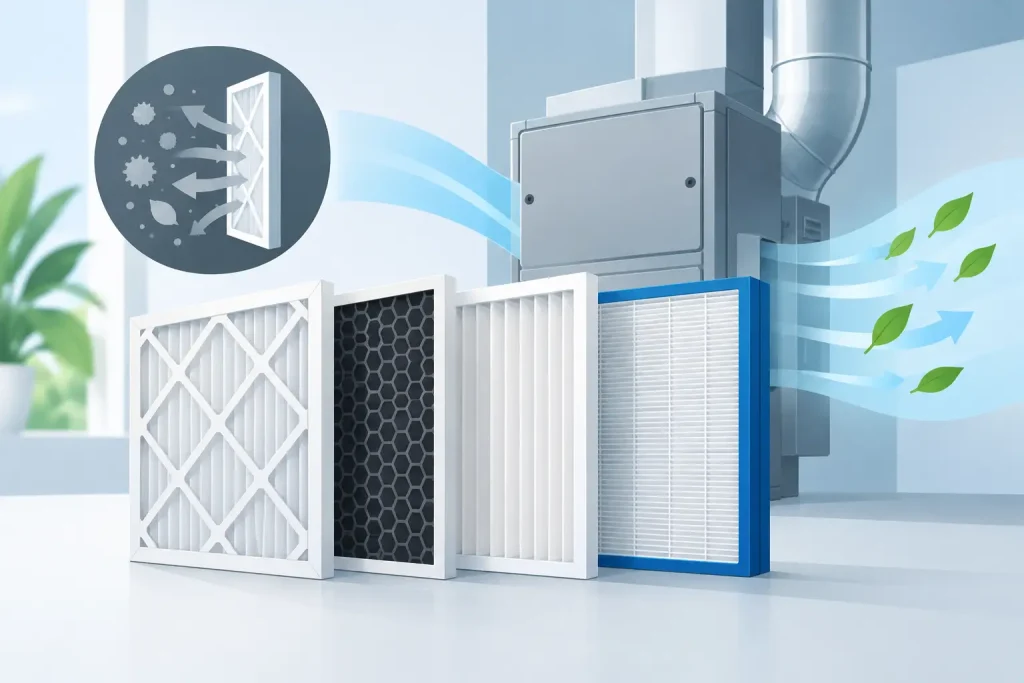
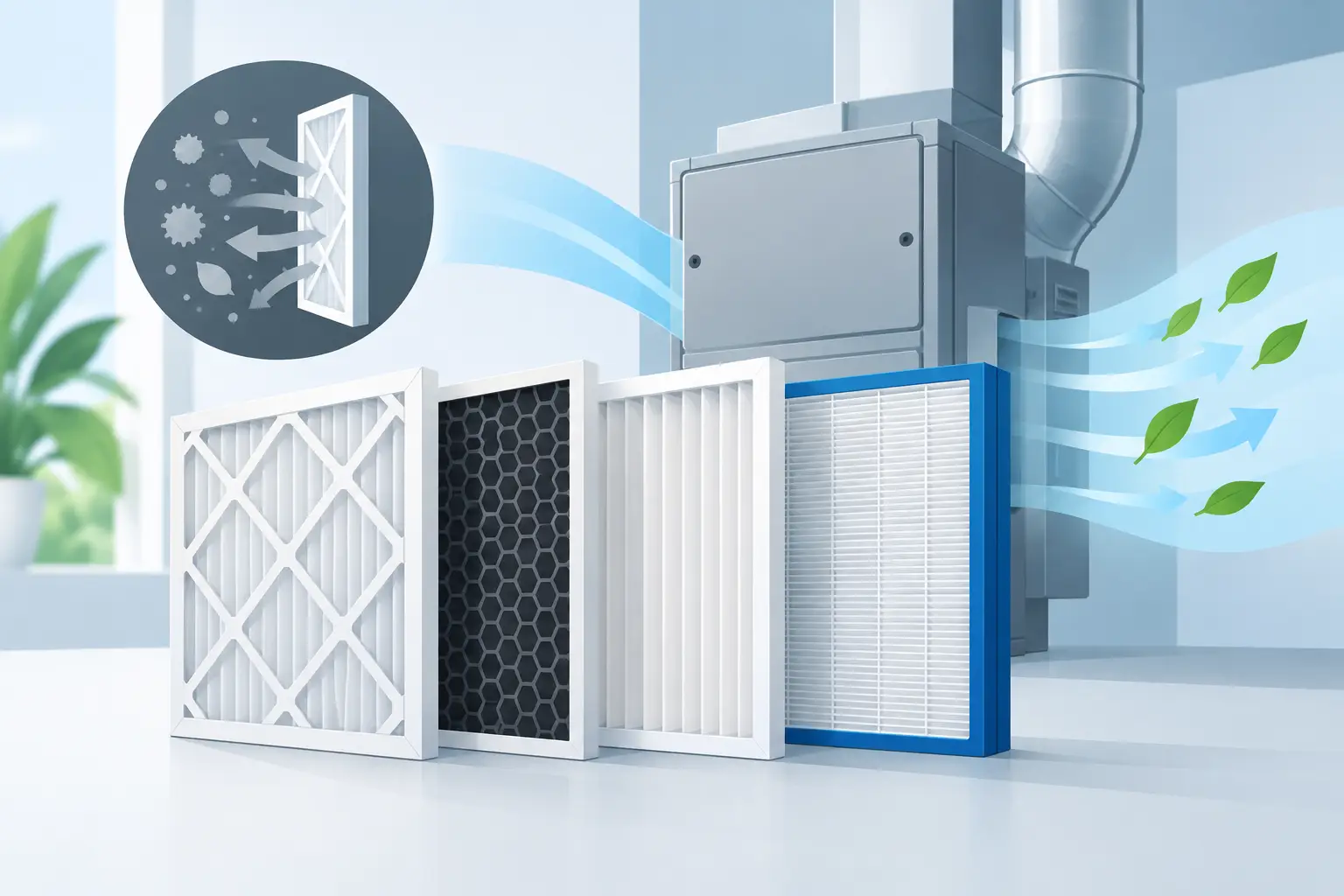
A filter that is too weak lets dust build up on your HVAC equipment. A filter that is too restrictive can reduce airflow and make the system work harder. The best air filters for HVAC systems strike the right balance for your equipment, your indoor air concerns, and the people using the space.
For many Baltimore-area homes, a quality pleated filter in the MERV 8 to MERV 11 range is the practical choice. But homes with pets, allergies, recent construction dust, or higher occupancy may benefit from a different approach. The right answer depends on more than the number printed on the filter frame.
Start With the MERV Rating
MERV stands for Minimum Efficiency Reporting Value. It measures how effectively an air filter captures airborne particles as air moves through the return duct and HVAC system. Higher numbers generally capture smaller particles, but higher filtration also creates more resistance to airflow.
That trade-off matters. Your furnace, heat pump, or air conditioner was designed to move a specific amount of air. If a filter is too dense for the system, it can contribute to weak airflow, uneven heating or cooling, longer run times, and added strain on components.
MERV 1 to 4: Basic protection only
Low-rated fiberglass filters are inexpensive and allow plenty of airflow, but they mainly protect the equipment from large debris. They do little to capture finer household dust, pollen, pet dander, or mold spores. They can be acceptable in a system with documented airflow limitations, but they are rarely the best choice for a home where indoor air quality is a concern.
MERV 5 to 8: A solid everyday option
MERV 8 pleated filters capture more common household particles without being overly restrictive in most properly maintained residential systems. They are a dependable option for many homes, apartments, rental properties, and small offices. If the building has no significant allergy concerns and the system needs a straightforward filter that offers better protection than fiberglass, MERV 8 is often a sensible starting point.
MERV 9 to 12: Better filtration for active households
MERV 11 filters are frequently a strong middle ground. They can capture finer dust, pollen, pet dander, and some smoke-related particles while remaining compatible with many residential HVAC systems. For homes with shedding pets, family members with seasonal allergies, or occupants who notice frequent dust buildup, this range can make a meaningful difference.
Before moving up to MERV 11 or MERV 12, make sure the filter is changed on schedule and the system is in good condition. A high-quality filter still becomes restrictive when it is loaded with dust.
MERV 13: More protection, but verify compatibility
MERV 13 filters provide higher-level particle capture and are often considered when occupants have stronger allergy or respiratory concerns. They can help reduce smaller airborne particles, including smoke and certain fine pollutants. However, not every standard residential HVAC system can handle a MERV 13 filter without a drop in airflow.
A deeper media cabinet, properly sized return ducts, and a system designed for the added resistance can make MERV 13 a good fit. Installing one in a one-inch return slot without checking the system can create problems. When in doubt, have a licensed HVAC technician assess the equipment before making a major jump in filtration.
Best Air Filters for HVAC: Match the Filter to the Home
The best filter is not necessarily the highest MERV rating available. It is the one that protects your equipment and supports cleaner indoor air without creating an airflow problem.
For a typical home with no pets or serious allergy concerns, a pleated MERV 8 filter is often a reliable, budget-friendly option. For homes with pets, allergy sufferers, or frequent dust, MERV 11 is commonly worth the added cost. MERV 13 may be appropriate for homes with specific air-quality needs, but it should be selected with the HVAC system’s capabilities in mind.
Commercial spaces require a similar assessment. A small office, retail space, or rental property may have more foot traffic, more occupants, and longer equipment run times than a single-family home. Property managers should consider both filtration needs and maintenance consistency. A filter that is appropriate on paper will not perform well if it is left in place long past its replacement date.
Choose Pleated Filters Over Cheap Fiberglass When Possible
Pleated filters have more surface area than flat fiberglass filters. That extra surface helps them capture more particles and often allows them to hold dust longer before replacement is needed. They are widely available in common sizes and offer choices across several MERV ratings.
Fiberglass filters still have a place in certain older systems with known airflow restrictions, but they should not be chosen simply because they are the least expensive option. A slightly better filter can help keep the blower compartment, evaporator coil, and ductwork cleaner over time. Cleaner equipment can support more dependable performance and may reduce avoidable maintenance issues.
Avoid treating a portable HEPA filter as an HVAC filter replacement. True HEPA filters are extremely dense and are not designed for most standard one-inch furnace or air-handler filter slots. Whole-home HEPA filtration typically requires specialized equipment and professional installation.
Fit and Thickness Matter More Than Many Homeowners Expect
A filter must fit the return grille or filter cabinet correctly. If there are gaps around the frame, unfiltered air can bypass the media and carry dust directly into the system. Check the size printed on the old filter, but also understand that nominal sizes and actual sizes may differ slightly.
For example, a filter labeled 16 x 25 x 1 may measure a little smaller than those exact dimensions. Purchase the size specified by the equipment manufacturer or measure the existing filter slot carefully. The filter should slide into place without being forced or leaving open space around the edges.
Thickness matters as well. One-inch filters are common, but some systems use four-inch or five-inch media filters. Deeper filters generally provide more surface area and can often deliver stronger filtration with less airflow resistance than a high-MERV one-inch filter. Do not substitute a thicker filter unless the cabinet is designed for it.
Finally, install the filter in the correct direction. The arrow on the frame should point toward the furnace, air handler, or blower compartment, following the direction of airflow.
Replace Filters Before They Restrict Airflow
There is no single replacement schedule that fits every property. A one-inch filter may need replacement every 30 to 90 days, while a deeper media filter may last several months. Pets, smoking, renovations, nearby road dust, and heavy heating or cooling use can all shorten filter life.
Check the filter monthly during Baltimore’s hot, humid cooling season and during winter heating months. Replace it when it looks visibly dirty, gray, or clogged, even if the date on the calendar suggests it should last longer. A clean filter is one of the simplest ways to support better airflow and help your equipment operate efficiently.
If filters become dirty unusually fast, do not just keep buying replacements. Excess dust can point to return-air leaks, duct issues, poor housekeeping conditions, an oversized filter gap, or an HVAC system that needs service.
Watch for Signs Your Filter Choice Is Causing Trouble
A new filter should not cause rooms to receive less air or make the system sound strained. If you notice weak vents, longer heating or cooling cycles, whistling at the return grille, a frozen air conditioner coil, or rooms that no longer reach the set temperature, the filter may be too restrictive or another issue may be present.
Do not remove the filter to solve an airflow problem. Running without a filter exposes sensitive equipment to dust and debris. Instead, reinstall the correct filter and arrange an inspection. A technician can check static pressure, blower performance, duct condition, and whether a different filter cabinet or filtration strategy would better serve the property.
A well-chosen air filter is inexpensive preventive care, but it is only one part of a healthy HVAC system. When airflow, comfort, or air quality still feels off after a filter change, ABC Cooling & Heating can help identify the cause and recommend a practical solution that fits your home or business.