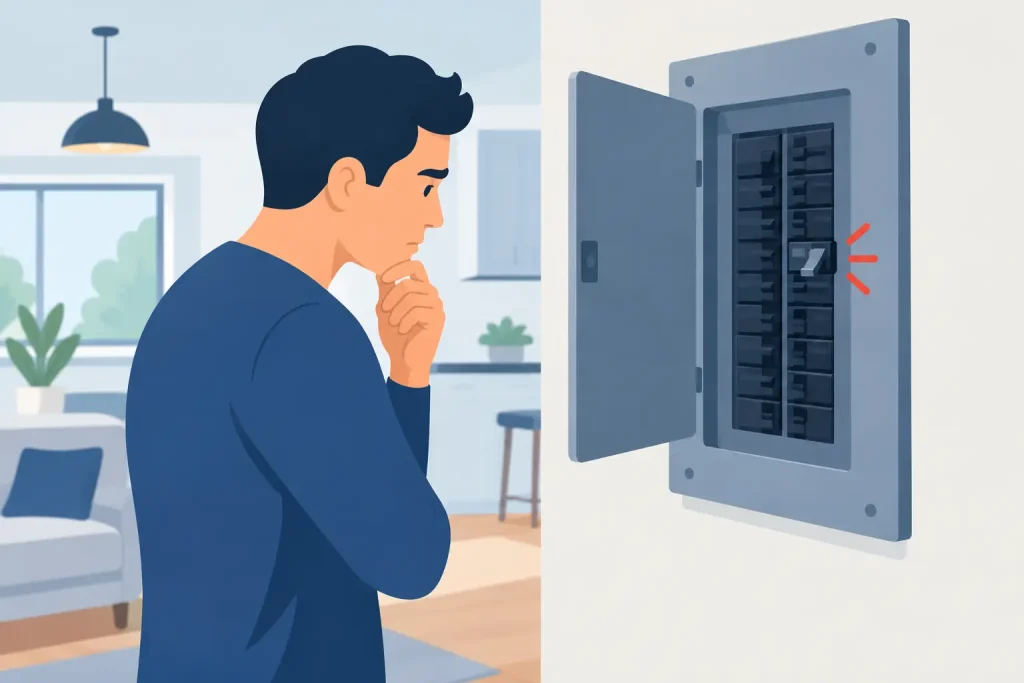
A hot Maryland afternoon is not the time to discover that your air conditioner has stopped and the electrical panel has a breaker in the off position. If your AC breaker keeps tripping, the breaker is responding to a condition that could damage the equipment, overheat wiring, or create an electrical safety concern. Resetting it may restore cooling briefly, but it does not solve the reason it tripped.
The right next step depends on when the breaker trips, how often it happens, and whether the system shows other warning signs. Some causes are simple maintenance issues. Others require a licensed HVAC technician or electrician. The key is knowing what you can check safely and when to stop resetting the breaker.
Why an AC breaker keeps tripping
A circuit breaker cuts power when it senses more electrical current than the circuit can safely handle. Your central air conditioner has high-demand components, especially the outdoor condenser, compressor, and fan motor. A single trip can occasionally happen after a power interruption or a one-time electrical event. Repeated trips are a service issue.
The timing gives useful clues. A breaker that trips immediately when the AC starts may point to a shorted component, a failing capacitor, or a compressor struggling to start. A breaker that trips after the system runs for several minutes can indicate overheating, restricted airflow, a failing motor, or a compressor drawing too much power as it works.
Do not assume the breaker itself is the problem. Breakers can wear out, but replacing one without finding the source of the overload can leave a larger issue unresolved.
Dirty air filters and restricted airflow
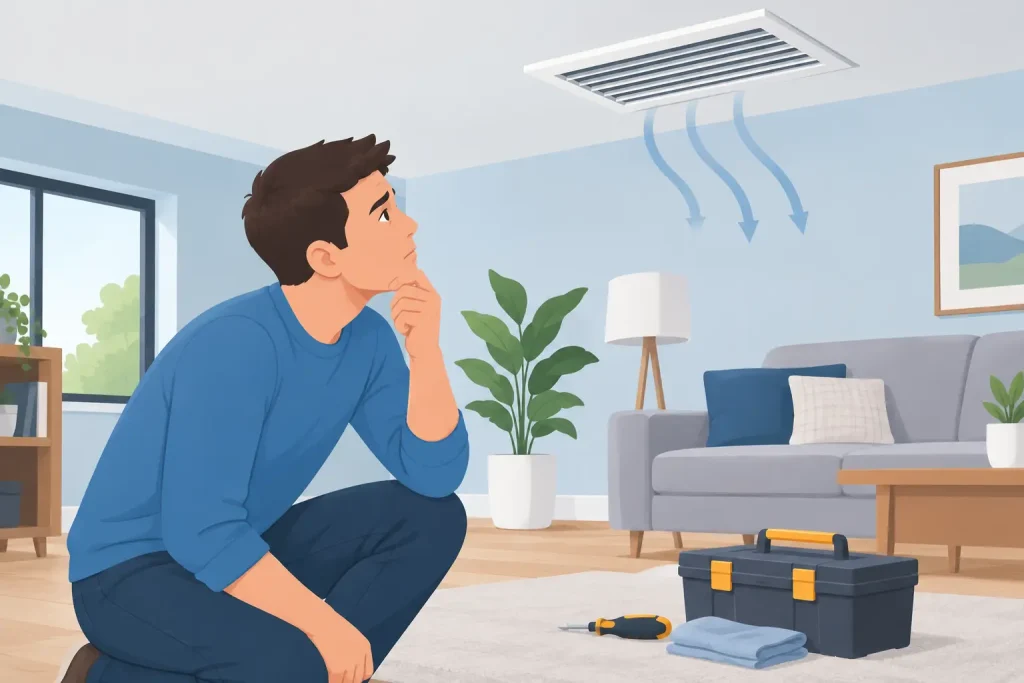
A clogged return-air filter is one of the most preventable causes of air conditioning trouble. Restricted airflow makes the indoor system work harder and can contribute to an evaporator coil freezing. While a dirty filter does not always directly trip the outdoor AC breaker, the strain it puts on the system can lead to operational problems that do.
Check the filter if it has been more than one to three months since replacement, depending on the filter type, pets, occupancy, and system use. Use the size and airflow rating recommended for your equipment. An overly restrictive filter can also reduce airflow, even when it is clean.
Keep supply vents open and clear of furniture, rugs, and storage. For landlords and property managers, regular filter changes are one of the simplest ways to avoid avoidable no-cooling calls during peak season.
A dirty outdoor unit or failing condenser fan
The outdoor unit needs room to release heat. Leaves, grass clippings, cottonwood, mulch, and overgrown shrubs can restrict airflow through the condenser coil. When heat cannot escape, pressures and electrical demand rise. The equipment may eventually overheat and trip the breaker.
Turn off power before removing loose debris around the unit, and leave at least a couple feet of clear space around it. Do not bend coil fins, spray electrical compartments, or use a pressure washer on the coil. A technician can safely clean the coil, inspect the fan motor, and confirm whether the condenser fan is moving enough air.
If the outdoor unit hums but the fan does not spin, or if you hear grinding, rattling, or repeated clicking, turn the system off and arrange service. Continuing to run it can turn a repairable motor or capacitor issue into more extensive equipment damage.
A weak capacitor or hard-starting compressor
The capacitor provides a stored electrical boost that helps the compressor and fan motor start. When it weakens, the outdoor unit may buzz, click, start slowly, or fail to start at all. The compressor can pull excessive amperage while trying to get running, causing the breaker to trip.
Capacitors hold an electrical charge even after power is shut off. They are not a safe do-it-yourself repair. A licensed technician can test the component, inspect electrical connections, and verify that the compressor is starting and running within its rated electrical range.
A compressor problem is more serious, but it is not always an automatic replacement decision. The best option depends on the age of the system, refrigerant type, repair cost, overall condition, and remaining efficiency of the equipment. Clear diagnostic information matters before authorizing a major repair.
Electrical wiring, contactor, or disconnect problems
Loose connections, worn wire insulation, damaged disconnect components, and a failing contactor can all create excess heat or a short circuit. In older homes and commercial spaces, the electrical circuit may also have been altered over time in ways that no longer match the air conditioner’s requirements.
Warning signs include a burning odor, discoloration near the breaker panel or outdoor disconnect, buzzing, visible damage, or a breaker that trips immediately. Shut the AC off and do not touch damaged wiring or open electrical compartments. These conditions need prompt professional attention.
An HVAC technician can identify equipment-side electrical faults. If the issue involves the service panel, circuit sizing, or building wiring, an electrician may need to make the repair. Responsible service means addressing the actual source, not simply installing a larger breaker. An oversized breaker can allow wires to overheat before it trips.
What to do before you reset the AC breaker
Start by turning the thermostat to OFF. Then find the breaker marked AC, air conditioner, condenser, or HVAC. If it is between ON and OFF, move it firmly all the way to OFF first, then back to ON. Wait about five minutes before turning the thermostat back to COOL. This gives system pressures time to equalize before the compressor restarts.
Reset the breaker once only. If it trips again, leave it off. Repeated resets force current through a system that is already signaling a problem and can cause further damage.
Before calling for service, note what happened: Did the breaker trip as soon as cooling began, after 10 or 20 minutes, or during a storm? Is the indoor blower still running? Is the outdoor unit noisy, silent, or hot? These details help speed up diagnosis.
You can also check the air filter, make sure the outdoor unit is free of loose debris, and confirm that the thermostat is set correctly. Avoid opening the condenser, removing access panels, changing wiring, or trying to bypass any safety device.
When the issue needs urgent service
Call for professional help promptly if the breaker will not stay on, the system is blowing warm air, or you see ice on refrigerant lines or the indoor coil area. Shut the system down immediately if you smell burning, see smoke, hear loud electrical buzzing, or notice melted insulation or scorch marks. If there is an immediate electrical hazard, contact emergency services or a qualified electrician.
For Baltimore-area homeowners, landlords, and small property managers, a fast diagnosis can prevent a minor electrical or airflow issue from becoming a lost compressor, water damage from a frozen coil, or a prolonged comfort problem. ABC Cooling & Heating technicians can inspect the system’s electrical components, airflow, refrigerant operation, and overall condition, then explain the repair options clearly.
Prevent future breaker trips with seasonal maintenance
Many breaker trips develop gradually. A capacitor weakens, a coil collects debris, a motor begins running hotter, or a connection loosens over repeated heating and cooling cycles. Seasonal AC maintenance helps catch these changes before the first major heat wave puts the system under its highest load.
A thorough visit should include checking electrical connections and amperage, cleaning components as needed, evaluating airflow, inspecting the condensate system, and confirming that the outdoor unit is operating within expected limits. Maintenance cannot prevent every unexpected failure, but it gives you a better chance to fix small concerns on your schedule instead of during an emergency.
If the breaker trips again after one careful reset, leave it off and schedule service. Your air conditioner is telling you something useful – responding early protects your comfort, your equipment, and your home.