A Maryland cold snap can turn a small heating issue into an urgent repair call overnight. Learning how to winterize home HVAC equipment before the first sustained freeze gives you time to catch airflow problems, worn parts, and safety concerns while your system is still running under lighter demand.
Winterizing is not about shutting every HVAC component down. Your best approach depends on whether your home uses a furnace, boiler, heat pump, central air conditioner, or a combination of systems. The goal is simple: protect equipment, improve heating performance, and reduce the chance that your family wakes up to a cold house.
How to Winterize Home HVAC Systems Safely
Start with the equipment you can safely inspect and maintain, then schedule professional service for combustion checks, electrical testing, refrigerant work, and repairs. A well-maintained system uses energy more efficiently, but just as importantly, it is less likely to fail when Baltimore-area temperatures drop quickly.
Replace the air filter before heating season
A dirty filter is one of the most common reasons a heating system struggles. It restricts airflow, which can make a furnace run longer, cause uneven temperatures, and put added stress on components. Check the filter monthly during heavy-use months and replace it according to the manufacturer’s guidance, typically every one to three months.
Choose the right filter for your system rather than automatically buying the highest-rated option. Very dense filters can capture more particles, but some older systems cannot move air effectively through them. If you have concerns about allergies, pets, or airflow, ask an HVAC technician which filter rating makes sense for your equipment.
Clear vents, returns, and indoor equipment access
Walk through the home and make sure supply registers and return grilles are open and unobstructed. Furniture, rugs, curtains, and storage boxes can block airflow where you need it most. Closing too many vents can also create pressure problems in ductwork and does not usually deliver the energy savings homeowners expect.
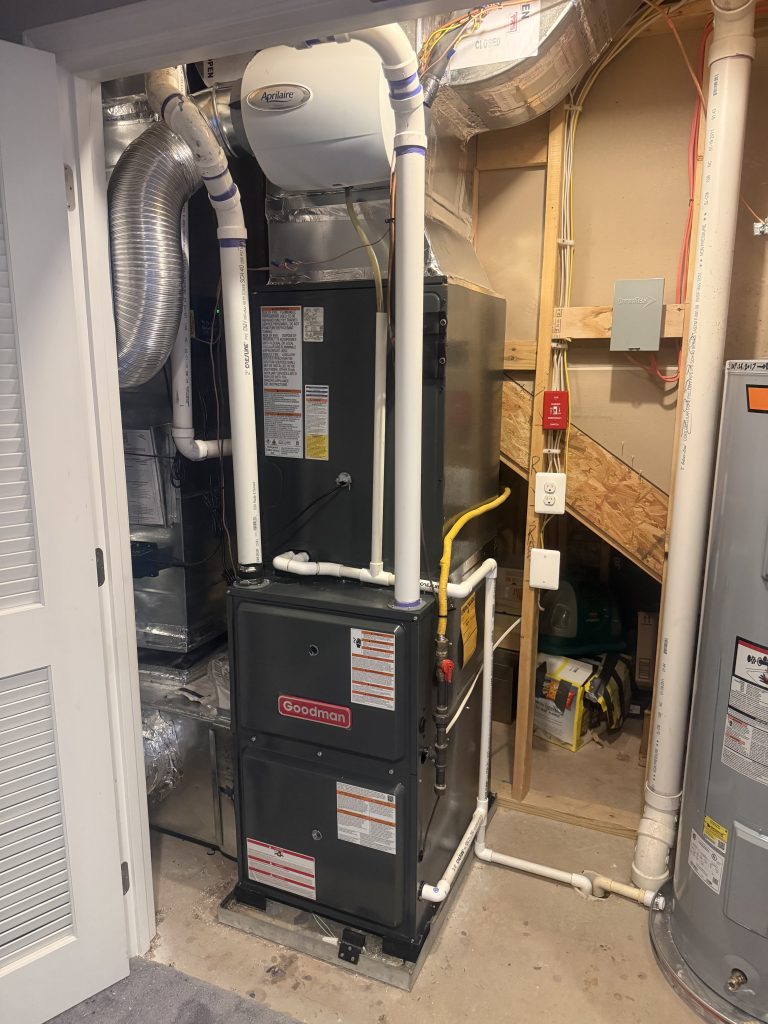
In the utility area, keep the furnace or air handler accessible. Remove stored paint, cardboard, cleaning products, and other clutter from around the equipment. For gas furnaces, follow the clearance recommendations in the owner’s manual and keep flammable materials well away from the unit.
Test your thermostat before the first real freeze
Set the thermostat a few degrees above the current indoor temperature and listen for the system to start. Let it run long enough to confirm warm air is reaching the rooms you use most. If some rooms remain cold, the issue may be a clogged filter, a duct problem, a blower issue, or an undersized or poorly balanced system.
Programmable and smart thermostats can help reduce unnecessary heating when the building is empty, but avoid extreme setbacks. Lowering the temperature slightly while sleeping or away can help, yet dropping it too far means the system must work harder to recover. For many homes, a modest adjustment is more comfortable and more practical.
Protect the Outdoor Unit the Right Way
This is where winter HVAC advice often gets confusing. An outdoor central AC condenser should be protected differently than an outdoor heat pump.
If you have central air conditioning
After cooling season ends, turn off power to the outdoor condenser using the exterior disconnect or the appropriate breaker. This helps prevent the AC from accidentally starting during an unusually warm winter day. Clear leaves, branches, and debris from around the unit, leaving room for air circulation and service access.
A breathable top cover can keep leaves and falling debris out of the fan area. Avoid wrapping the entire unit in a sealed tarp. Trapped moisture can encourage corrosion, and a fully covered unit can become an attractive nesting spot for pests. Never stack objects on top of the condenser.
If you have a heat pump
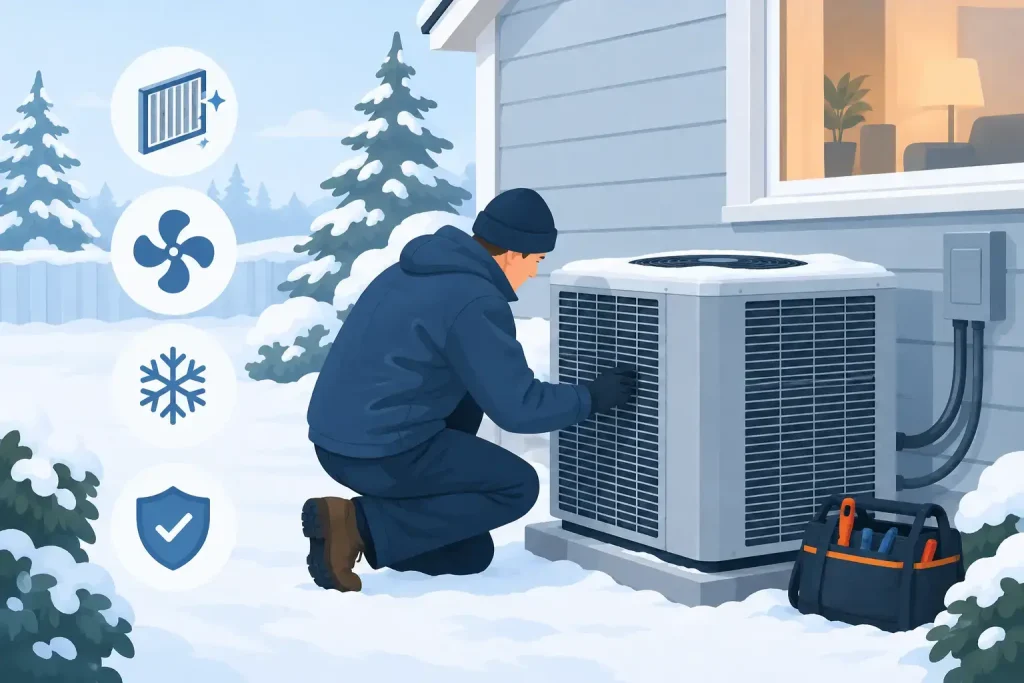
Do not shut off or cover a heat pump for the winter. It is your heating system, and its outdoor unit needs open airflow to operate correctly. Keep snow, leaves, and ice cleared from around the unit, with at least a couple of feet of open space on all sides whenever possible.
It is normal for a heat pump to enter a defrost cycle during cold, damp weather. You may see steam rising from the unit or hear a temporary change in sound. However, thick ice buildup, repeated short cycling, weak heat, or a system that relies heavily on auxiliary heat calls for professional attention.
Schedule a Professional Heating Tune-Up
Homeowner maintenance helps, but a preseason tune-up looks at the parts that should not be left to guesswork. This is especially true for gas furnaces and aging systems. A licensed technician can inspect electrical connections, test safety controls, examine the blower assembly, verify temperature rise, and look for signs of wear before they lead to a breakdown.
For a gas furnace, professional maintenance should include checking the burners, heat exchanger, venting system, and ignition components. Cracks or deterioration in a heat exchanger are not a DIY repair. They can create a carbon monoxide risk and require prompt evaluation.
For a heat pump, service may include inspecting the outdoor coil, refrigerant performance, defrost controls, condensate drainage, and auxiliary heat operation. Heat pumps can be highly efficient in Maryland winters, but their performance depends on correct setup and maintenance.
Landlords and property managers should schedule service before tenants report a no-heat emergency. Preventive maintenance records also make it easier to track recurring issues across rental homes, offices, and small commercial properties.
Check Carbon Monoxide and Condensate Safety
Every home with fuel-burning equipment should have working carbon monoxide detectors. Test each detector, replace batteries if needed, and follow the manufacturer’s replacement schedule. Place detectors near sleeping areas and on each level of the home as recommended by local safety guidance.
If a carbon monoxide alarm sounds, get everyone outside to fresh air immediately and call emergency services from a safe location. Do not reenter the building until it has been cleared. Symptoms such as headache, dizziness, nausea, confusion, or unusual fatigue should also be taken seriously around fuel-burning equipment.
Check the furnace area for water around the base, too. High-efficiency furnaces produce condensate that drains through tubing and a trap. A blockage can cause leaks or trigger a system shutdown. Homeowners can visually check for obvious kinks or standing water, but a technician should correct drainage problems and confirm proper operation.
Reduce Heat Loss Before Blaming the HVAC System
A furnace or heat pump cannot solve every comfort problem on its own. Drafty doors, attic air leaks, damaged weatherstripping, and poorly insulated rooms can make a good system seem inadequate. Before assuming you need a replacement, look for simple building-envelope issues that may be allowing heat to escape.
Seal obvious drafts around doors and windows, close fireplace dampers when they are not in use, and make sure attic access points are properly insulated. Open interior doors when practical to improve circulation, especially in homes with one thermostat serving multiple rooms.
If one area of the house is consistently colder than the rest, it may need more than a thermostat adjustment. Duct leakage, insufficient return air, poor insulation, or an improperly sized system can all contribute. A comfort assessment can identify whether the answer is repair, duct improvement, zoning, or a customized equipment recommendation.
Know When to Call for Help
Do not wait for a complete shutdown if your system is giving warning signs. Unusual banging, scraping, or squealing; burning odors; frequent cycling; weak airflow; rising utility bills; and inconsistent temperatures all deserve attention. A furnace that blows cool air, a heat pump covered in ice, or any suspected gas or carbon monoxide concern should be addressed promptly.
ABC Cooling & Heating helps homeowners and property managers in Baltimore, Dundalk, and nearby communities prepare systems for the season with clear recommendations and dependable service. A timely inspection can often resolve a small concern before it becomes a middle-of-the-night emergency.
Give your HVAC system a little attention before winter settles in. Clean airflow, safe operation, and a professional checkup can make the difference between simply getting through the season and staying comfortably prepared for it.