A furnace filter is a small, inexpensive part that can cause a surprisingly expensive problem when it is ignored. A clogged filter restricts airflow, makes the furnace work harder, and can leave some rooms feeling cooler than others. Knowing how to replace furnace air filter media correctly is one of the simplest ways to protect your comfort, indoor air quality, and heating equipment.
For homeowners and property managers in Baltimore-area homes, filter changes matter even more during a busy Maryland heating season. Your system may run for long stretches, especially during cold snaps. A clean, properly sized filter helps it move air as designed instead of straining against a layer of dust, pet hair, and debris.
When to Replace Furnace Air Filter Media
There is no single schedule that fits every home. A basic 1-inch fiberglass filter may need replacement every 30 days, while some pleated filters can last 60 to 90 days. The date printed on the package is only a starting point. How quickly the filter loads up depends on your household and how often the system runs.
Check the filter more often if you have shedding pets, smokers in the home, recent remodeling work, allergies, or a large household. These conditions put more particles into the air and can clog a filter well before its expected replacement date. Rental homes and small commercial spaces also benefit from a scheduled filter check, since occupants may not notice reduced airflow until comfort becomes a problem.
A quick visual check helps. Hold the filter up to a light source. If very little light passes through it, or the surface is visibly gray and coated with debris, replace it. Other warning signs include weak airflow at supply vents, more dust on furniture, unusual furnace cycling, and higher energy bills without another clear explanation.
Do not wait until the filter is completely packed. A heavily clogged filter can contribute to overheating, limit airflow across the heat exchanger, and trigger furnace safety controls. While a dirty filter is not the cause of every heating issue, it is the first thing worth checking before assuming a major repair is needed.
How to Replace a Furnace Air Filter
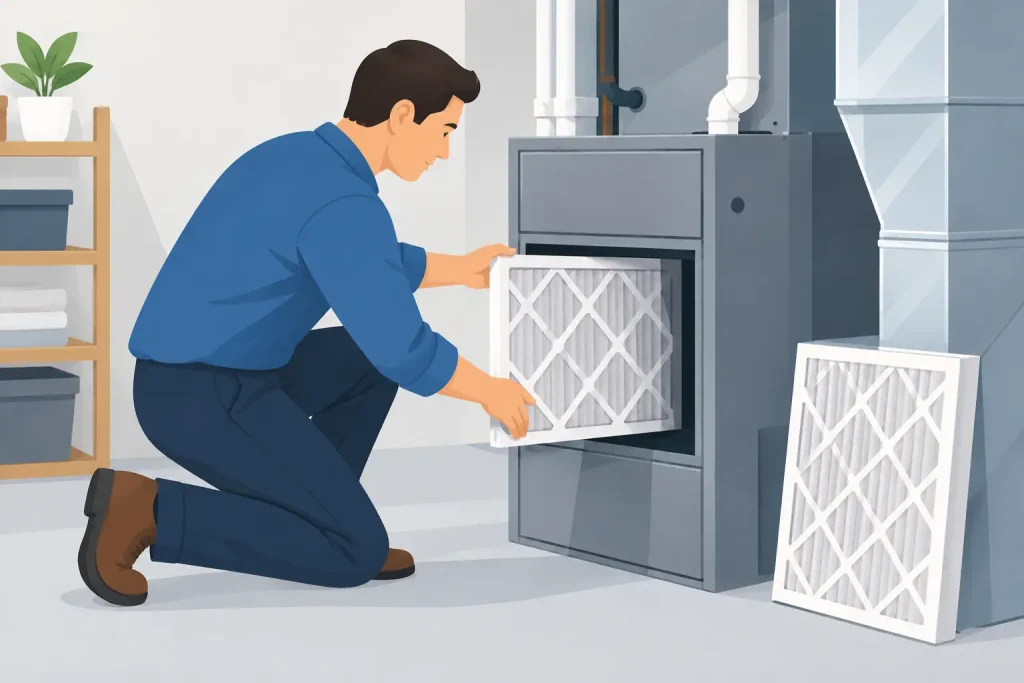
Replacing a filter usually takes only a few minutes. The important part is installing the correct filter in the correct direction.
1. Turn the system off
Turn off the furnace at the thermostat before opening the filter compartment. For added safety, use the furnace service switch if it is easy to access. This prevents the blower from pulling loose dust into the system while you are changing the filter.
2. Find the filter location
Most forced-air furnaces have a filter in one of two places: behind a return-air grille inside the home or in a slot beside the furnace or air handler. The filter may be located in a basement, utility closet, attic, garage, or mechanical room.
If you cannot find it, do not remove furnace panels at random. Look for a narrow filter rack near the return duct, which is the larger duct bringing air back to the equipment. Your system manual may show the filter location and acceptable sizes.
3. Check the size and airflow arrow
Before throwing away the old filter, read the dimensions printed along its frame. Common sizes include 16 x 25 x 1 and 20 x 25 x 1, but the actual size can vary slightly from the label. Buy the size specified for your filter slot rather than forcing a near match into place.
Every disposable filter has an arrow on the cardboard frame. That arrow must point in the direction of airflow, toward the furnace or air handler. If the filter sits behind a return grille, the arrow still points toward the ductwork and equipment, not toward the room.
A filter installed backward may still fit, but it can reduce its effectiveness and create unnecessary resistance. If you are unsure which way air moves, remember that return air travels from the rooms into the furnace, while heated supply air travels away from the furnace to the vents.
4. Slide in the new filter and close the panel
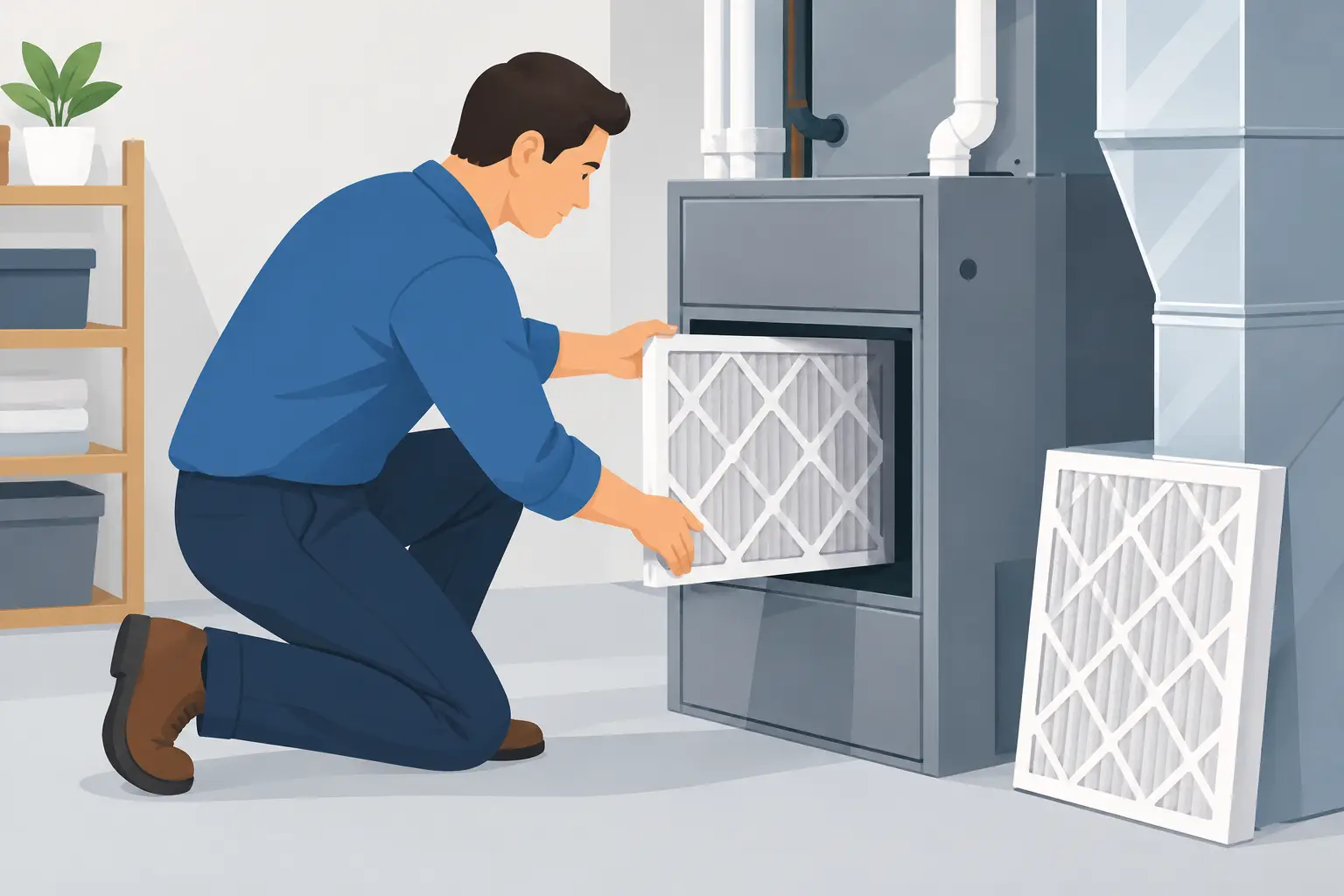
Insert the new filter so it sits flat in the rack without bending or leaving gaps around the edges. Close the access panel or return grille securely, restore power, and set the thermostat back to heat. Within a few minutes, listen for normal operation and check that air is moving from supply vents.
Write the installation date on the filter frame or set a calendar reminder. That simple habit prevents the filter change from becoming an easy-to-miss task during a busy season.
Choosing the Right Furnace Filter
The highest-rated filter is not automatically the best choice for every system. Furnace filters are commonly rated by MERV, short for Minimum Efficiency Reporting Value. A higher MERV rating captures smaller particles, but it can also create more airflow resistance.
For many homes, a pleated filter in the MERV 8 to MERV 11 range offers a practical balance of particle capture and airflow. It can help reduce dust, pollen, pet dander, and other common airborne debris without placing excessive demand on a properly designed residential system. Households with significant allergy concerns may consider a higher rating, but it is wise to confirm that the furnace and ductwork can handle it.
Very high-MERV filters can be useful in the right equipment, but they are not a universal upgrade. If your furnace was designed for a less restrictive filter, moving to a dense filter may reduce airflow enough to affect comfort and system performance. The same is true of inexpensive filters that collapse, fit loosely, or allow air to bypass the frame.
Use the filter size and type recommended by the furnace manufacturer or a qualified HVAC technician. If you are repeatedly seeing heavy dust, weak airflow, or filters that clog unusually fast, the answer may not be a thicker filter. Duct leakage, return-air problems, construction dust, or an undersized filter rack may need attention.
Common Filter Mistakes That Can Cost You
The most common mistake is using the wrong size because it was available at the store. A filter that is too small can leave gaps for unfiltered air to enter the equipment. One that is too large may buckle, damage the rack, or block airflow. Measure the existing filter and check the equipment label before purchasing replacements.
Another mistake is doubling up filters. Two filters do not provide double the protection. They can seriously restrict airflow, especially when both begin collecting debris. Use one correctly sized filter unless your HVAC system was specifically designed with separate filtration stages.
Reusable filters also deserve caution. Some are marketed as permanent, but they must be cleaned thoroughly and allowed to dry completely before reinstalling. A damp filter can encourage mold growth, while an improperly cleaned one may remain restrictive. For many busy homeowners and landlords, quality disposable pleated filters are the more reliable option.
Finally, do not treat a filter change as a substitute for maintenance. A clean filter supports your furnace, but it cannot correct ignition issues, worn blower components, cracked heat exchangers, thermostat problems, or ductwork defects. Annual professional maintenance helps identify those concerns before they turn into a no-heat call.
When a Filter Change Is Not Enough
If you install a clean filter and the furnace still shuts down, blows cool air, makes loud noises, or has little airflow, stop troubleshooting and arrange a service visit. Repeatedly resetting the furnace can mask an underlying safety or mechanical issue.
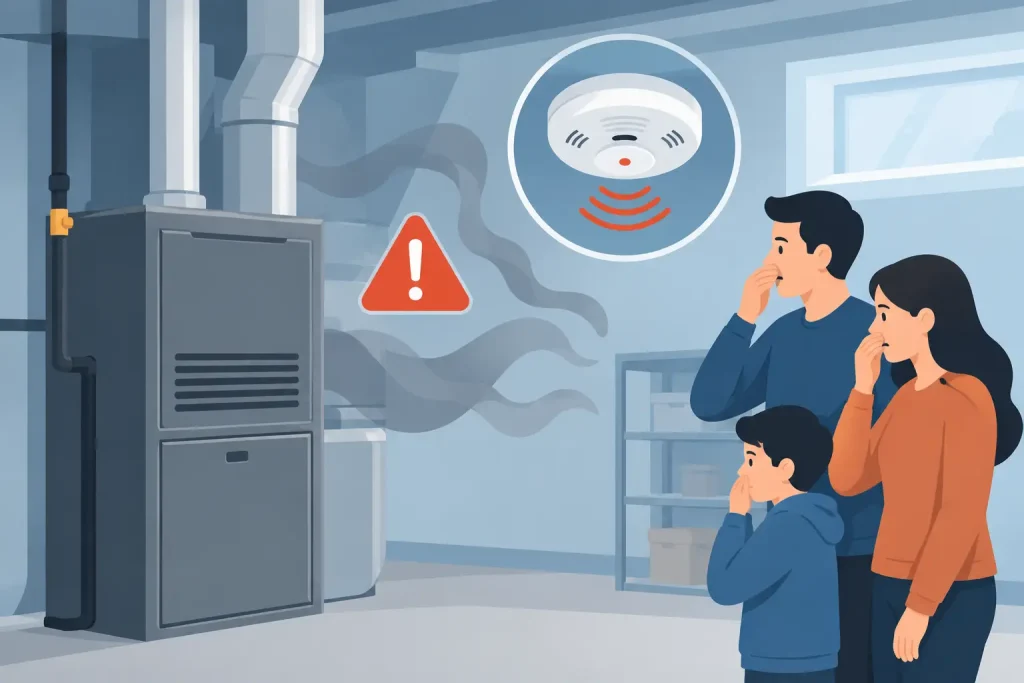
Call for prompt professional help if you smell gas, notice a burning odor that does not quickly fade, see soot around the furnace, or have a carbon monoxide alarm. Leave the area and follow appropriate safety guidance when a gas or carbon monoxide concern is present.
ABC Cooling & Heating provides clear furnace service for homeowners, landlords, and property managers who need an accurate diagnosis without guesswork. A technician can confirm whether the issue is limited to filtration or whether your system needs repair, maintenance, or a better long-term airflow solution.
A fresh filter is a small maintenance step, but it gives your furnace the airflow it needs to do its job. Check it regularly, use the right fit and MERV rating, and call for help when the system is telling you that something more is wrong.