A heat pump versus central AC decision usually comes up at the worst possible time: the air conditioner is struggling through a Baltimore summer, repairs are adding up, and you need a dependable answer before comfort becomes an emergency. Both systems can cool your home effectively. The better choice depends on how you heat now, the condition of your ductwork, your budget, and how you want to manage energy costs year-round.
Central AC is a familiar, proven cooling solution. A heat pump performs the same cooling job in summer but can also provide heat during winter. That added capability makes it worth a closer look for many Maryland homeowners, landlords, and property managers.
Heat Pump Versus Central AC: The Core Difference
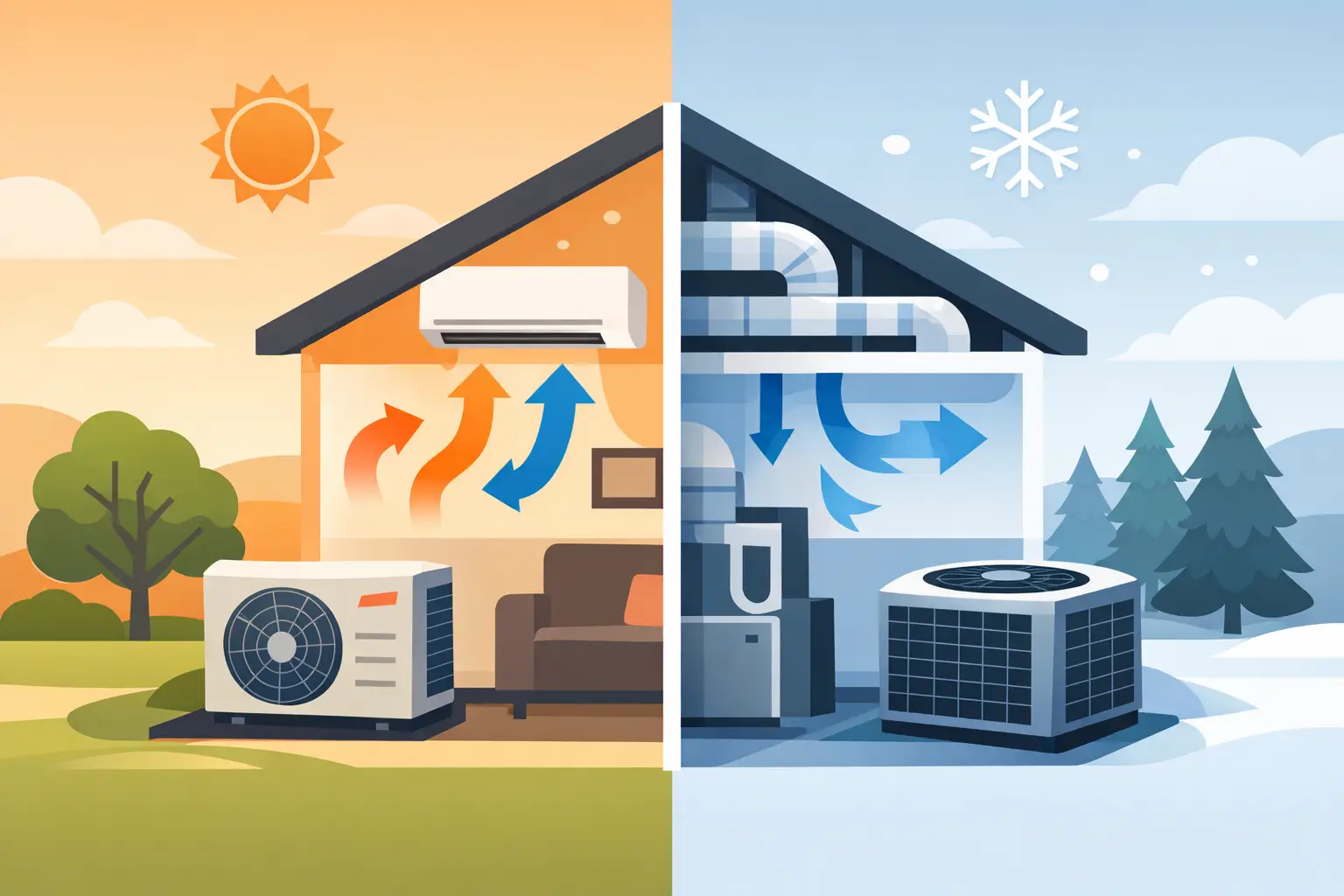
A central air conditioner moves heat from inside your building to the outdoors. It works with an indoor coil, an outdoor condenser, ductwork, and a thermostat to circulate cool, conditioned air. During the heating season, it needs a separate heat source, such as a gas furnace, oil furnace, boiler, or electric heating system.
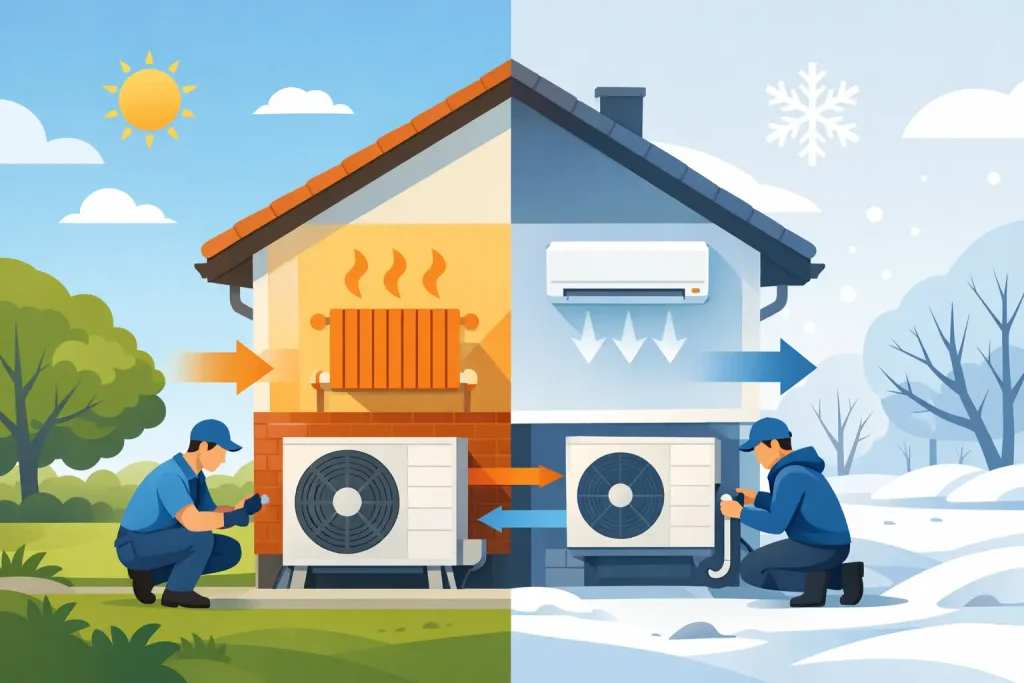
A heat pump also moves heat rather than creating it through combustion. In cooling mode, it operates much like central AC. In heating mode, it reverses the process and pulls available heat from outdoor air into your home. Even cold outdoor air contains some heat energy that a properly sized modern heat pump can use.
The practical difference is simple: central AC cools only, while a heat pump cools and heats. If your current furnace is in good condition, central AC may be the straightforward replacement. If both your cooling and heating equipment are nearing the end of their useful life, a heat pump can reduce the number of systems you rely on.
How Each System Handles Maryland Weather
Maryland homes need more than strong summer cooling. Humid days can make 78 degrees feel sticky and uncomfortable, while winter temperatures can drop below freezing. Equipment has to handle both conditions without wasting energy or leaving rooms unevenly conditioned.
Central AC in summer
A correctly installed central AC system provides reliable cooling and humidity removal. It is often an excellent choice for homes with existing ducts and a dependable furnace. The air conditioner handles warm-weather comfort, while the furnace continues to provide the heating performance your household already knows.
For properties served by natural gas, this pairing can be especially practical. Gas furnaces deliver strong heat during the coldest weather, and central AC handles the summer workload. The decision can be less about which system is “better” and more about whether replacing only the cooling side makes financial sense.
Heat pumps through all four seasons
Modern heat pumps are far more capable in cold weather than many people expect. They can efficiently heat many Baltimore-area homes through much of the winter while providing effective cooling in summer. However, performance depends on the model, sizing, insulation levels, duct design, and the home’s actual heating load.
When temperatures fall very low, some heat pumps use electric backup heat. That backup protects comfort, but electric resistance heat can cost more to run. A dual-fuel setup can be a smart middle ground: the heat pump handles mild and moderate weather, while an existing gas furnace takes over when outdoor temperatures become less favorable.
Upfront Cost and Long-Term Operating Costs
Central AC may have a lower upfront installation cost when the furnace, thermostat, electrical service, refrigerant lines, and ductwork are ready to support the new system. Replacing an aging AC condenser and indoor coil can be a focused project with fewer changes to the rest of the home.
A heat pump can cost more initially, particularly if the installation includes electrical upgrades, new ductwork, a new air handler, or changes to accommodate backup heat. But initial price is not the whole picture. Because a heat pump transfers heat instead of generating it directly, it can use less electricity for heating than electric baseboard units, electric furnaces, or older electric systems.
Savings vary from property to property. A homeowner replacing an older electric heating system may see a meaningful reduction in winter energy use. A homeowner with an efficient gas furnace and low gas rates may see a different result. Utility rates, equipment efficiency ratings, household temperature preferences, and how well the building holds conditioned air all affect the final numbers.
The right comparison should include installation cost, expected maintenance, available rebates or incentives, and projected seasonal energy use. A clear, written estimate is more useful than a one-size-fits-all promise about savings.
Comfort, Humidity, and Airflow Matter Too
Cooling capacity is only one part of indoor comfort. In Dundalk, Baltimore, and nearby communities, humidity control matters just as much during summer. Both central AC and heat pumps can remove moisture when sized and installed properly. An oversized system, however, may cool the space too quickly and shut off before it has enough time to dehumidify effectively.
That is why equipment size should never be based only on the square footage printed on a real estate listing. Window exposure, insulation, ceiling height, air leakage, occupancy, and duct condition all affect how much heating and cooling a building needs.
Airflow is equally important. A high-efficiency heat pump cannot overcome undersized return ducts, blocked registers, or leaky duct runs in an attic or crawlspace. The same is true for central AC. Before recommending replacement equipment, a qualified technician should inspect the full system, not just the outdoor unit.
When Central AC Is Often the Better Fit
Central AC can be the sensible choice when your furnace is newer, reliable, and appropriately sized for the home. It is also a strong option when you prefer gas heat, need to control upfront project costs, or are replacing a failed air conditioner without changing the rest of the HVAC system.
For some commercial spaces and rental properties, keeping separate heating and cooling equipment may also simplify planning. If the furnace has years of useful life remaining, replacing it early just to install a heat pump may not be the best use of the budget.
Central AC is not an outdated choice. A properly matched, efficient system with clean ducts, good filtration, and regular maintenance can provide years of dependable comfort.
When a Heat Pump Makes More Sense
A heat pump is often worth serious consideration when both the air conditioner and furnace are old, when the property uses costly electric heat, or when you want one system for both heating and cooling. It can also be an attractive option for additions, converted garages, smaller homes, and properties where extending gas service is impractical.
Heat pumps are especially appealing to owners who want efficient electric heating without sacrificing summer cooling. Variable-speed models can offer steadier temperatures, quieter operation, and longer run times that support humidity control. Those benefits are real, but they depend on good design and installation rather than the equipment label alone.
If you have a gas furnace in good shape, ask about a dual-fuel system. It may provide the efficiency benefits of a heat pump during milder weather while preserving furnace heat for colder days.
Installation Quality Decides Much of the Outcome
The equipment choice matters, but installation quality often determines whether the system delivers the comfort and efficiency you expect. Refrigerant charge, electrical connections, condensate drainage, thermostat setup, duct sealing, and airflow testing all affect performance.
A professional evaluation should begin with your goals. Are you trying to lower monthly costs, replace a failing unit quickly, improve comfort in upstairs rooms, or prepare a rental property for reliable year-round operation? Those answers guide the recommendation better than a generic equipment comparison.
At ABC Cooling & Heating, the right approach is to inspect the existing system, explain the options in plain language, and recommend equipment that fits the property instead of pushing a single answer. That can mean central AC, a heat pump, or a combined dual-fuel solution.
Maintenance Protects Either Investment
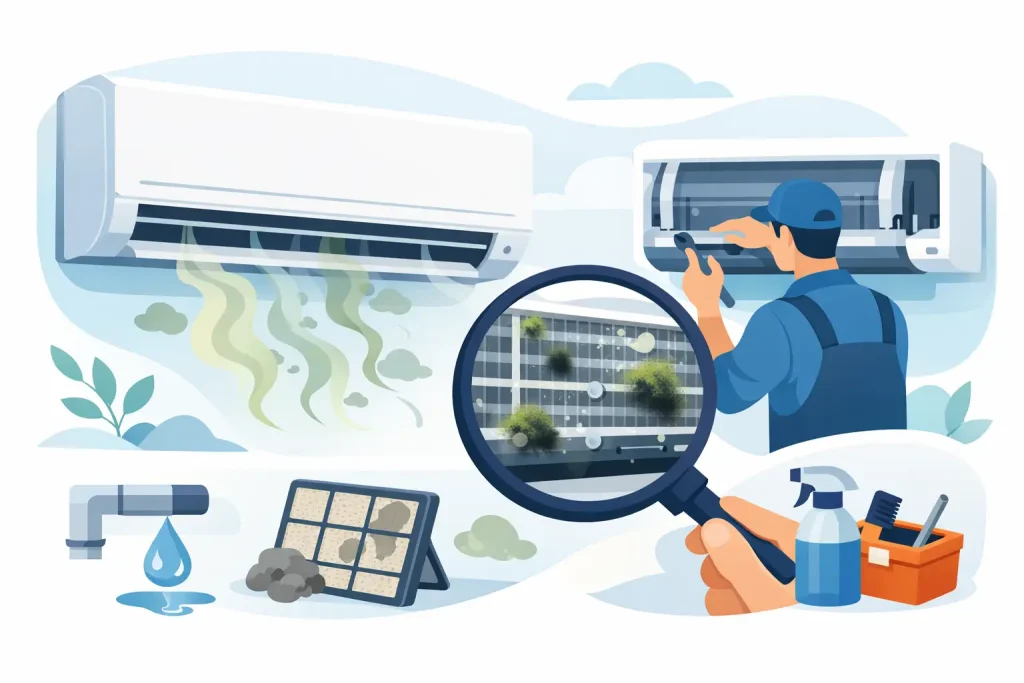
Both systems need routine service to remain efficient and reliable. Filters should be checked regularly, outdoor units need clear space for airflow, and annual professional maintenance helps identify worn electrical parts, drainage issues, refrigerant concerns, and airflow problems before they become a no-cooling or no-heat call.
Heat pumps deserve maintenance before both major seasons because they operate year-round. Central AC should be serviced before summer, while the separate furnace should be checked before winter. For landlords and property managers, planned maintenance is often less disruptive and less expensive than handling breakdowns during extreme weather.
The best system is the one that matches your building, your existing equipment, and your plans for the next several years. Start with a careful assessment, ask for the trade-offs in writing, and choose the solution that will keep your space comfortable when you need it most.