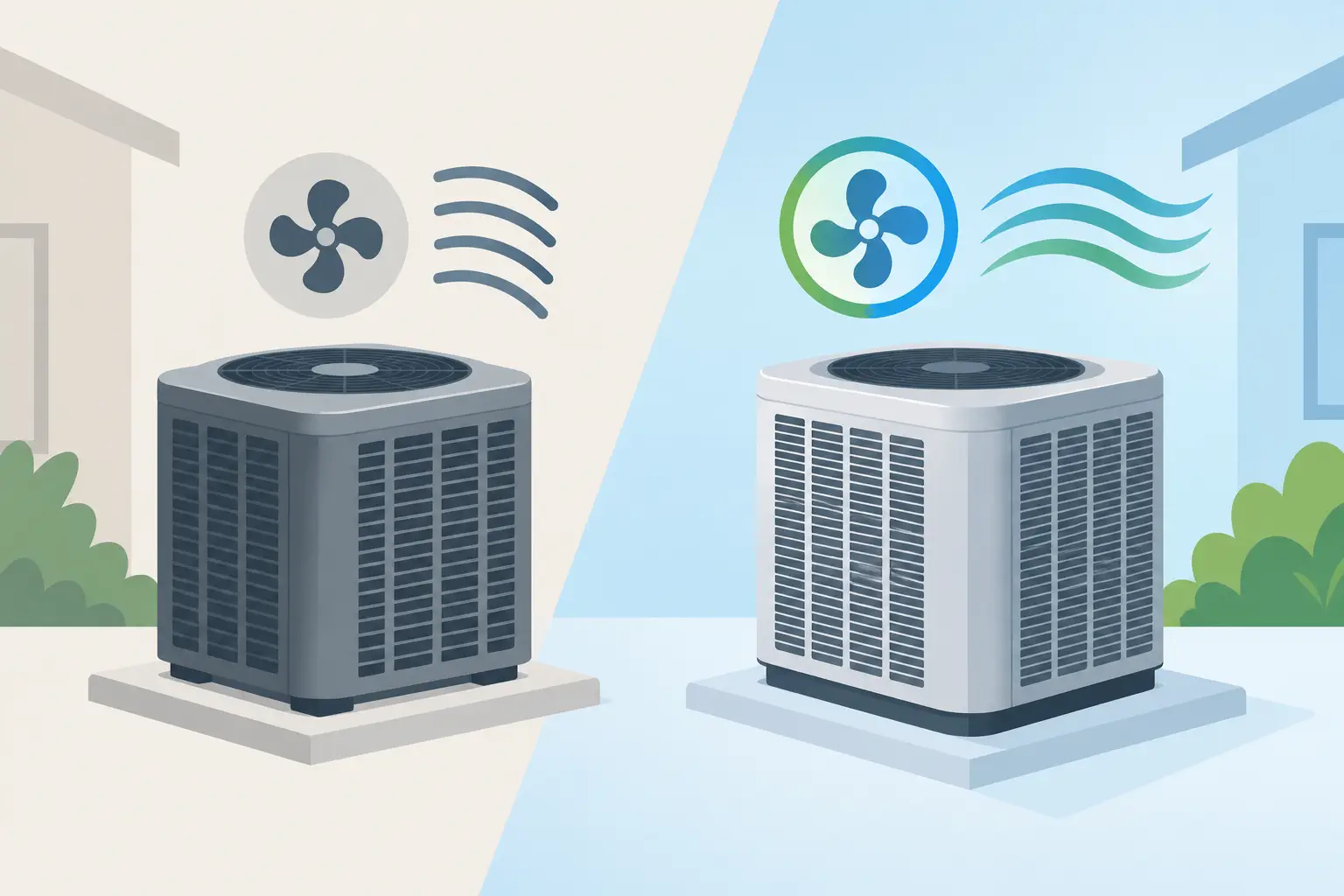
A system that blasts cold air for 10 minutes, shuts off, then leaves one room warm and another chilly is doing more than testing your patience. It may be time to compare single stage versus variable speed equipment. The right answer depends on your property, comfort expectations, ductwork, and budget – not simply which option has the higher price tag.
For many Baltimore-area homeowners and property managers, a single-stage system remains a practical, dependable choice. For others, variable-speed equipment provides the steadier comfort and quieter operation that make the investment worthwhile. Understanding what each system actually does can help you make a confident replacement decision.
What Single-Stage HVAC Equipment Does
A single-stage furnace, air conditioner, or heat pump has one primary operating level: full capacity. When the thermostat calls for heating or cooling, the system turns on at 100%. When the target temperature is reached, it turns off.
This design is common because it is straightforward, proven, and typically less expensive to purchase and repair. A properly sized single-stage unit can heat and cool a home very effectively, especially when the home has sound insulation, balanced ductwork, and a quality thermostat.
The trade-off is that full output is not always necessary. On a mild 80-degree day, an air conditioner may only need part of its capacity to keep a home comfortable, but a single-stage compressor still runs at full power during each cycle. That can lead to more noticeable temperature swings, louder starts and stops, and less humidity removal during cooling season.
Single-stage equipment is often a sensible fit for rental homes, smaller properties, budget-conscious replacements, and systems where the existing setup is otherwise in good condition. It is not automatically the “basic” or wrong choice. A correctly sized, professionally installed single-stage system usually performs better than an advanced system installed without careful planning.
How Variable-Speed Systems Work
Variable-speed systems adjust their output more gradually. Rather than operating only at full capacity, they can run at lower levels for longer periods and increase capacity when outdoor conditions or indoor demand require it.
The term can describe different parts of an HVAC system, which is worth clarifying before comparing estimates. A variable-speed blower motor changes the airflow produced by the indoor furnace or air handler. A variable-speed or inverter-driven compressor can adjust cooling or heating output outside. Some systems include one of these features, while premium matched systems include both.
Longer, lower-output operation has real comfort benefits. Air moves more consistently through the home, temperatures tend to stay closer to the thermostat setting, and the system can remove more moisture from indoor air during Maryland’s humid summers. Lower-speed operation is also generally quieter than repeated full-power starts.
Variable-speed equipment can use less energy because it avoids running at maximum capacity when the load is low. However, actual savings depend on the system’s efficiency rating, thermostat settings, insulation, duct condition, maintenance, and how the building is used. No contractor should promise a specific utility-bill reduction without evaluating the property.
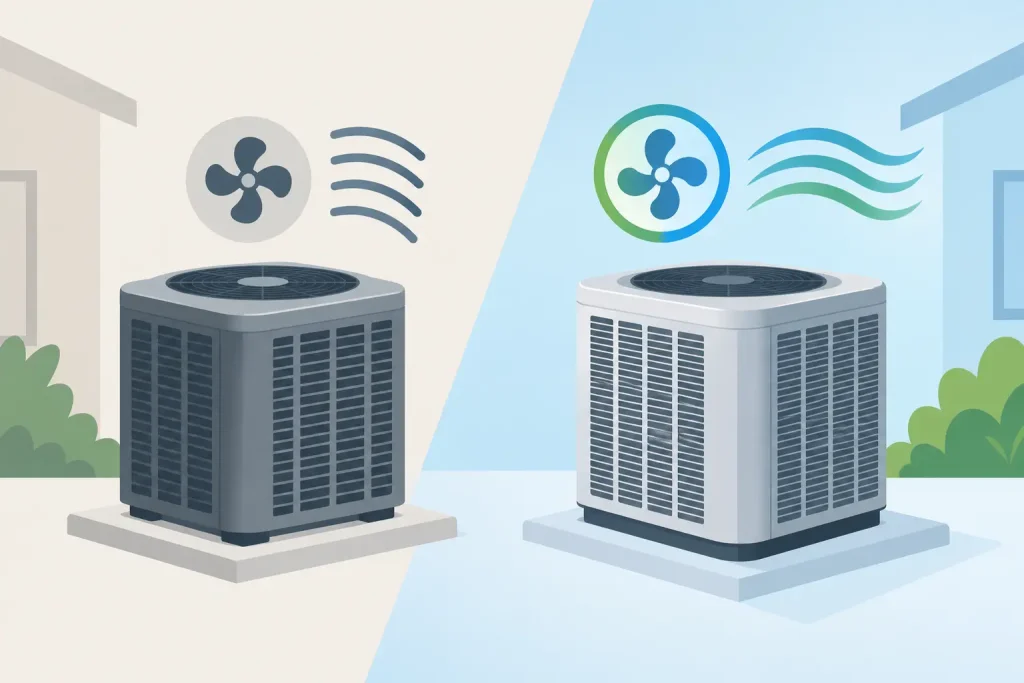
Single Stage Versus Variable Speed: The Real Differences
The biggest difference is not whether either system can make a building comfortable. Both can. The difference is how precisely and quietly they maintain that comfort.
A single-stage system tends to create a more noticeable cycle: air gets cooler or warmer quickly, then the system rests. A variable-speed system is designed for a more even approach, often running longer at a lower output to avoid major indoor temperature changes.
Humidity is another important factor. Air conditioners remove moisture while they run, so longer cooling cycles can make a home feel more comfortable even at a slightly higher thermostat setting. This is especially useful in spaces that feel clammy, have uneven cooling, or receive a lot of afternoon sun.
Noise can matter as well. Variable-speed indoor blowers usually ramp up and down more softly, reducing the sudden rush of air at registers. Outdoor inverter equipment can also operate at lower, less noticeable sound levels for much of the day. If a bedroom, patio, office, or neighboring property is close to the outdoor unit, that difference may be meaningful.
Cost is where the comparison becomes more personal. Single-stage units generally have lower upfront equipment costs and simpler controls. Variable-speed systems cost more initially and may require compatible components, controls, and careful installation. Their added efficiency and comfort can justify the cost for a long-term owner, but they may not be the best financial choice for every property.
When a Single-Stage System Makes Sense
A single-stage replacement can be a strong option when you need reliable heating or cooling without stretching the replacement budget. It is particularly practical if your current system has delivered acceptable comfort, your home is not difficult to heat or cool, and you plan to address insulation or duct improvements separately.
It can also make sense for certain rental or light commercial applications where dependable operation, manageable repair costs, and a clear upfront price are the top priorities. The key is proper sizing. Oversizing a single-stage air conditioner can create short cycles, poor moisture control, and unnecessary wear. Bigger is not better in HVAC.
If a technician recommends a single-stage system, ask how the equipment size was determined, whether the existing ducts can support the required airflow, and what efficiency level fits your expected length of ownership. Clear answers matter more than a sales pitch.
When Variable Speed Is Worth Considering
Variable-speed equipment is often worth a closer look for homeowners and building operators who notice hot and cold rooms, high indoor humidity, excessive system noise, or long periods of daily heating and cooling demand. It can be particularly appealing in a primary residence where consistent comfort is a priority year after year.
It may also benefit properties with open floor plans, finished upper levels, home offices, or rooms that have different sun exposure. These conditions do not guarantee that variable speed will solve every comfort issue, but lower, longer operation can help when the system and ducts are designed properly.
For heating, a variable-speed blower can improve airflow control and provide gentler starts. For cooling, pairing a variable-speed blower with compatible high-efficiency air conditioning or heat pump equipment can offer the most noticeable improvement. The equipment should be selected as a matched system rather than pieced together based on a single advertised feature.
Installation Details Matter More Than the Label
A variable-speed system cannot overcome severely undersized ducts, major air leaks, blocked returns, or a thermostat installed in the wrong location. Likewise, a single-stage unit can underperform if it is oversized or charged incorrectly. Equipment is only one part of the comfort equation.
Before replacement, a qualified HVAC technician should review the building size, insulation, window exposure, duct layout, existing equipment condition, electrical requirements, and comfort concerns. For commercial spaces, occupancy schedules and heat-generating equipment should also be considered.
Ask whether any duct modifications, filtration changes, drain updates, electrical work, or thermostat upgrades are included in the estimate. A complete proposal protects you from surprise costs and helps ensure the new system can perform as intended.
Choosing the Right System for Your Property
Start with the problems you want to solve. If your priority is replacing failed equipment quickly with a dependable, affordable system, a properly selected single-stage unit may be the right fit. If you want quieter operation, steadier temperatures, stronger humidity control, and potential long-term energy savings, variable-speed equipment may deserve the higher upfront investment.
There is also room between these options. Two-stage systems provide an intermediate level of capacity control and may offer a useful balance of price and comfort. A technician can explain whether single-stage, two-stage, or variable-speed equipment best matches your needs instead of steering every customer toward the same solution.
ABC Cooling & Heating can evaluate your current system, explain the options in plain language, and recommend equipment based on your building and budget. The best system is the one that is sized correctly, installed carefully, and supported with regular maintenance – so your home or workplace stays comfortable when Maryland weather refuses to cooperate.