A ductless central comparison is most useful when your current system is struggling, your home has uneven temperatures, or you are planning a major replacement. Both options can provide dependable heating and cooling in Maryland, but they solve comfort problems in different ways. The better choice depends on your home’s layout, existing ductwork, budget, and how each room is used.
A ductless system can be a smart answer for a converted attic, home addition, older Baltimore-area home, or a room that never feels comfortable. Central HVAC may be the better long-term fit when your home already has well-designed ducts and you want one system to manage the entire property. A clear comparison starts with how each system works.
Ductless vs. Central HVAC: The Basic Difference
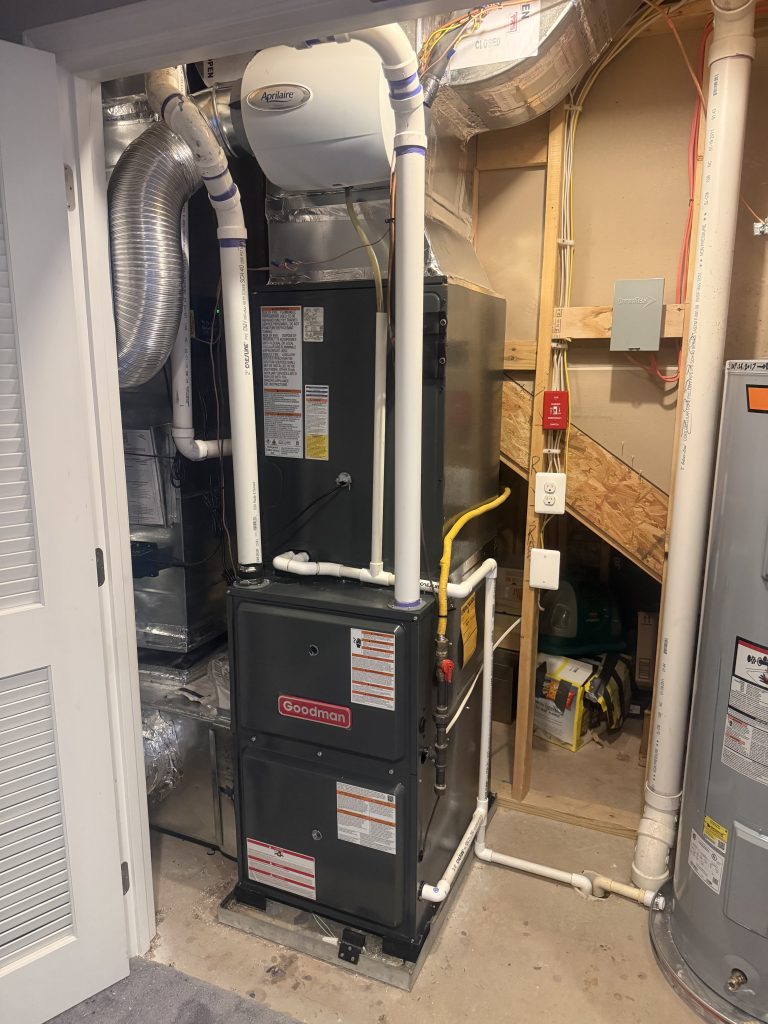
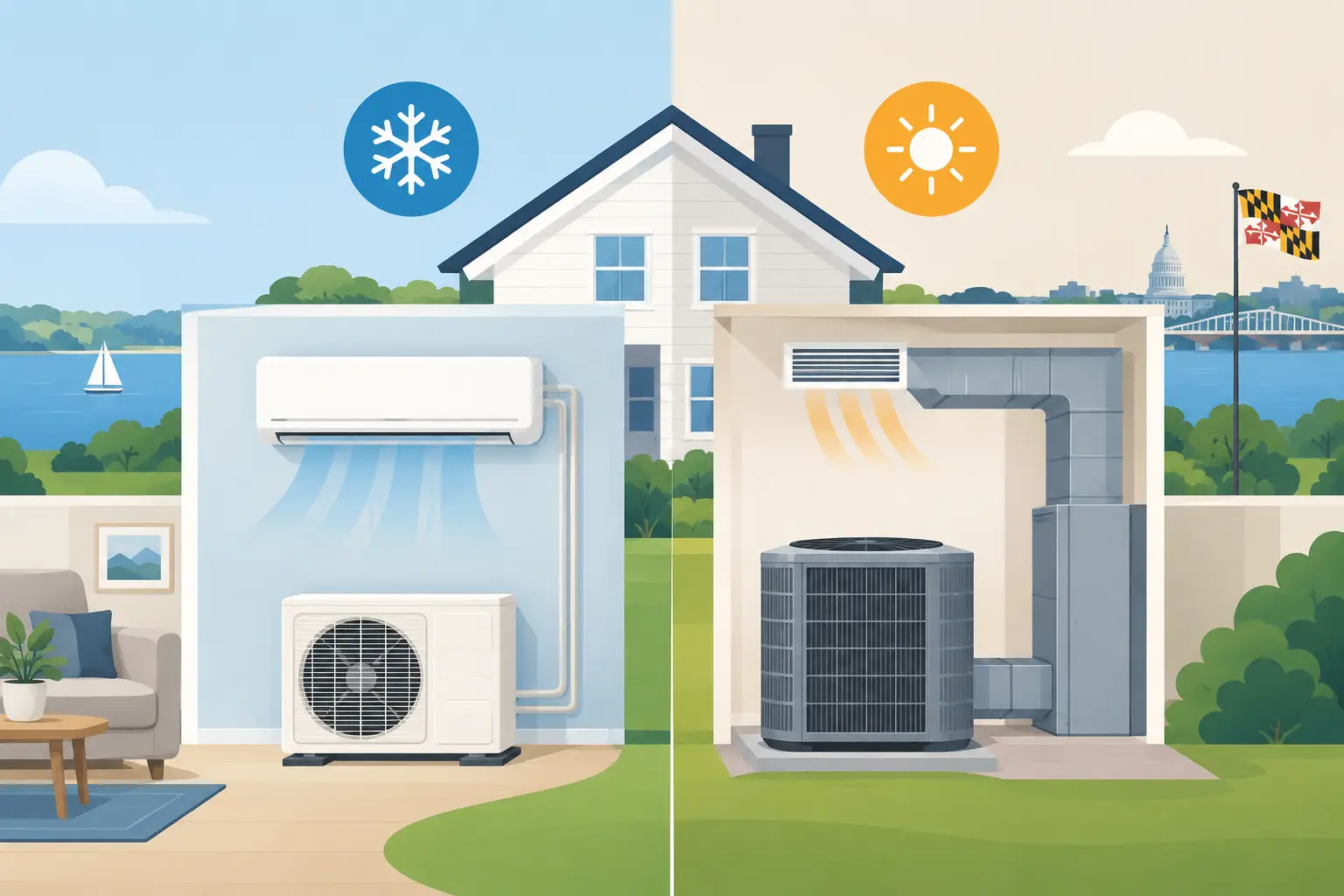
A central HVAC system moves conditioned air through a network of supply and return ducts. Depending on the equipment, it may use an air conditioner with a furnace or a central heat pump that provides both heating and cooling. One indoor unit and one thermostat typically control the home, although zoning can be added in some cases.
A ductless mini-split system uses an outdoor heat pump connected to one or more indoor air handlers. Each air handler serves a specific room or zone and has its own temperature control. Refrigerant lines, wiring, and a condensate drain run through a small wall opening to connect the indoor and outdoor equipment.
Neither option is automatically better. Central systems are built around whole-home distribution. Ductless systems are built around room-by-room control.
Ductless Central Comparison for Installation
Installation often becomes the deciding factor, especially in older homes and rental properties. If a property has usable ducts that are properly sized, sealed, and insulated, replacing central equipment is usually less disruptive than installing an entirely new ductless system throughout the house.
If there are no ducts, installing central air can require extensive work. Contractors may need to open walls and ceilings, build soffits, use attic or crawlspace access, and add returns in the right locations. That can add time, labor, and repair costs beyond the HVAC equipment itself.
Ductless systems avoid large duct runs. An indoor unit can often be installed in a day for a single-zone application, making it a practical option for garages, finished basements, sunrooms, additions, and older rowhomes. Multi-zone ductless installations take more planning because every indoor unit needs a proper location, line-set path, drainage solution, and electrical connection.
Placement matters. Wall-mounted air handlers are common, but they are visible in the room. Ceiling cassettes and concealed ducted mini-split units may offer a lower-profile appearance, though they can increase installation complexity. A qualified technician should review the space before recommending a setup based only on square footage.
Comfort and Temperature Control
Ductless systems are especially strong at zoning. If one bedroom runs warm at night while the rest of the home is comfortable, that room can be set independently. This can reduce arguments over the thermostat and prevent energy from being spent on unused rooms.
Central systems provide a more uniform approach. With balanced ductwork, correct airflow, and a properly sized system, they can maintain steady temperatures throughout the home. Many homeowners prefer the uncluttered appearance of central air because the equipment is mostly hidden, with only registers and a thermostat visible.
The trade-off is that a single thermostat cannot always account for every room. Bedrooms over a garage, top-floor spaces, rooms with large windows, and additions often have different heating and cooling loads. Central zoning can help, but it requires additional dampers, controls, and design work. It is not a simple add-on for every existing system.
Humidity control also deserves attention in Maryland’s sticky summer weather. Both ductless heat pumps and central air conditioners remove humidity while cooling, but performance depends on proper sizing and run time. An oversized system may cool a space quickly without running long enough to remove sufficient moisture. Comfort is not just a temperature number on the thermostat.
Energy Efficiency and Operating Costs
Many ductless mini-splits offer high efficiency because they use variable-speed inverter technology. Instead of frequently cycling fully on and off, the system can adjust output to match the room’s demand. Avoiding duct losses can also improve efficiency, particularly when existing ducts run through a hot attic or unconditioned crawlspace.
Central heat pumps and air conditioners are also available in high-efficiency models. A well-installed central system with sealed ducts can deliver excellent performance. For a whole house that needs heating and cooling in every room, central equipment may be the more practical way to achieve consistent comfort without adding several visible indoor units.
Energy savings depend on how the system is used. A ductless unit can cost less to operate when it conditions only occupied rooms. However, using multiple indoor heads across a large home can narrow that advantage. Central systems may use more energy if ducts leak badly, but replacing or repairing ductwork can change the calculation.
For heating, modern heat pumps can work effectively through much of a Maryland winter. During very cold weather, some homes benefit from supplemental electric heat or a dual-fuel arrangement that combines a heat pump with a gas furnace. The right approach depends on insulation, utility costs, the home’s heat loss, and the equipment selected.
Cost: Look Beyond the Equipment Price
A single-zone ductless system is often less expensive than adding new central ductwork for one room. That makes it a strong choice for targeted comfort problems. A whole-home multi-zone ductless installation, however, can cost as much as or more than replacing an existing central system, especially when several rooms need separate air handlers.
Central replacement costs vary based on equipment efficiency, duct repairs, electrical upgrades, indoor air quality accessories, and whether the project includes a furnace. Ductless costs vary with the number of zones, line-set lengths, electrical requirements, condensate routing, and indoor unit style.
The lowest quote is not always the lowest ownership cost. An improperly sized system, poorly routed drain line, undersized electrical circuit, or neglected duct issue can lead to comfort complaints and avoidable repairs. A reliable estimate should identify what is included and explain why the recommended capacity fits the building.
Maintenance Needs for Both Systems
Both systems need regular professional maintenance to protect efficiency and reliability. Central systems require filter changes, coil cleaning, electrical inspections, condensate drain service, and ductwork checks. A dirty filter or blocked drain can become a small issue with a large impact on comfort.
Ductless systems also need filter cleaning, coil cleaning, drain maintenance, and inspection of the outdoor unit. Their washable filters are convenient, but they need attention more often than a standard central filter. If indoor heads are neglected, dust buildup can affect airflow, efficiency, and indoor air quality.
For landlords and property managers, central systems can be easier to manage when the property already has a familiar filter schedule and one main thermostat. Ductless systems may offer better control for separately occupied spaces, but residents need clear guidance on cleaning filters and using each controller correctly.
When Ductless Is Usually the Better Fit
Ductless is often worth serious consideration when the home has no ducts, an addition has comfort problems, or only a few rooms need heating and cooling. It also works well where installing ductwork would mean major construction. Room-by-room control can be valuable for homes with different schedules, such as a home office used during the day and bedrooms used primarily at night.
It may be less appealing when you want every room conditioned from hidden equipment, dislike visible wall units, or need a solution for a large open property with many regularly occupied spaces. In those cases, central HVAC or a mixed approach may make more sense.
When Central HVAC Is Usually the Better Fit
Central HVAC is often the logical choice when a home already has sound ductwork and needs a full-system replacement. It provides whole-home heating and cooling from a single system, maintains a clean interior appearance, and can pair with a furnace if gas heat is preferred.
It is also a strong option when duct improvements can correct uneven temperatures. Leaky ducts, weak return airflow, crushed flex duct, and poor insulation can make a central system seem inadequate even when the equipment itself is not the main problem.
Some homes benefit from a hybrid solution: central HVAC for the main living areas and a ductless unit for an addition, finished attic, garage conversion, or problem bedroom. This approach can address a specific comfort issue without redesigning the entire system.
Before choosing, request an in-home evaluation that includes load calculations, duct inspection when applicable, electrical review, and a discussion about how the space is actually used. A good recommendation should fit the property, not just the equipment available. For homeowners and property managers who want clear answers and dependable workmanship, ABC Cooling & Heating can help evaluate the comfort issue and recommend the option that makes practical sense for the building.